
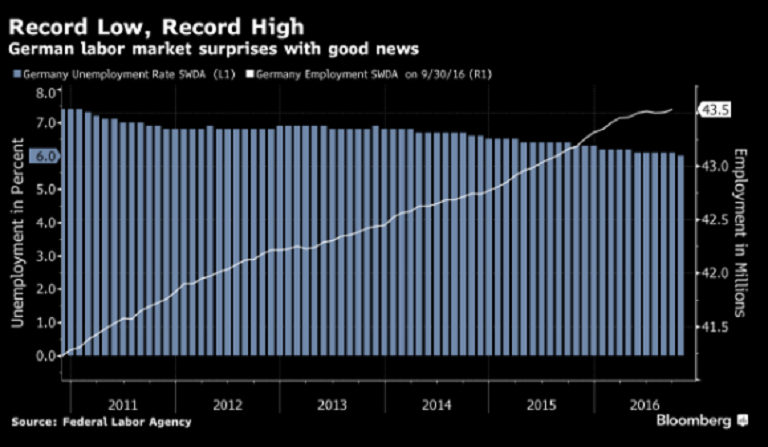
The unemployment rate in Germany fell to a new record low during the month of October, declining more than what markets had initially anticipated, while job vacancies hit a fresh all-time high during the same period.
Germany’s seasonally adjusted jobless total fell by 13,000 to 2.662 million, data released by the Department of Labour showed Wednesday. That compared with a consensus forecast in a Reuters poll for unemployment to fall by only 1,000.
The adjusted unemployment rate edged lower by 0.1 percentage point to 6.0 percent, the lowest level since German reunification in 1990. Further, the number of job vacancies also hit a record high of 691,000, suggesting companies are increasingly struggling to find new staff quickly on the labor market.
In addition, the number of people out of work fell by some 6,000 in western Germany and decreased by about 8,000 in the eastern part of the country, the labor agency said. At the same time, underemployment rose by a seasonally adjusted 11,000 nationwide due to a loosening of labor policies to target refugees, according to the report.
Meanwhile, manufacturing grew at the fastest pace in almost three years in October, according to final data published by IHS Markit on Wednesday, as companies boosted hiring, partially in response to stronger foreign demand from the U.S and Asia. The country’s central bank has pointed to export and business expectations in manufacturing as signs that the situation could improve in the coming month, Bloomberg reported.
"Due to the autumn pickup, unemployment fell significantly, employment rose again and demand for new staff increased further," Reuters reported, citing Frank-Juergen Weise, Head, Federal Labour Office.

