Germany has reduced the area being assessed for a high-level nuclear waste repository to less than 5% of its territory, while no site has been selected and regional exploration proposals remain pending.
The Federal Company for Radioactive Waste Disposal (BGE) said Oct. 27 that the area under review had fallen from about 25% in 2025. The areas still being assessed are in southern, eastern, northern and northwestern Germany.
Thirty-six of the 90 subareas identified in 2020 remain in preliminary safety assessments. These areas are not official site regions. BGE plans to send a proposal for regions to undergo surface exploration to the Federal Office for the Safety of Nuclear Waste Management (BASE) by the end of 2027. BASE will review it before the federal legislature decides which regions proceed.
The Federal Ministry for the Environment, Climate Action, Nature Conservation and Nuclear Safety (BMUKN) says the project is too early for a dependable overall cost projection. In its discussion of the high-level repository project, a 2025 report records about €232 million in costs from 2018 through the end of 2024 and estimates €215 million for 2025 through 2027.
The BMUKN says the federal budget provides initial funding. Eligible costs are later recovered from the Fund for the Financing of Nuclear Waste Management (KENFO) and other waste producers, under the polluter-pays principle.
Germany’s last three commercial nuclear power plants shut down April 15, 2023, and high-level waste remains in interim storage. The ministry says site selection is intended to protect safety over one million years. BGE says high-level waste accounts for about 99% of radioactive waste’s radioactivity despite making up a small share of its volume.
At an Oct. 28 press conference, a ministry spokesperson said the minister wants a clear repository site before 2050 and has proposed changes to speed up the search. The spokesperson said interim-storage permits can be extended, with conditions varying by site.
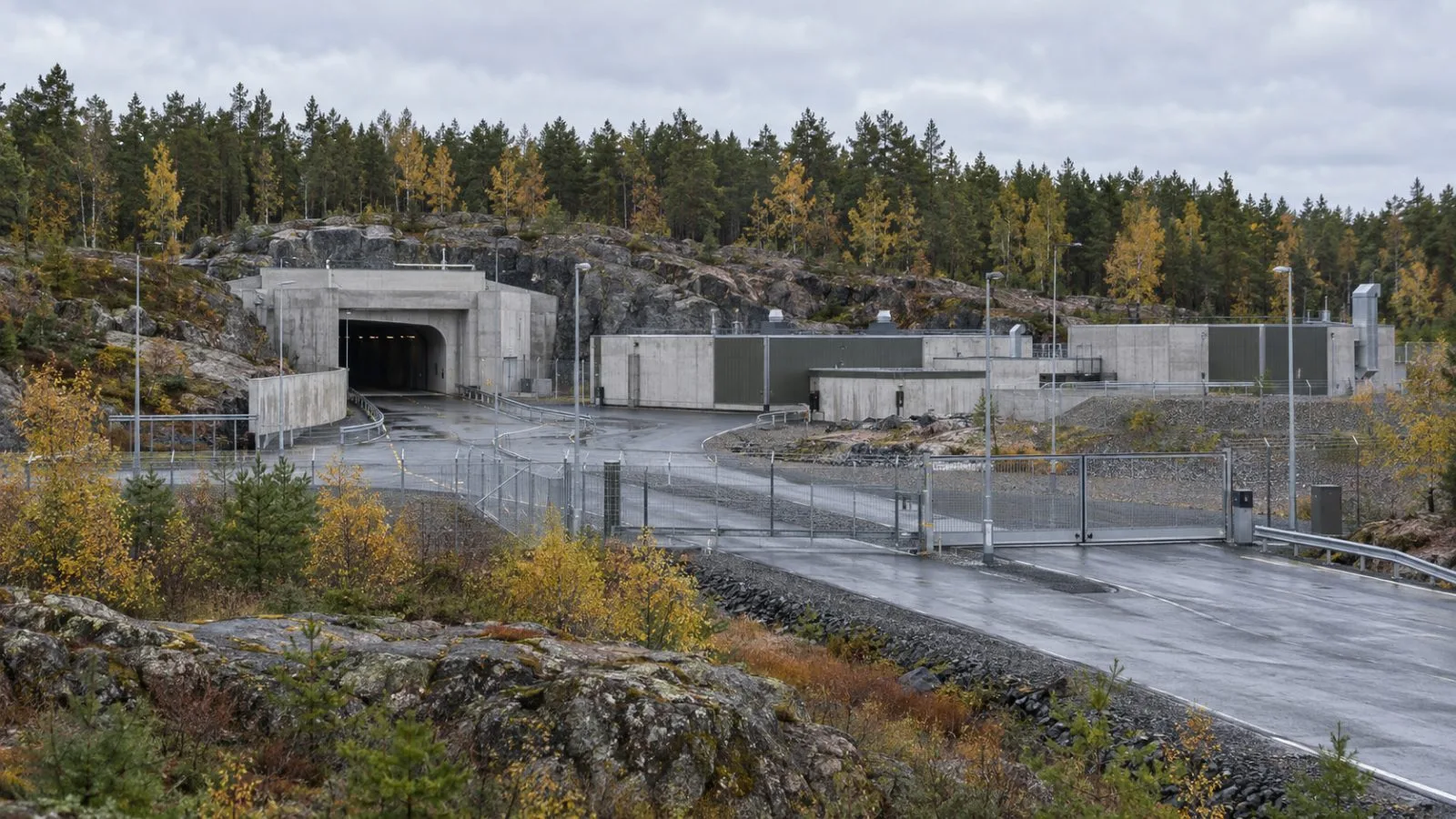
Finland’s government granted Posiva an operating license Oct. 22 for its Olkiluoto spent-fuel facility through the end of 2070. The government described it as the first spent-fuel final-disposal facility worldwide to receive an operating license. Disposal has not begun: the Radiation and Nuclear Safety Authority (STUK) must inspect the facility before it can operate.
BGE’s next stated step is to submit its proposed surface-exploration regions to BASE by the end of 2027; a legislative decision on which regions proceed follows review.