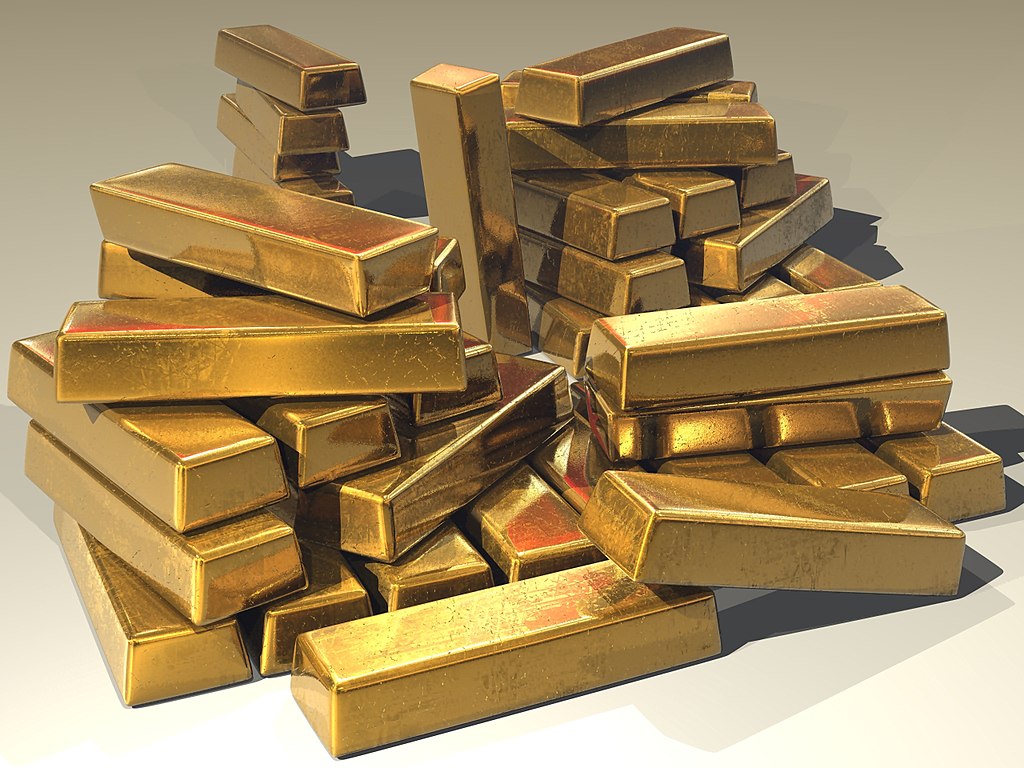
Gold prices edged higher during Asian trading on Thursday, recovering some losses from the previous session as investors assessed ongoing geopolitical risks in the Middle East and awaited crucial U.S. labor market data that could influence the Federal Reserve’s next interest rate decision.
Spot gold climbed 0.6% to $4,460.8 per ounce, while U.S. gold futures gained 0.5% to reach $4,486.84 per ounce. The precious metal had declined more than 1% on Wednesday after a stronger U.S. dollar weighed on market sentiment.
Investor attention remained focused on developments in the Middle East. The United States announced a ceasefire framework between Israel and Lebanon late Wednesday, though the agreement remains dependent on Hezbollah suspending military activity. While the announcement offered some optimism, traders continued to monitor regional tensions closely.
Fresh reports of conflict emerged during the week, including alleged Iranian missile strikes targeting Kuwait and Bahrain, alongside U.S. military operations against Iran’s Qeshm Island near the Strait of Hormuz. Meanwhile, Israeli forces reportedly expanded operations in southern Lebanon, targeting areas associated with Hezbollah.
Oil prices retreated in Asian markets after posting gains for three consecutive sessions. The decline eased immediate concerns about rising energy costs and their potential impact on global inflation, providing some support for gold prices.
Market participants are now looking ahead to Friday’s highly anticipated U.S. nonfarm payrolls report. Recent economic indicators have painted a mixed picture of the labor market. Data from payroll processor ADP showed private-sector employers added 122,000 jobs in May, exceeding analyst expectations and improving from the previous month’s reading.
Additionally, the latest ISM services survey revealed that prices paid by U.S. service providers rose to their highest level since 2022, driven by increasing costs for petroleum products and other commodities. These figures strengthened expectations that the Federal Reserve may keep interest rates elevated for longer, a scenario that typically limits gains for non-yielding assets such as gold.
The U.S. Dollar Index slipped 0.1% after reaching a two-month high in the previous session. Among other precious metals, silver advanced 0.5% to $73.11 per ounce, while platinum rose 0.7% to $1,875.60 per ounce.
Traders will continue monitoring geopolitical developments, inflation trends, and upcoming economic data for further direction in the gold market and broader financial markets.