


 China’s robots can run faster than Usain Bolt – now they are being prepared for war
  Unsustainable – or manageable? We don’t yet know how data centres will impact Australia’s environment
  US Judge Dismisses Imran Ahmed Deportation Lawsuit
  ‘Buy now, pay later’ doesn’t feel like debt. For young people, that can be a big problem
  What is Zionism? The different meanings of a contested term
  Google Changes EU Spam Policy Amid Antitrust Scrutiny
  SEC Seeks ISS Client Voting Records in Proxy Adviser Probe
  Brazil Warns EU of Retaliation Over Animal Products Ban
  FDA Weighs Safety Standards for Psychedelic Therapies
  DOJ Will Investigate AI-Related Crimes, Attorney General Blanche Says
  FCC Approves Foreign Investment in $110B Paramount-Warner Bros. Deal
  Goldman Sachs Forecasts Fed Rate Hike as Inflation Risks Rise
  US Resumes Immigrant Visa Processing for Hungary, Poland


 Add as a preferred source on Google
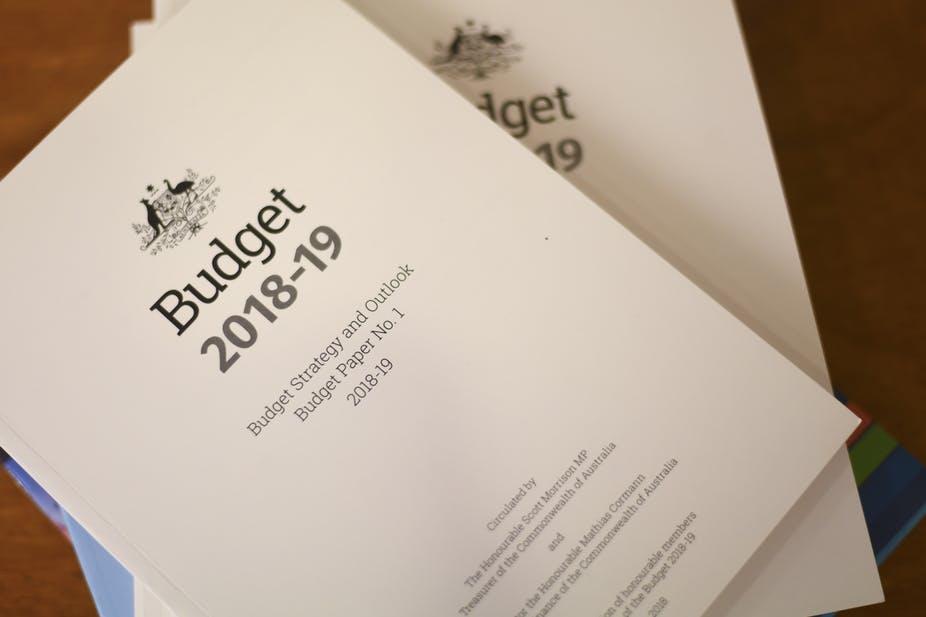
Treasurer Scott Morrison has unveiled an income tax plan that will cost $140 billion over a decade and initially deliver tax relief up to $530 a year for 4.4 million people earning between $48,000 and $90,000.
The three-stage plan is the centrepiece of Tuesday night’s budget, which also brings forward by a year the forecast return to surplus and the peak of Australia’s net debt.
The tax plan will be part of the government’s pitch for the election, due early next year, with Labor putting up a competing proposal.
The government also hopes that its income tax changes will soften Senate resistance to its legislation to cut the company tax rate for large companies. Morrison stressed that people on low to middle incomes would get a tax cut before big business.
Under the plan, the government says that 94% of taxpayers in 2024-25 will face a marginal rate of 32.5% or less. That compares with 63% if the system was unchanged.
Morrison said that in the first stage, there would be relief for lower and middle income earners. The second stage would protect taxpayers from bracket creep, while the third stage would make the income tax system simpler and flatter.
The initial relief will be given via an additional tax offset, paid when taxpayers receive their assessment, so that it is directed to lower and middle income earners.
In 2024-25 the system will be simplified by abolishing the 37% tax bracket entirely.
“Australians earning more than $41,000 will only pay 32.5 cents in the dollar all the way up to the top marginal tax rate threshold which will be adjusted to $200,000,” Morrison said.
“Under the Turnbull government’s personal tax plan most working Australians earning above $41,000 are likely to never face a higher marginal tax rate throughout their entire working life,” he said.
Morrison said the plan was “affordable”. The revenue impact over the forward estimates is $13.4 billion. The cost over a decade is $140 billion.
The budget forecasts a deficit for the current financial year of $18.2 billion, which Morrison said would be the best budget outcome since the Howard government’s last budget a decade ago.
The deficit is forecast to be $14.5 billion in 2018-19 before returning to balance with a wafer thin $2.2 billion surplus in 2019-20. Previously the budget had been predicted to return to a surplus in 2020-21. Over the medium term the surplus is predicted to rise to more than 1% of GDP.
Net debt will also peak earlier than predicted, at 18.6% of GDP in 2017-18, falling by about $30 billion over the forward estimates. Morrison told a news conference in the budget lock up “we have reached a turning point on debt”.
Morrison said in his budget speech: “The Australian economy is now pulling out of one of the toughest periods we have faced in generations.”
The economy is forecast to grow by 3% in 2018-19, with unemployment at 5.25% compared with 5.5% in this financial year. But the budget forecasts a slowing in what has been the surging growth in employment - from 2.75% in 2017-18 to 1.5% in 2018-19.
Real spending growth in the budget has been kept below 2%, which Morrison said was “the most restrained of any government in more than 50 years”. He emphasised that the government was “keeping taxes under our policy speed limit of 23.9% GDP”.
The main initiative on the spending side is a package for older Australians including an additional 14,000 high level home care places costing $1.6 billion over four years. There will also be extra money for aged care services in regional Australia and increased support for mental health services in aged care facilities.
The government is hoping to boost retirement incomes by making it easier for people to find their lost superannuation, and by abolishing exit fees. It will also crackdown on expensive insurance policies being sold to younger people.
The budget foreshadows raising $5.3 billion over the next four years from a crackdown on the black economy, including combatting “chop chop” tobacco.
 Michelle Grattan does not work for, consult, own shares in or receive funding from any company or organisation that would benefit from this article, and has disclosed no relevant affiliations beyond their academic appointment.







