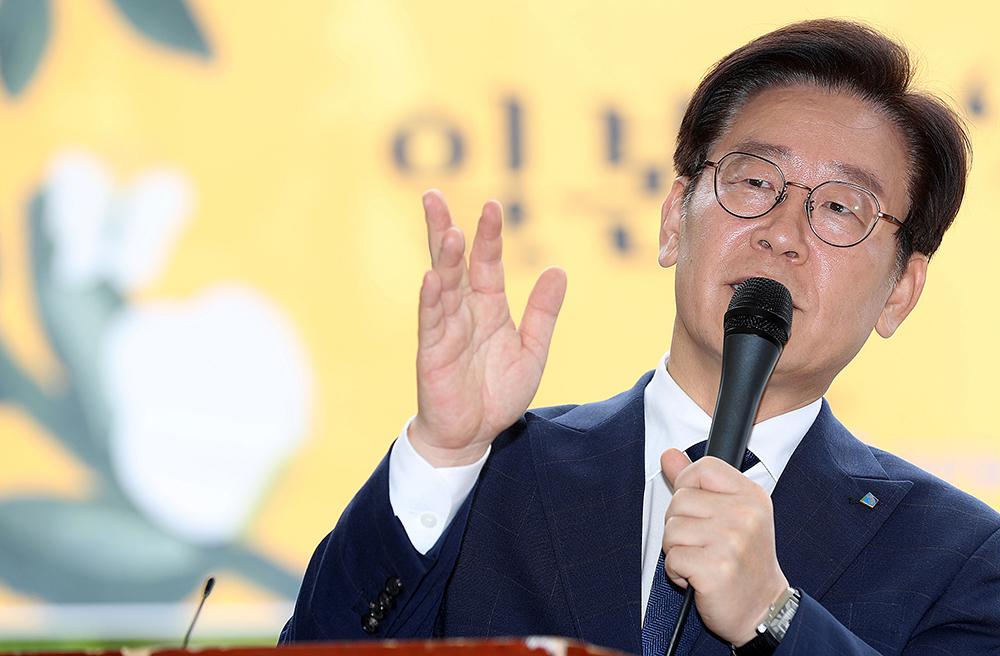
South Korean President Lee Jae Myung said Friday that Seoul will not deploy military forces to the Middle East in any capacity that could pull the country into war, while confirming that officials are considering a greater role in protecting commercial shipping and energy supplies.
“There won’t be deployment that would involve or enter war,” Lee told a news conference, adding that South Korea would not send military assets for that purpose.
However, Lee said Seoul must take reasonable measures, similar to other countries, to safeguard commercial vessels, crude oil shipments and South Korean citizens. The government has been reviewing a possible military deployment to the Strait of Hormuz, although the proposal has faced domestic opposition.
South Korea already maintains a naval presence off Somalia as part of anti-piracy operations. The government has resisted calls from U.S. President Donald Trump for greater military support amid the Iran war. Trump has criticized Seoul’s level of support and scaled back major U.S.-South Korea military exercises this summer.
Lee also addressed negotiations over South Korea’s $350 billion U.S. investment commitment under a trade agreement that lowered U.S. tariffs on Korean imports to 15%. He said concerns about the commercial viability of the investment package remained the main obstacle, although the two governments were moving closer to an agreement. A parliamentary briefing on the plans was postponed this week and is expected next week.
On North Korea, Lee said a meeting between Trump and North Korean leader Kim Jong Un could take place in the coming months if the necessary conditions align. He said Seoul continues coordinating efforts to facilitate dialogue between Washington and Pyongyang.
Lee also firmly ruled out seeking a second consecutive presidential term. South Korea’s Constitution currently limits presidents to a single five-year term, and Lee said his presidency would end in 2030.
The South Korean leader additionally pledged to reduce Seoul’s dominance by strengthening Sejong’s role as the country’s political capital while positioning Seoul as its economic capital. Sejong, located about 120 kilometers south of Seoul, already hosts numerous government agencies.