


 Best Gold Stocks to Buy Now: AABB, GOLD, GDX
  Gold Prices Fall Amid Rate Jitters; Copper Steady as China Stimulus Eyed


 Add as a preferred source on Google
PM Tsipras announced his government's resignation on 20th August. Consequently, Greek President Pavlopoulos will need to investigate this week whether somebody else is in a position to form a government. The Greek constitution grants the leaders of the three largest parties other than the ruling party (New Democracy, Golden Dawn, To Potami) up to three days each to try to form a government.
In all likelihood, the president will fail to find a Prime Minister able to win the subsequent confidence vote, and will thus need to appoint the head of the Supreme Court as an interim Prime Minister, and call for new elections to be held over the next 30 days (probably on 20 or 27 September). It will be the sixth elections in eight years.
More importantly, it is likely that the strategy of snap polls in September would halt the Greek administration and prevent the passing of the bailout-related legislation (pension reform, the €50bn asset fund, product market regulation, fiscal measures) until after the elections, states Societe Generale. In the best case scenario of a stable majority, snap elections would postpone the first bailout review as well as the discussion on a debt reprofiling from October to the end of the year.
"Regarding possible ECB purchases of Greek government bonds, no action is expected before the recapitalisation of the Greek banking sector (probably in Q4). As with the example of Cyprus, the lift up of capital controls will also be key. Moreover, as long as regaining market access is not a near term prospect for the Greek government, there is no need for the ECB to take any decision in the near term", says SocGen.

- News

- Economy

- Central Banks
- Investing
- Research
- Roundups
- Digital Currency
- Insights
- Technical Analysis
- Technology
- Business
- Law
- Health
- Nature
- Fintech
- Science
- Topic
- Opinions
- ©Econometrics LLC . All Rights Reserved.
Greece on route to new election
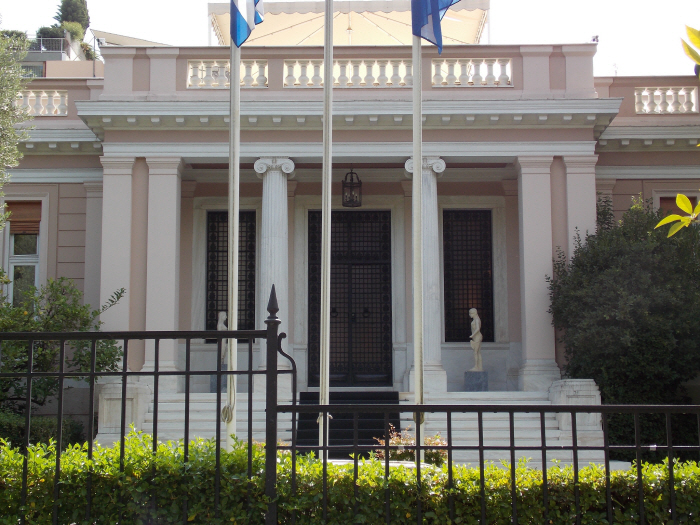
Maximos Mansion, 19 Irodou Attikou st. (Dimitris Graffin_Flikr)
Wednesday, August 26, 2015 8:06 AM UTC
Editor's Picks



- Market Data
Most Popular




