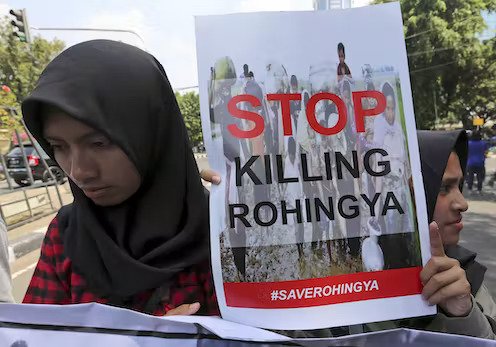
A landmark genocide case against Myanmar is set to open at the International Court of Justice (ICJ), the United Nations’ highest judicial body, marking the first full genocide hearing at the court in more than a decade. The case, brought by The Gambia in 2019, accuses Myanmar of committing genocide against the Rohingya, a minority Muslim population from the country’s western Rakhine state. The proceedings are expected to have far-reaching legal and political implications, potentially influencing other genocide-related cases before the ICJ, including South Africa’s case against Israel over the war in Gaza.
The hearings will begin at 10 a.m. local time on Monday and are scheduled to last for three weeks. For the first time, Rohingya victims of the alleged atrocities will present testimony before an international court, although the sessions will be closed to the public and media due to privacy and security concerns. Legal experts say the case could establish critical precedents on how genocide is legally defined, proven, and remedied under international law.
The case stems from a 2017 military operation by Myanmar’s armed forces that forced at least 730,000 Rohingya to flee to neighboring Bangladesh. Refugees reported widespread killings, mass rape, and the burning of villages. A United Nations fact-finding mission later concluded that Myanmar’s actions included genocidal acts. Myanmar has consistently denied these allegations, arguing that the military campaign was a legitimate counter-terrorism response to attacks by Rohingya militants.
During preliminary hearings in 2019, Myanmar’s former civilian leader Aung San Suu Kyi dismissed the genocide accusations as “incomplete and misleading.” Since then, Myanmar has faced ongoing instability following a 2021 military coup that overthrew the elected government, leading to violent crackdowns on pro-democracy protests and a nationwide armed rebellion.
The country is currently conducting phased elections that have been widely criticized by the United Nations, Western governments, and human rights organizations as neither free nor fair. As the ICJ hearings begin, international attention is once again focused on accountability for the Rohingya crisis and the broader implications for global justice and human rights enforcement.