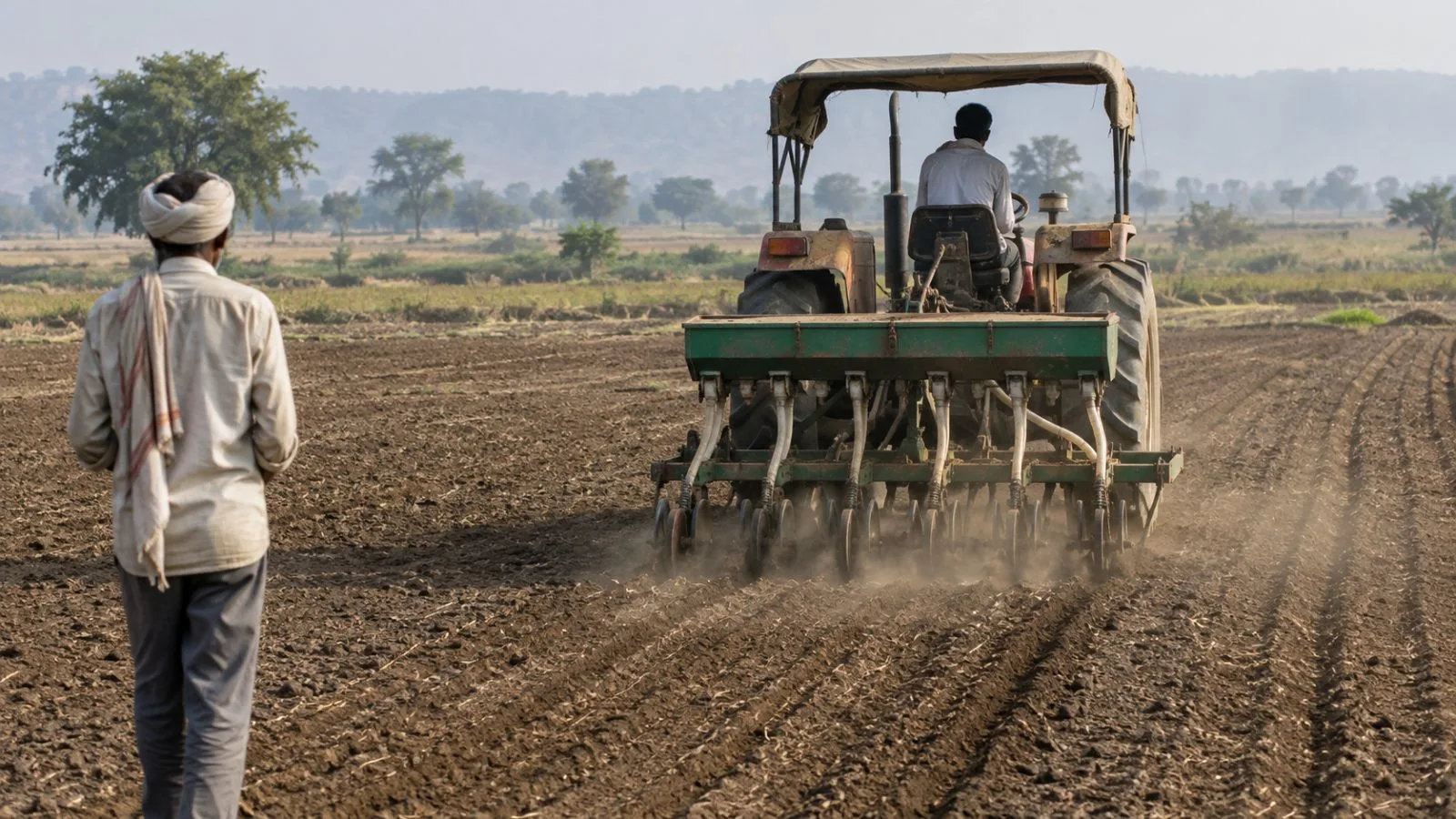
A Tribune-reported preliminary tally put India’s chickpea planting at 5,900 hectares by Oct. 16, as officials urged states to align winter crop plans with water supplies amid rising food inflation.
The Tribune reported that preliminary Agriculture Ministry figures showed total rabi, or winter, crop planting at 343,000 hectares, down 26.3% from 465,000 hectares a year earlier. Gram acreage stood at 50 hectares at the same point last year. The early count is not a final estimate of production.
At the National Agriculture Conference – Rabi Campaign 2026 on Sept. 28, Union Agriculture Minister Shivraj Singh Chouhan asked states to assess water availability and soil moisture before finalizing crop plans. The Ministry of Agriculture and Farmers Welfare said areas with limited water should favor less water-intensive pulses and oilseeds. Chouhan also called for weekly crop monitoring.
The Directorate of Pulses Development recommends sowing rain-fed chickpeas in northern India during the second half of October, with irrigated planting in the first half of November. Its recommended window for central and southern India runs from the first half of October to the first half of November. December or January sowing can expose crops to moisture stress and high temperatures during pod filling, reducing yields and seed quality.
The Ministry of Statistics and Programme Implementation reported provisional Consumer Food Price Index inflation of 7.74% in September, up from 5.97% in August. That national measure covers food overall, not chickpeas specifically. The Department of Consumer Affairs listed average gram-dal prices on Oct. 22 at ₹93.17 per kilogram for retail and ₹8,532.48 per quintal for wholesale; those prices are for gram dal, not raw chickpeas.
The National Oceanic and Atmospheric Administration’s Climate Prediction Center forecast on Oct. 8 that El Niño would continue strengthening through the end of 2026, without quantifying an effect on India’s chickpea crop.