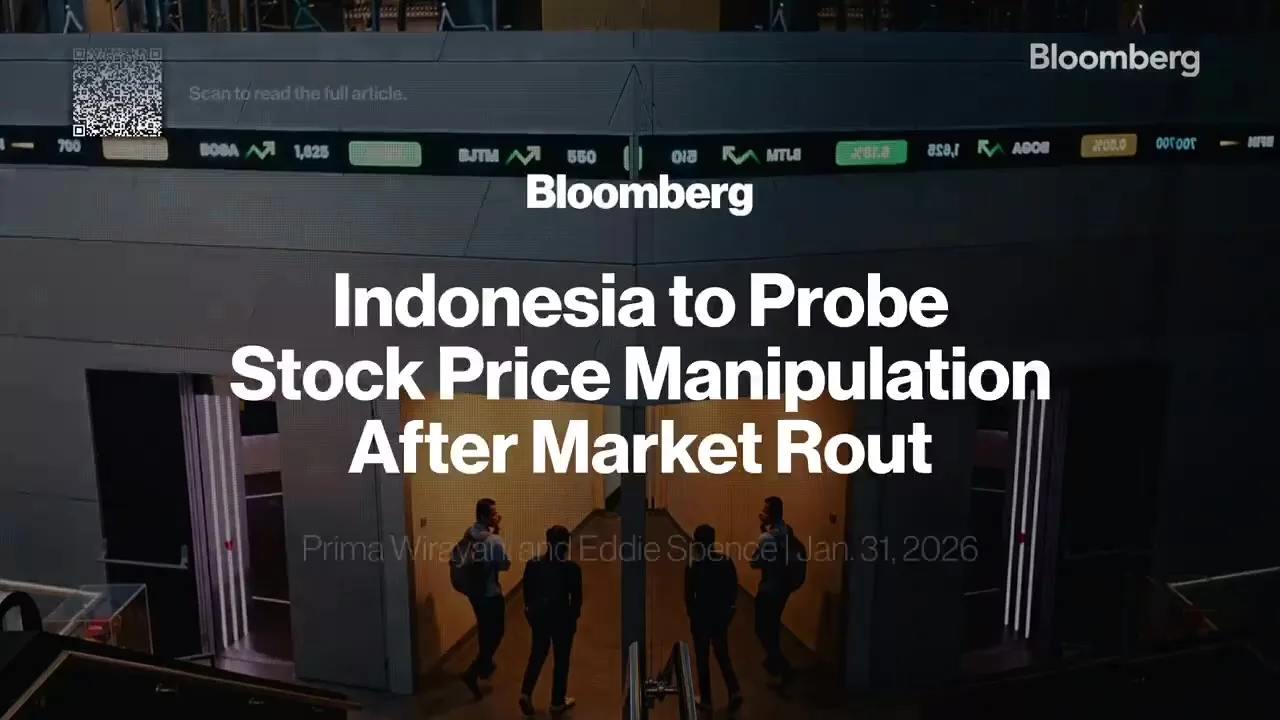
A single broker handled about 40% of trading in some Indonesian stocks amid alleged manipulation designed to attract global investors, Bloomberg Television reported on Nov. 3 in “Inside Indonesia’s Wash-Trade Scheme.”
That concentration affected one in five stocks in the Indonesian market. MSCI, an index provider whose benchmarks guide global investment, is considering removing Indonesia from its emerging-market category.
MSCI raised the possibility in January of moving Indonesia to frontier-market status. In October, it raised the prospect of a further demotion to standalone status, outside both emerging and frontier markets.
Emerging markets are relatively accessible to international investors, while frontier markets are smaller and harder to buy into. A standalone classification would put Indonesia outside both groups of stock indexes.
Such a change could prompt billions of dollars in selling by funds that track the indexes. MSCI’s concerns included unclear share ownership, suspected coordinated trading and a lack of enforcement.
Indonesia’s stock market rose strongly in 2025 and reached a record in January before declining. The prospect of an MSCI downgrade intensified the sell-off.
The alleged trading practices created an appearance of demand by moving shares between accounts. Wash trading, transactions that generate activity without a genuine change in ownership, can inflate prices and trading volumes.
In the mechanism described, shares move from one account to another while money flows in the opposite direction. Repeating those transactions makes a stock appear more actively traded than it really is.
The practice is known locally as the “MSCI trade.” Raising a company’s valuation and trading volumes can improve its chances of entering an MSCI index and drawing money from international investors.
One example was Abadi Lestari, a producer of edible bird nests that went public in December 2025. Its shares rose about 5,000% within weeks of the listing.
The securities company Samuel worked with Abadi Lestari executives to raise the stock’s price and trading volumes, Bloomberg reported, citing interviews with dozens of bankers, analysts and regulators.
Indonesian regulators have tightened free-float rules, which govern the shares available for public trading, and taken enforcement action. Whether international investors believe authorities will enforce those rules consistently remains unresolved.
MSCI is due to make its final decision on Indonesia’s classification by the end of June 2027. Indonesian President Prabowo said he would not be bullied by MSCI.
The decision could affect the wider economy through the withdrawal of investment. Exclusion from emerging-market indexes would also damage the reputation of Southeast Asia’s largest economy, a member of the G20.