


 Novo Nordisk Eyes Turnaround as Oral Wegovy Challenges Eli Lilly in Weight-Loss Drug Race
  SpaceX Pivots Toward Moon City as Musk Reframes Long-Term Space Vision
  Jared Isaacman Confirmed as NASA Administrator, Becomes 15th Leader of U.S. Space Agency
  Hanmi Pharm Soars 30% on $2.3 Billion Genentech Obesity Drug Deal
  GLP-1 Weight-Loss Drug Use Surges Among U.S. Children
  Moderna Wins FDA Approval for mFLUSIVA mRNA Flu Vaccine for Adults 50+
  Eli Lilly’s Inluriyo Gains FDA Approval for Advanced Breast Cancer Treatment
  Is space worth the cost? Accounting experts say its value can’t be found in spreadsheets
  Hims & Hers Shares Fall as GLP-1 Costs Widen Q2 Loss
  NASA Artemis II: First Crewed Moon Mission Since Apollo Takes Four Astronauts on 10-Day Lunar Journey
  Neuralink Plans High-Volume Brain Implant Production and Fully Automated Surgery by 2026
  AstraZeneca, Bristol Myers Squibb Explore Mega Merger Worth Nearly $400 Billion
  New Mexico Measles Outbreak Cost Reached $5.4 Million, Study Finds
  Trump Administration Releases New UFO Files and Apollo Mission Records


 Add as a preferred source on Google
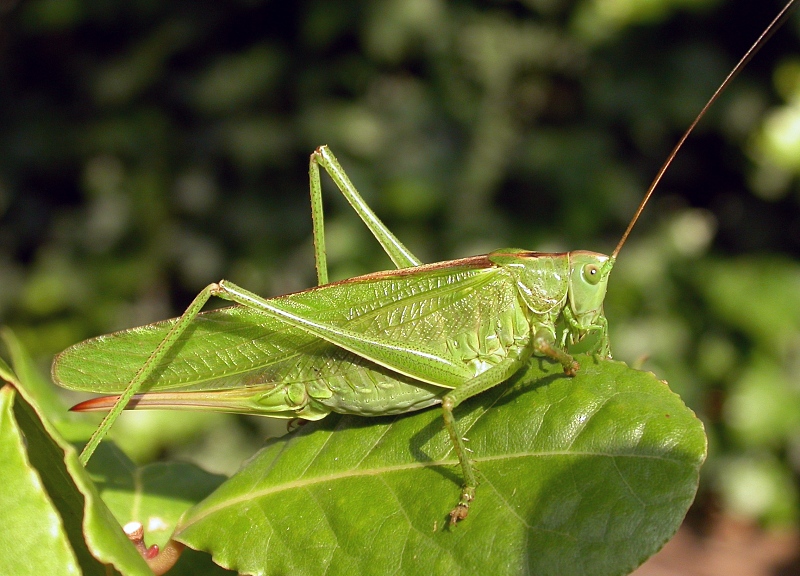

The human ear is a miracle of mechanical evolution. It allows us to hear an astonishing range of sounds and to communicate and navigate in the world. It’s also easy to damage and difficult to repair. Hearing aids are still large, uncomfortable and as yet unable to deliver the rich and wonderful sounds we take for granted. Yet there may be a new way for us to replace damaged hearing from an unlikely source – the insect world.
Spend a summer in the countryside in a warm climate and you’ll likely hear crickets chirping, males of the species “singing” in an attempt to attract a female. What’s surprising is how small the creatures are given the very high sound levels they produce. Could studying crickets allow us to learn something about how to design a small speaker that is also loud, just as you need for a hearing aid?
Currently my colleagues and I are researching exactly this. Crickets create sound by rubbing their wings together. The secret to their loud calls is that their wings are corrugated in specific patterns which makes them very stiff, which in turn makes them very loud when they are rubbed together. Using laser vibration systems and advanced computer modelling simulations (more often used to study aerodynamics), we can replicate this idea by tailoring the stiffness of a speaker surface. This creates a simple and efficient way to make tiny speakers very loud indeed.
Insect inspiration doesn’t stop with small speakers, however. Hearing aids have traditionally been designed to operate in distinct stages. Sound signals are picked up by a microphone and then electrically amplified. Unwanted sounds are filtered out using digital processors and finally a speaker delivers high intensity sound into the ear canal. In each of these processes we may be able to learn from insects.
Among the best studied insects in bio-acoustics is the locust, which has two large “tympanal” membranes used for hearing on either side of its chest. These membranes vibrate with sound and transfer the resulting signals to the nervous system, much a like a human ear drum. Recently we observed this membrane doing more than just vibrating up and down. Upon careful dissection, we found that it had a regular variation in thickness. While this may not sound particularly interesting at first, when we played sound to it we were amazed.
It produced a tsunami-like vibration with the peak of the wave directly at the location of the nerve cells. In effect, this simple variation in thickness allowed for huge amplifications of the sound energy. The process of amplification in mammals is achieved with fragile middle ear bones, something locusts are achieving by simply varying the thickness of their ear drum. So we may be able to similarly design microphones with inbuilt passive amplification based on this idea.
Interestingly, some insects are even making us question what exactly a microphone can be. Mosquitoes and fruit flies, as examples, have tiny antennae on their heads which are microscopic in size yet are very sensitive to sound. While research into these features is tentative, it could direct us in unexplored directions of microphone design.
The process of filtering incoming sounds with a hearing aid requires quite sophisticated electronics, which directly impact the device’s size and battery life. Here again the locust may help. Along with amplifying the sound waves, the tympanal membranes also filter out a range of frequencies. This is most likely due to the material the membrane is made from.
My colleague, Professor Daniel Robert, recently found a South American species of katydid or bush cricket that may well perform the same task. The katydid has a tiny structure less than a millimetre in size in each of its forelegs that is capable of separating different frequencies into location specific vibrations, very similar in function to the human cochlea. If we could somehow encompass this mechanical frequency separation into the microphone itself, we may be able to harness its automatic filtering properties.
Biology, medicine and engineering have traditionally been quite separate disciplines. But by combining them, as we have in these projects, we can develop new engineering solutions based on discoveries that may have been made many years ago. So while bio-inspired hearing aids may not be about to arrive on the shelves, this innovative new field of study could find more and more ways to address the needs of people with hearing loss. And there’s plenty more inspiration that could come from our miniature mechanical specialists, the insects.
 Rob Malkin has been awarded the Isambard Kingdom Brunel Award Lecture for engineering, technology and industry at the 2016 British Science Festival by the British Science Association.
This article was originally published on The Conversation. Read the original article.







