


 Solana Price Drops 3% Despite Samsung USDC Partnership
  DWF Labs Sues BitGo for $114 Million Over Alleged Token Sales Breach
  Crypto Liquidation Flush: BTC & ETH at a Glance
  Ledger Investigates Alleged $86 Million Crypto Wallet Theft
  Jameson Lopp Downplays AI Threat to Bitcoin Cryptography
  Cardano Price Eyes $0.30 as ADA Whale Activity Surges
  XRP Ledger Activates New Security Feature for Banks and Stablecoins
  Chainlink Price Drops 3% Despite New CCIP Vault Launch
  Circle Stock Falls 4% as Crypto Selloff Overshadows SAP Pay Expansion
  XRP Holds Steady at $1.39 as Crypto Market Faces Heavy Liquidations
  US Government Moves $1 Billion in Bitcoin Amid Sale Speculation


 Add as a preferred source on Google
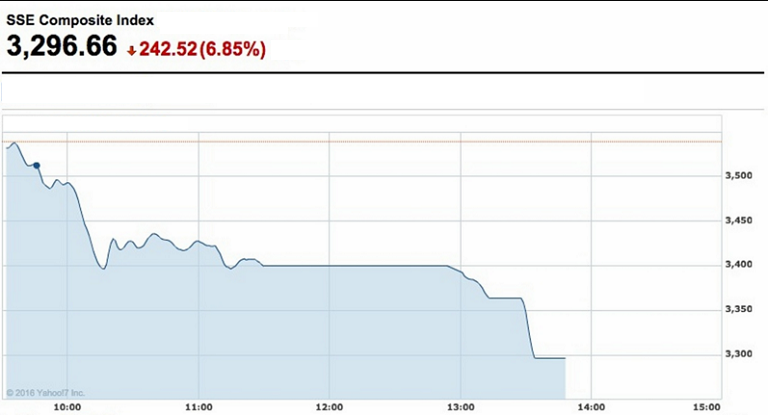
The health of the Chinese economy has resurfaced as a key concern as we head into 2016, extending a major blow to the markets already rattled by geopolitical tensions stemming from Saudi-Iran tensions and North Korea's nuclear test. China concerns are shaking confidence of investors and creating volatility across markets.
Earlier Thursday, PBoC fixed the onshore yuan's value lower by 0.51% from Wednesday's level, the biggest move since Aug. 13, after the yuan's devaluation. Spot yuan fell to 6.5945 against the dollar, its weakest since February 2011. Other regional currencies followed suit, the South Korean won touched a four-month low, the Malaysian ringgit slumped to a three-month trough and the Singapore dollar hit a six-year low.
Markets perceive PBoC's consecutive lower yuan fixes, allowing CNY value to steadily decline as an effort by Beijing to help exporters and thereby support its faltering economy and stimulate growth. Investors have been unnerved as it could mean that China's economy is even weaker than had been imagined.
China's stocks plummeted over 7 pct on the day within 29 minutes of opening, triggering circuit breaks again for a second time this week. Trading was halted and markets remained shut thereafter. China's stock regulator separately announced extension for three months a ban on sales of shares by large shareholders which was scheduled to expire on Friday.
The instability brings back to light China's stock market crash and a surprise Yuan devaluation by Beijing last year which sparked a global rout, and wiped out trillions of U.S. dollars in value from Chinese equities. The magnitude of the fall in Chinese stocks and its currency Thursday could set off a chain reaction in sentiment. There is a risk that this could spark another wave of competitive devaluations around Asia and in other key economies.
The renminbi will provide a critical test for the Chinese authorities in the coming months as to how they will prevent a gradual decline from turning into a rout. Domestic investors are moving money out of the country before the buying power of their renminbi slides any further. The currency weakness, economic slowdown and the stock market turmoil could force the government to take action.







