The death of Iran’s president, Ebrahim Raisi, in a helicopter crash in May plunged Iran into political uncertainly. Raisi’s death has set off an intense power struggle within the Islamic Republic.
Iran’s consitution requires that a new president should be chosen within 50 days of Raisi’s death. Accordingly, voting for the election of a new president will begin on June 28. A list of prospective candidates who registered over the past few days was released on June 3. As expected, it is dominated by hardline conservatives.
The reason for this goes back several years. In 2020, Iran’s powerful Guardian Council carried out a purge of parliamentary candidates. It disqualified no fewer than 90 reformist candidates from running in the 2021 presidential elections. Hence the political scene is now dominated by ultra-conservative voices.
The Guardian Council will now vet applicants over the next week before releasing the final list of presidential candidates on June 11. While the provisional list is dominated by conservatives, it is possible that some “moderate” candidates will be allowed to run. But this is more to encourage a better turnout for an electoral process that the majority of people do not accept as legitimate.
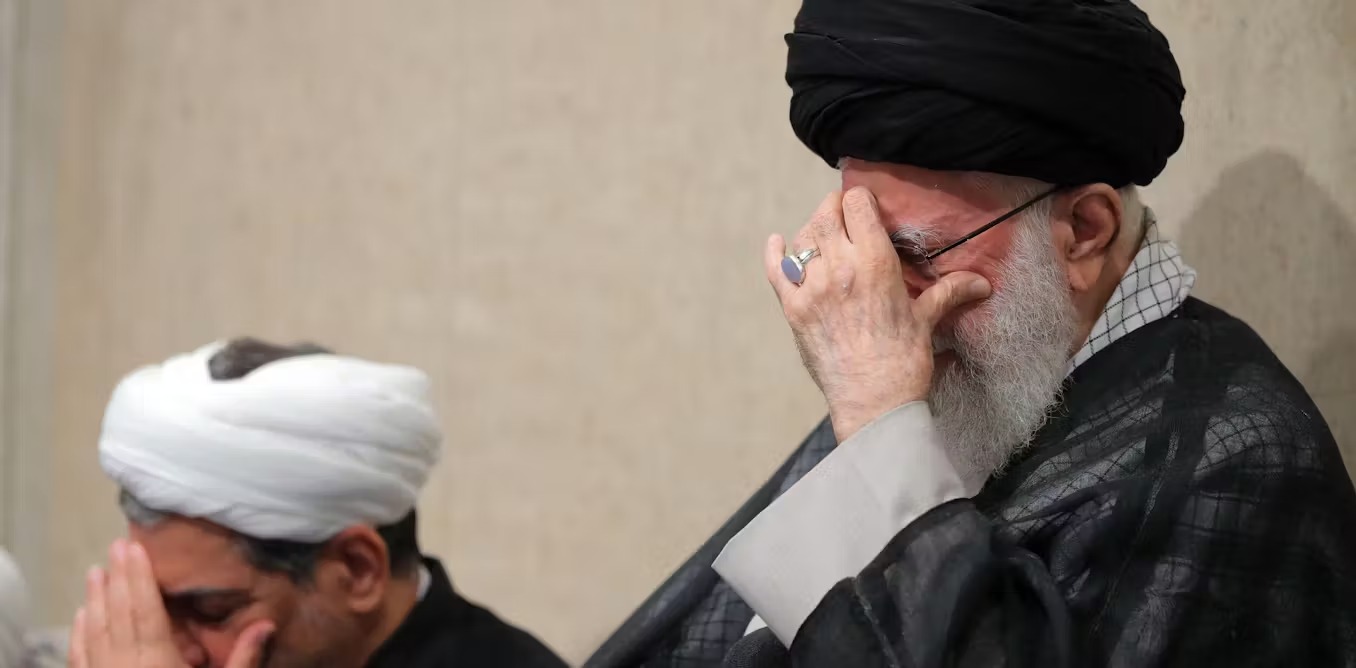
The stakes are high. Before his presidential tenure, Raisi was considered a possible successor for the aging supreme leader, Ali Khamenei. Now a new field of hardliners and conservatives has assembled to battle it out for the presidency. This is now considered a stepping stone to enable politicians to reposition themselves for the ultimate political battle: the succession for the position of supreme leader.
Hardliners battling hardliners for political control in Iran is a new twist on an old story. Factionalism is nothing new in Iran, but traditionally these internal conflicts were about rivalry between hardliners and reformists.
For several decades, even when reformists were in control of the executive and legislature, hardliners tended to have the backing of the country’s all-important theocratic clerical power base. Even throughout the presidency of moderate Hassan Rouhani, they continued to wield considerable influence.
Now they are turning on each other.
Hardliners’ Power Struggle
One of the most prominent of the hardline conservative groups battling it out for position is the Paydari Front (which translates as the Steadfast or Endurance Front). This group has risen to prominence during Raisi’s presidency and holds significant sway in both the government and parliament.
It is known for its ultra-conservative policy positions and has been a major force in shaping Iran’s domestic and foreign policies in recent years. But it faces stiff competition from other hardline factions that are emerging to challenge its dominance.
Prominent among those are the faction led by the speaker of Iran’s parliament, Mohammad Bagher Ghalibaf. Ghalibaf, who leads a group known as the Coalition Council of Revolutionary Forces, has put his name forward for the presidency twice, in 2017 and 2021, before withdrawing.
Only a few days after being reinstated as speaker on May 28 this year, he declared his candidacy for another tilt at the presidency. Despite the reputation that Ghalibaf and his family have for bribery and corruption, he remains close to Khamenei.
These factions represent various conservative elements within the regime, each with its own agenda and vision for the future. Motivated by power and the potential for economic gain, they are prepared to publicly fight each other. One of the ways they undermine each other is to use social media to air accusations of corruption.
The clashes are becoming increasingly visible, which is further destabilising the political landscape and exacerbating internal divisions.
Unrest and instability
The Islamic Republic is facing severe internal and external challenges. Domestically, the regime is grappling with a profound legitimacy crisis after the death of 22-year-old Kurdish Iranian woman, Mahsa Amini, in September 2022 at the hands of the hated morality police sparked mass protests across the country. This unrest has been exacerbated by economic hardship, causing widespread public discontent.
Externally, Iran is facing off against bitter adversaries in the region, including Israel and Saudi Arabia. The Islamic Republic also faces significant pressure from the US and its allies in the shape of harsh sanctions
The widespread unrest has meant that the Islamic Republic is more dependent than ever on its security organisations, including the Islamic Revolutionary Guard Corps (IRGC) and the Basij militia. But important economic and security organisations like the IRGC are not monolithic – their leadership consist of hardliners who explicitly or implicitly support different factions.
As the struggle intensifies, the possibility of a fragmented security apparatus becomes more likely. These elite factions are engaged in a zero-sum game to broaden their power and eliminate their rivals, further intensifying the instability. This could pose a serious threat to the Islamic Republic’s survival.
Delivering a speech to mark the 35th anniversary of the death of Rouhollah Khomenei, who led the revolution in 1979 that founded the Islamic Republic, Khamenei warned against such public infighting, saying: “Slandering, spreading mud will not help progress and will harm the national reputation,” and that “the election scene is a scene of honor and epic” and “not a scene of fighting to gain power”.
As factions jostle for position ahead of the upcoming election, the outcomes of these power struggles will shape Iran’s political trajectory. The stakes are high, and the ramifications of these internal conflicts will resonate beyond Iran’s borders, given the regime’s significant role in the wider regional security complex.