
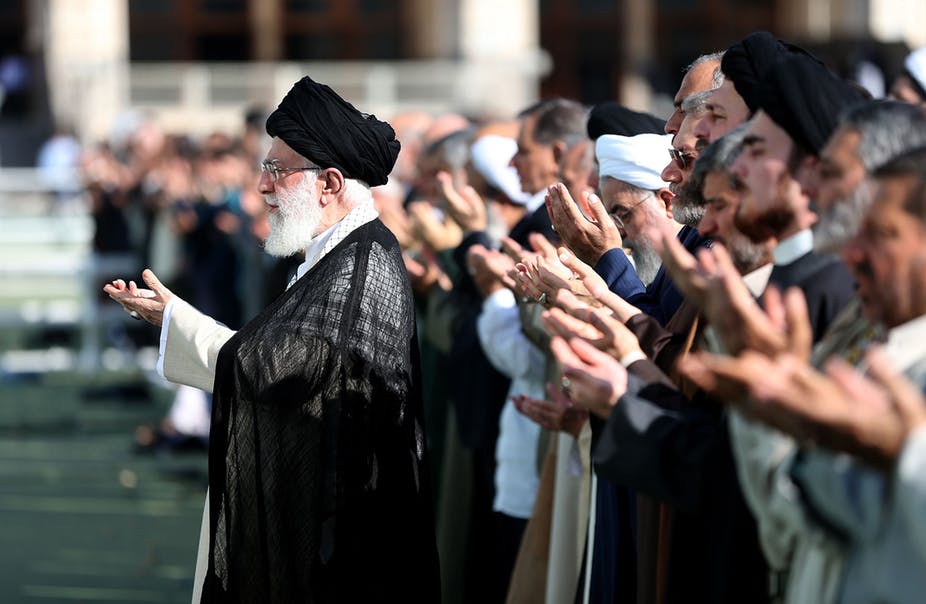
Iran's Supreme Leader Ayatollah Mojtaba Khamenei vowed on Saturday to avenge the death of his father and predecessor, Ayatollah Ali Khamenei, escalating tensions with the United States as President Donald Trump warned that any Iranian attempt to assassinate him would trigger an overwhelming American military response.
In a written statement released on Telegram during funeral ceremonies for the late supreme leader, who was killed in U.S.-Israeli airstrikes on Feb. 28, Mojtaba Khamenei declared that retaliation was inevitable. He described revenge for his father and those killed in the recent conflicts as "the demand of the nation."
Trump responded with a stark warning on Truth Social, saying the U.S. military was fully prepared to retaliate if Iran targeted him. He claimed that 1,000 missiles were "locked and loaded" against Iran, adding that thousands more could be deployed if necessary. Trump also said orders had already been issued for the U.S. military to "completely decimate and destroy" Iranian targets if Tehran acted on assassination threats.
Diplomatic efforts remain stalled. Senior U.S. officials continue to insist that Iran publicly guarantee the Strait of Hormuz remains open to commercial shipping and halt attacks on maritime traffic before broader nuclear negotiations can resume. However, Iran's semi-official Fars News Agency reported that talks will not restart unless Washington reverses its current policy positions.
Iranian Foreign Minister Abbas Araghchi accused the United States of violating last month's memorandum of understanding by imposing new sanctions, saying future negotiations require mutual compliance. Parliament Speaker Mohammad Bagher Ghalibaf also warned that Iran is prepared for a "full-scale defence" if the agreement is breached.
Despite the impasse, regional diplomacy continued. Araghchi met with Oman's foreign minister to discuss securing safe navigation through the Strait of Hormuz, while Oman confirmed technical and political discussions would continue. Qatar and Pakistan also remain involved in mediation efforts.
Meanwhile, the U.S. increased its diplomatic and military engagement in Lebanon ahead of talks between Lebanese and Israeli officials in Rome on a phased Israeli withdrawal from southern Lebanon. At the same time, Israeli airstrikes continued in southern Lebanon, while commercial shipping through the Strait of Hormuz remained significantly below normal levels, underscoring ongoing risks to global energy markets.


