


 New Zealand Moves to Ban Social Media for Children Under 16
  Saudi Arabia Shuts East-West Oil Pipeline After Drone Attack
  US Confirms Weapons in Orbit as Space Tensions Rise
  Texas Republicans Turn Against AI Data Centers as Election Backlash Grows
  Bill Gates Warns Governments Are Unprepared for AI Disruption
  U.S. Probes Apex Logistics Over Nvidia AI Chip Shipments to China
  U.S. Imposes New Visa Restrictions Over South Africa Policies
  Vietnam, U.S. Firms Plan 29 Deals Across Energy, Tech and Aviation
  Ukraine Races to Counter Russia’s Faster Jet-Powered Drones
  China’s Global Times Slams Anthropic CEO’s AI Slowdown Plan as ‘Cold War’ Strategy
  Global Poll Shows Rising Trust in Institutions as US-China Leadership Support Falls
  FDA Weighs Safety Standards for Psychedelic Therapies
  Europe can’t achieve space sovereignty alone. Here’s why
  Mahmoud Khalil Sues Columbia Over Alleged Pro-Palestinian Harassment
  Nvidia CEO Jensen Huang Expected at Trump-Xi State Dinner
  Synthetic data could ease people’s concerns about privacy breaches. But who gets to create it?
  US Immigration Arrests Surge as Deportations Lag Behind


 Add as a preferred source on Google
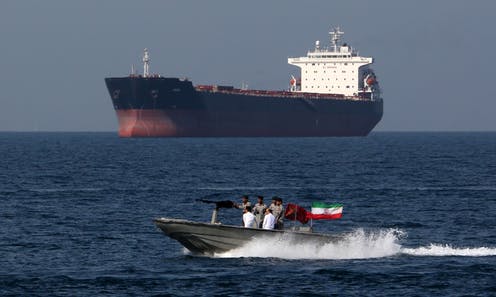
Iran's Revolutionary Guards (IRGC) navy announced early Sunday that it has closed the Strait of Hormuz until further notice after firing a warning shot at a vessel it claimed was attempting to transit through the strategic waterway using an unapproved route, according to Iranian state media.
The reported move marks a major escalation in tensions around one of the world's most critical maritime chokepoints. The Strait of Hormuz serves as the primary shipping lane for a significant portion of global crude oil and liquefied natural gas exports, making any disruption a major concern for international energy markets and global trade.
Iranian state media said the IRGC navy intercepted the vessel after it allegedly failed to follow designated transit procedures. Authorities claimed the ship attempted to navigate through an unauthorized route before a warning shot was fired to halt its movement. No immediate details were released regarding the vessel's identity, flag, cargo, or whether any injuries or damage occurred during the incident.
The Revolutionary Guards also declared that the Strait of Hormuz would remain closed "until further notice," though officials did not specify how long the restriction would remain in place or whether commercial shipping would be permitted under certain conditions.
The Strait of Hormuz connects the Persian Gulf to the Gulf of Oman and the Arabian Sea and is regarded as one of the world's most strategically important waterways. Any interruption to shipping through the narrow passage can affect global oil supplies, energy prices, and international maritime traffic.
There was no immediate response from other regional governments or international maritime authorities regarding Iran's announcement. Shipping companies and energy markets are expected to closely monitor developments as uncertainty grows over navigation through the vital route.
The latest incident adds to heightened geopolitical tensions in the region, with the status of the Strait of Hormuz remaining a key focus for global governments, energy producers, and commercial shipping operators.







