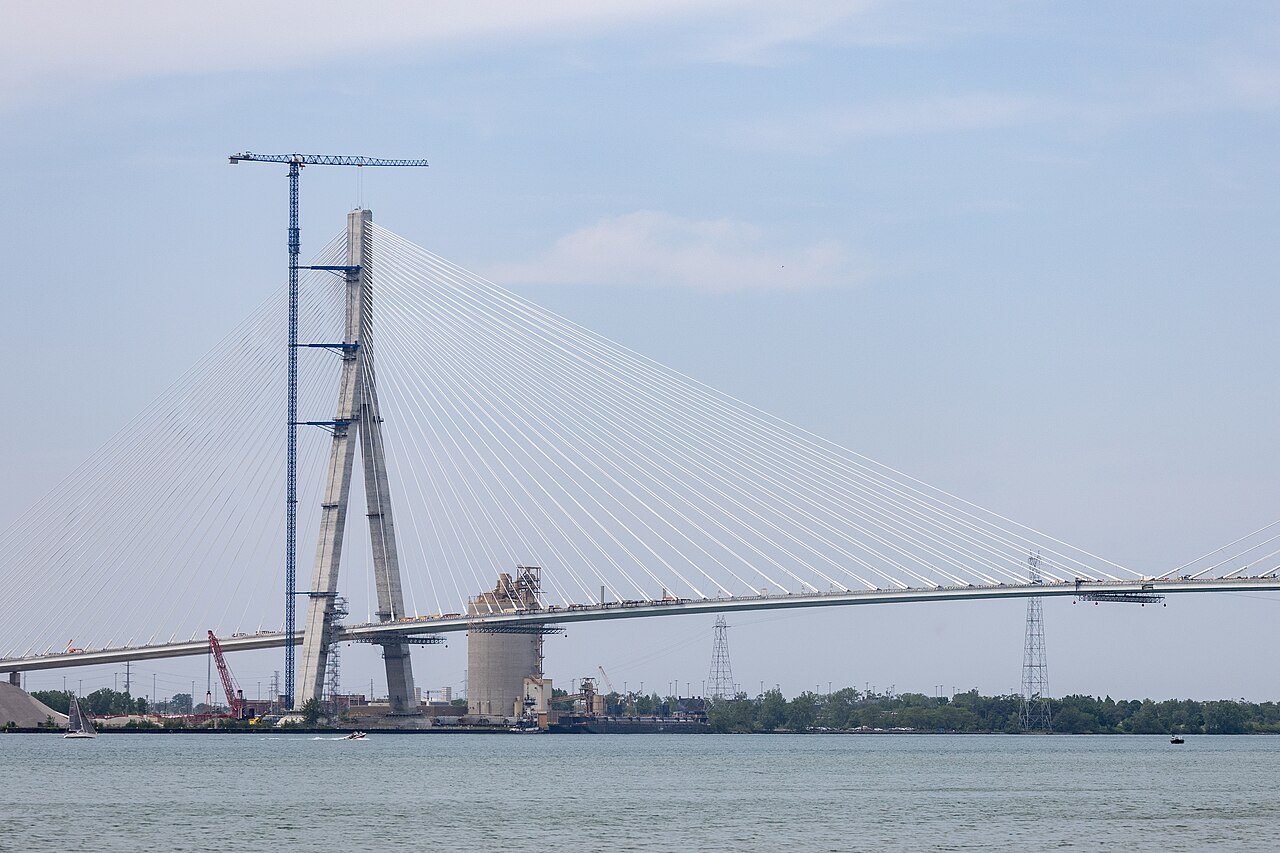
The $4.7 billion Gordie Howe International Bridge connecting Detroit and Windsor, Ontario, is set to open on July 27 after the United States and Canada reached a new agreement on toll revenue, ending months of uncertainty sparked by President Donald Trump’s objections to the original deal.
The cross-border bridge, originally scheduled to open in June, faced delays after Trump raised concerns in February over financial terms, arguing the United States was not receiving a fair share of the benefits. The bridge is named after Detroit Red Wings legend Gordie Howe.
Canada announced that the two countries had agreed on a package of measures covering toll governance, transparency, and regional investments, including a 15-year economic development fund financed by a portion of bridge profits.
Trump welcomed the revised agreement in a Truth Social post, saying the previous arrangement was "unacceptable" and describing the new deal as "great, and fair." Michigan Republican Senate candidate Mike Rogers also said Commerce Secretary Howard Lutnick helped secure a significantly improved agreement that would allow the bridge to open as planned.
According to sources familiar with the negotiations, the United States will receive 50% of toll revenue profits and gain the authority to veto toll increases exceeding 10% above current rates. The agreement was reportedly finalized following talks between Lutnick and Canada's Minister responsible for U.S. trade, Dominic LeBlanc.
The Gordie Howe Bridge has become a political issue in Michigan's Senate race, while Canadian Prime Minister Mark Carney previously confirmed that Canada agreed to delay the opening at the Trump administration's request.
Construction began in 2018 and was fully financed by Canada after the United States declined to contribute funding. The project was designed to recover construction costs through toll revenue over 30 years, although it remains unclear how the new revenue-sharing arrangement will affect repayment.
The bridge is expected to ease congestion at the privately owned Ambassador Bridge, currently the busiest commercial crossing on the U.S.-Canada border. The route handled approximately $126 billion in truck trade in 2023. A University of Windsor study estimates the new crossing will reduce travel times by about 20 minutes and save the trucking industry roughly $2.3 billion over the next three decades.