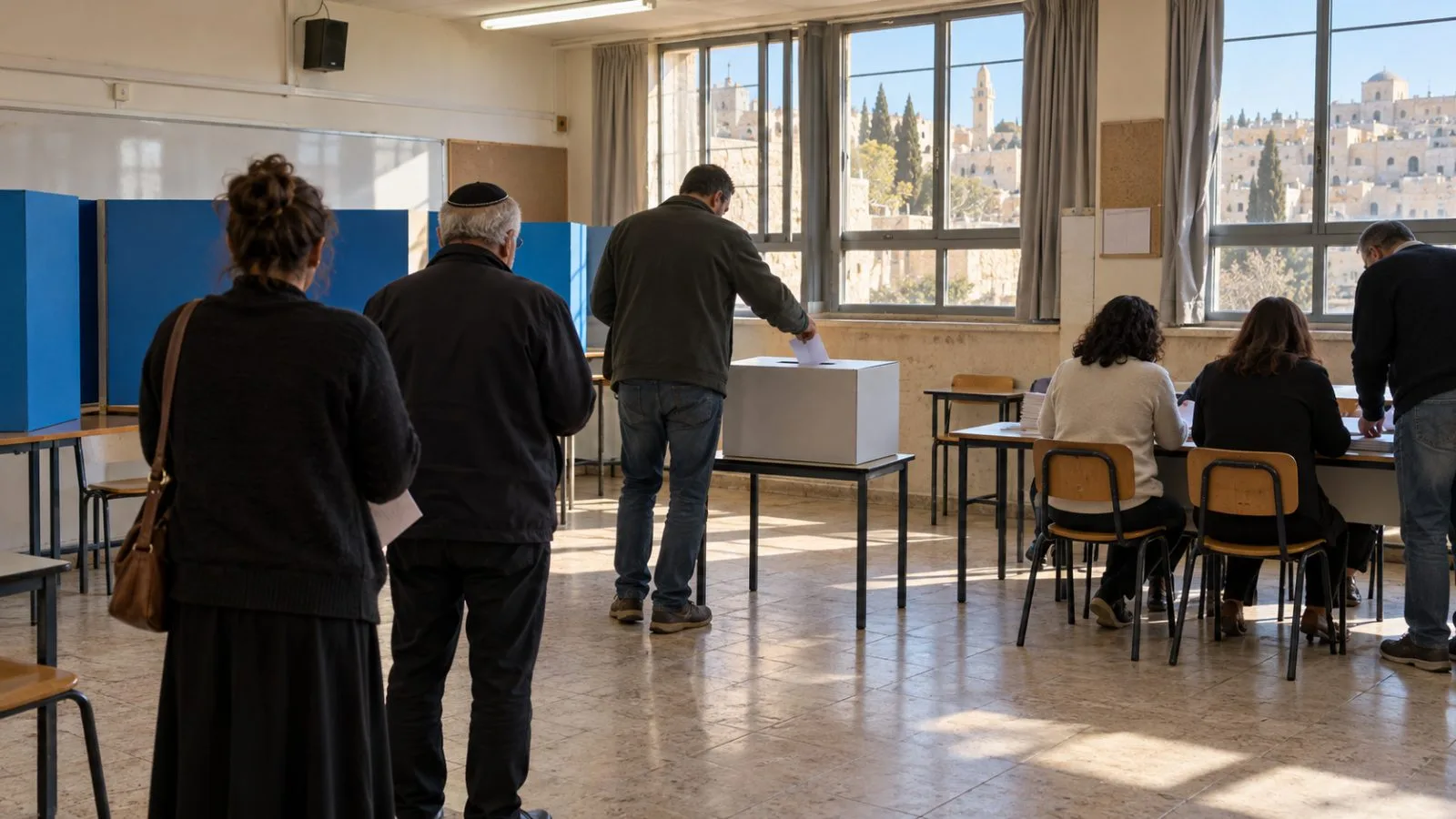
Anadolu and Reuters reported that Israeli broadcasters were expected to publish exit-poll projections when most polling stations close at 4 p.m. ET (8 p.m. UTC) Tuesday, giving voters an early estimate ahead of formal results.
The Central Elections Committee's timetable sets Nov. 4 for publication of official results. Anadolu also reported that initial results were expected overnight. Some stations, including those in small communities and special locations, are scheduled to close earlier, according to committee voter guidance.
Double-envelope ballots follow a separate verification and counting process. The Israel Democracy Institute says checks are intended to prevent a voter from having ballots recorded through this process and at an assigned polling station.
The institute's count for 2022 came to about 463,000 such ballots, close to one in 10 votes cast. It expects a larger number this year, citing mobilized soldiers, evacuees and voting arrangements for people with limited mobility.
Israelis vote for party lists rather than choosing a prime minister directly. Lists must receive at least 3.25% of valid votes to take part in the proportional division of the Knesset's 120 seats. A majority requires 61 seats. The threshold determines which lists receive seats, while each qualifying list's vote total shapes its share of parliament. The Central Elections Committee lists 7,336,553 eligible voters.
Pre-election polls put the main blocs below 61 seats, according to EconoTimes' earlier coverage of the election. The seat distribution will set the starting point for coalition talks, rather than directly name a prime minister.
After publication, the president consults parliamentary groups before assigning a lawmaker the task of forming a government; the assignment is due within seven days. The 28-day clock starts when the task is assigned, with a possible extension of up to 14 days. If the effort fails, further steps can bring another nominee into the process and may ultimately lead to new elections.