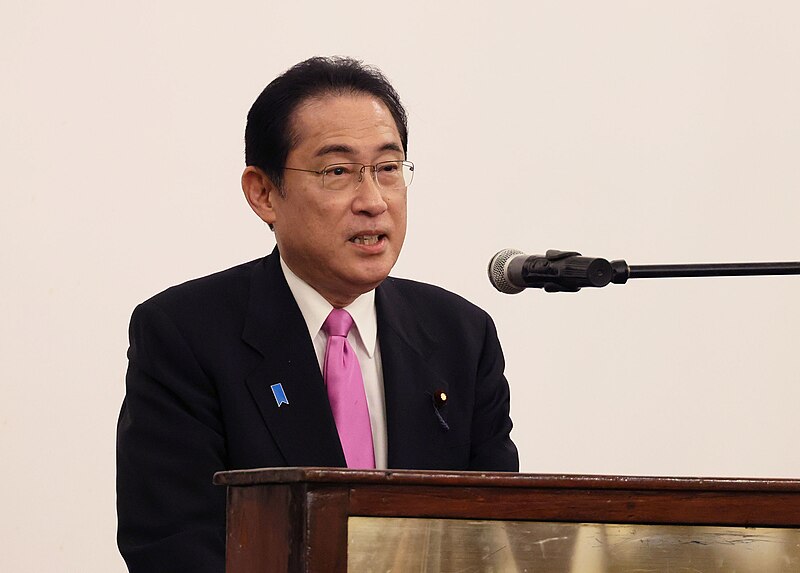
Japanese Prime Minister Fumio Kishida said there would be no tax increases to fund the government’s childcare policy. The policy comes as Tokyo looks to find a solution to the country’s declining birth rate.
On Monday, Kishida said during a government panel meeting with private sector experts in attendance that tax hikes would not fund the childcare package that aims to address the declining birth rate in the country. Japanese economy minister Shigeyuki Goto told reporters that the government will present draft guidelines to implement the childcare measures at the next meeting with the panel.
“I’m not considering imposing new tax burdens, including sales tax hikes, to secure sources of funding childcare support,” said Kishida, who has sought to double childcare spending to address Japan’s declining birth rate. The proposed measures, which were unveiled in March, would make it easier for parents to work and fairly divide household chores.
The proposed childcare policy would take place over a span of three years, but the government has yet to specify how the policy would be funded.
According to Japan’s Nikkei Daily, some proponents of securing stable funding suggested the possibility of creating a new special budget account aside from the state general account budget that would manage spending related to childcare funding reforms. The new account would reportedly be created through a partial merger of two existing accounts and would be run by the childcare agency, and would have greater flexibility in earmarking spending.
The new account follows 13 other special budgets that Japan already has in place.
Over the weekend, China summoned the Japanese ambassador to protest against what Bejing has referred to as the “hype around China-related issues” and the G7 summit in Hiroshima. This comes as the leaders of the G7 countries have expressed concerns about the flared tensions in both the East and South China Seas, as well as human rights concerns in China, such as the situation in Tibet and in Xinjiang.
Beijing said Japan collaborated with other countries at the summit “in activities and joint declarations…to smear and attack China, grossly interfering with China’s internal affairs, violating the basic principles of international law and the spirit of the four political documents between China and Japan” referring to the 1972 China-Japan Joint Communique.
Photo: Kantei.go.jp/Wikimedia Commons(CC by 2.0)