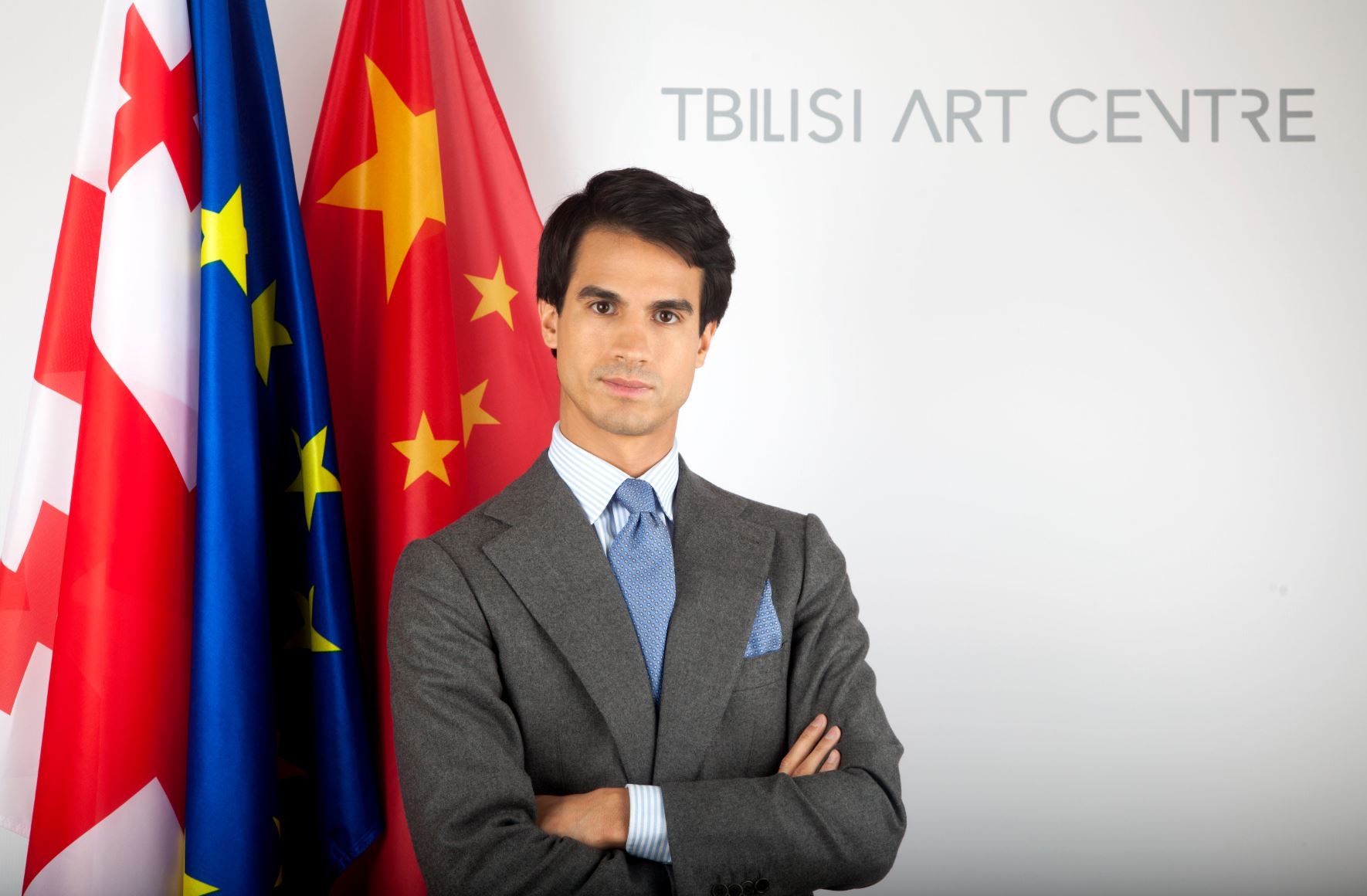
As a French expatriate who has made a name for himself as a successful businessman and prominent art collector in Tbilisi, Georgia, John Dodelande is uniquely poised to provide insight into a new group of young entrepreneurs from West Asian countries whom he describes as a rising global economic force. With his professional focus turned mainly to the countries that make up the historical Silk Road, such as Georgia, Azerbaijan, Kazakhstan, and China, Dodelande has aptly named this new group of commercial firebrands from that area as "Silk Road Entrepreneurs." He describes the members of this group as being “part of the history of their region” while simultaneously “possessing an international orientation.”
In an attempt to better understand who the Silk Road Entrepreneurs are and how they are helping to reshape global commerce and business models, we spoke with John Dodelande. The questions and answers have been edited for brevity and clarity.
Q: How would you characterize Silk Road Entrepreneurs?
A: "I would say that they have freed themselves from external stereotypes or preconceptions about their business practices, regardless of the field they are in—innovative technologies, agri-food companies, sustainable economy, or even the art market. They simply defy any attempt to lock them into stereotypes. Perhaps with the exception of within China, the people of the Silk Road are resistant and reluctant to conform to persistent clichés and categories of this kind. This has given them the freedom to build their reputation on neutral ground and to be judged purely on the basis of their seriousness and professionalism."
Q: What contributing factors led to the rise of the new generation of Silk Road Entrepreneurs?
A: “They have had a great hunger for success as well as some frustration at not being identified on the map of international business, relative to their peers from Western countries. Many of them have actually studied, traveled, and developed extensive business ties with Western countries. They all are eager to participate fully in the global economy and to end the North-South, East-West, Asian-Western dichotomies, since their countries are the very countries that have traditionally been caught in the middle. The Silk Road Entrepreneurs seek to redraw the map of the global economy by putting themselves at the center, offering the world their talent and new vision. I have to say that I’ve found in them an energy that I no longer can easily find in either Europe or the United States.”
Q: What are some of the political realities that produced the Silk Road Entrepreneurs?
A: “I would primarily point to their emergence from Soviet rule into democratically-minded, pro-NATO, independent countries that have a European orientation while nevertheless being firmly rooted in Asia. These are countries that have suffered from economic crises, wars, political fragility, and often even oppressive regimes. That history has prompted the younger generation to carefully weigh political and structural models. It has been fascinating to see them create a unique model of government that, on the one hand, parts ways with their recent political past but, on the other, does not seek to emulate the Western model. This thoughtful political reality has contributed to the commercial attitudes and views that have been embraced by the Silk Road Entrepreneurs.”
This article does not necessarily reflect the opinions of the editors or management of EconoTimes