A joint expedition organized by the Archaeological Legacy Institute, Purdue Research Foundation and Purdue University reported no conclusive evidence that a reflective lagoon feature on Nikumaroro was Amelia Earhart’s aircraft, leaving the wider search unresolved.
Researchers first drew attention to the Taraia Object in 2020 after spotting it in satellite images. Purdue said the feature is also visible in aerial photographs from 1938. By the time the team examined the area, only a Y-shaped piece remained. The expedition judged the larger anomaly was likely trees deposited along the Taraia Peninsula sandspit. Purdue said a carbonate veneer explained the surviving piece’s reflective surface.
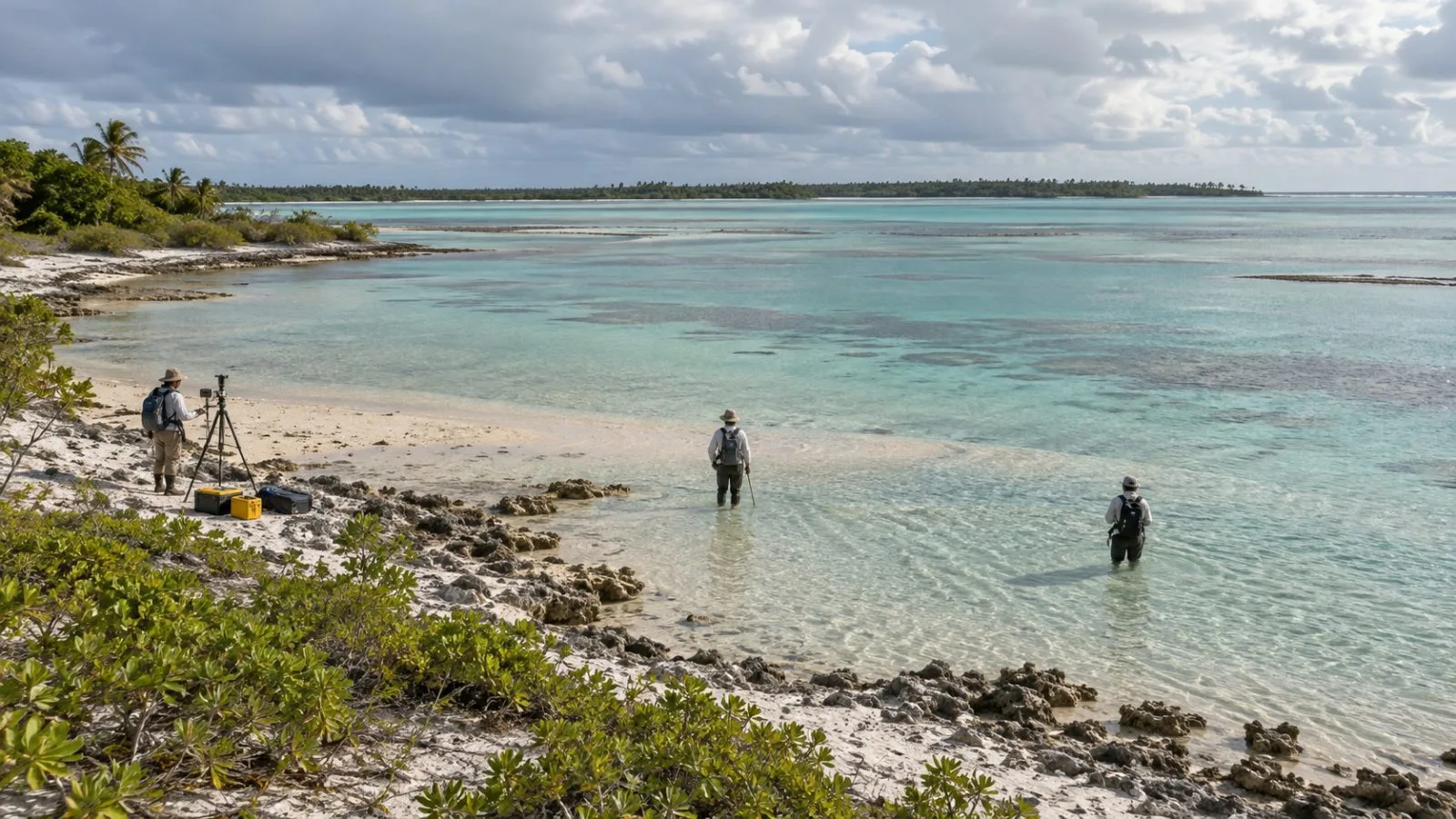
The 17-person team reached the atoll from Tarawa after a five-day passage. Its seven-day operation nearby included four days ashore, and Purdue said weather prolonged the expedition. Researchers found artifacts both on land and in the lagoon, including a steel tube about 30 inches long. Purdue said the finds may help assess a proposed route through Tatiman Passage, across the lagoon and onto the peninsula. The university has not connected the tube to Earhart.
Steve Schultz, Purdue’s general counsel and an expedition member, said: “We set out to test a hypothesis, not to guarantee a particular result.”
The finding concerns the Taraia Object alone. Purdue said expedition members continue to support a separate theory that Earhart and navigator Fred Noonan landed on Nikumaroro’s reef and became stranded there. The International Group for Historic Aircraft Recovery has developed that theory since the 1980s. Purdue says its proponents cite radio bearings, artifacts and a 2018 analysis of bones found on the island.
Earhart and Noonan disappeared on July 2, 1937, while flying from Lae, Papua New Guinea, toward Howland Island, about 400 miles northwest of Nikumaroro. Purdue said researchers will continue studying the newly found artifacts for what they may reveal about how objects move through the lagoon.