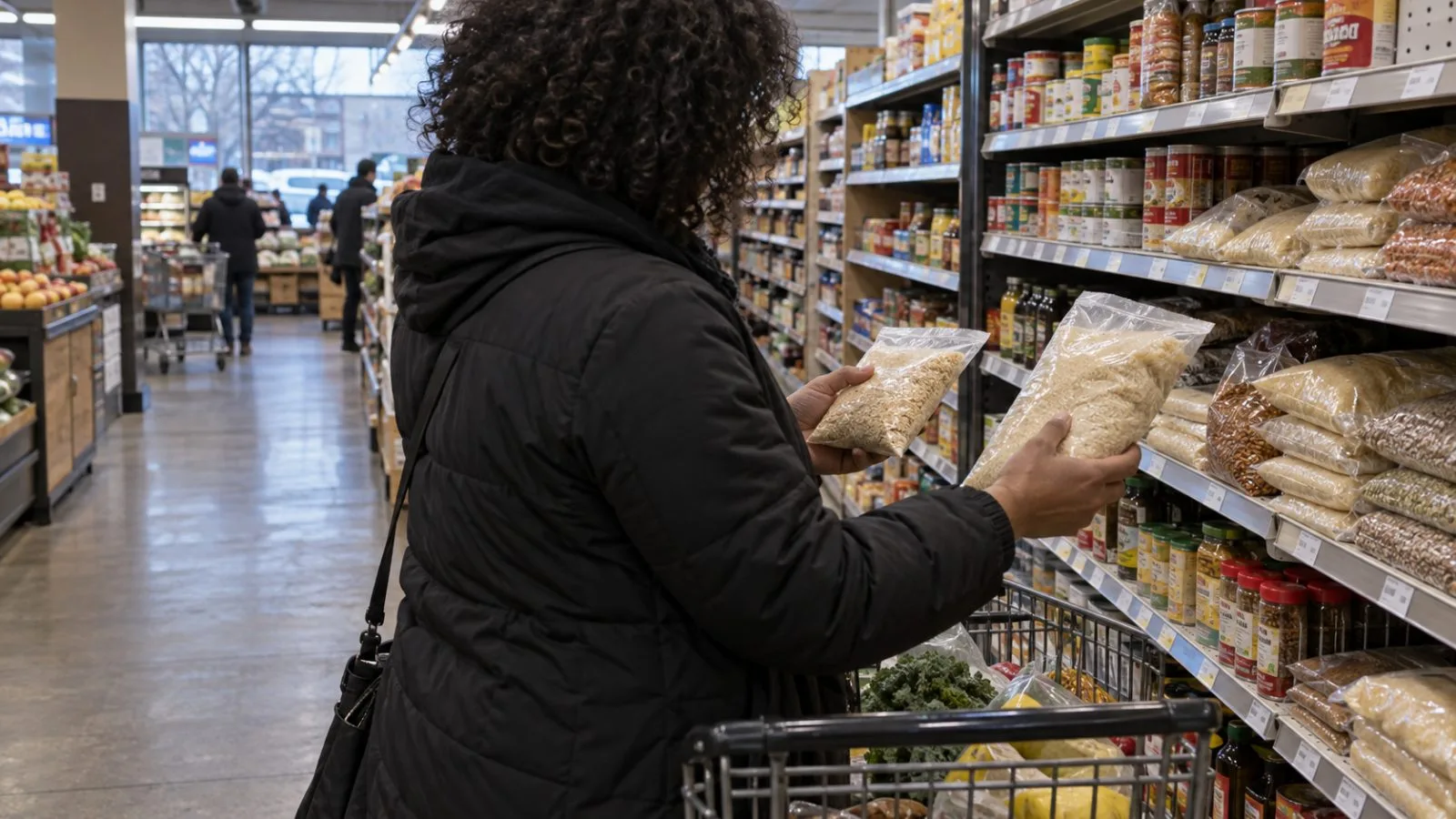
Former Federal Reserve Vice Chair Lael Brainard’s Kitchen Table Project proposed three grocery measures it estimates could save a family of four more than $1,000 a year, as food-at-home prices remained 1.8% higher in September.
The project’s report presents the savings as projections, not money shoppers have already saved. It also gives a separate estimate of $750 in first-year savings but does not explain how that figure fits with the package’s annual estimates.
The tariff proposal accounts for more than $320 in potential annual savings, assuming reductions on groceries and food inputs reach shoppers. The project argues that businesses can be quicker to raise prices as costs rise than to lower them when costs fall. Brainard told Kyla Scanlon’s newsletter that companies can be “very reluctant to lower them again when things like tariffs come back down.” The project proposes a Fair Grocery Price Taskforce that would use existing Federal Trade Commission investigative powers to track whether tariff reductions reach stores.
A second proposal would make per-unit costs easier to see and flag reductions in package sizes. The project estimates that clearer pricing could save a family more than $460 a year, using the lower end of research it cites: a 3% reduction in a typical family’s grocery bill.
A proposed federal purchasing partnership accounts for more than $315 in estimated annual savings. Participating grocers would offer a shared basket of staples at a capped margin. In the project’s comparison, federal procurement prices offered no price advantage for six of 20 items against fiscal 2025 commercial acquisition prices; eggs, milk and ground beef were among them. The project says larger pooled orders or changed market conditions could improve the savings potential.
The project’s polling found that 83% of respondents said tariffs had raised grocery costs and 73% said the same about the war in Iran. Those responses reflect the views of people surveyed, not measurements of how much either factor contributed to prices.
The U.S. Bureau of Labor Statistics (BLS) reported that food-at-home prices fell 0.1% from August on a seasonally adjusted basis but were up 1.8% from September 2025. The U.S. Department of Agriculture (USDA) reported a 0.1% monthly increase on an unadjusted basis and forecast food-at-home prices would rise 2.3% in 2026, compared with a 2.6% annual average increase from 2006 to 2025. The BLS scheduled its October CPI release for Nov. 10 at 8:30 a.m. ET.