


 OpenAI Revenue Hits $50 Billion, Below Earlier $70 Billion Estimate
  Deutsche Bank CEO Urges Faster German Economic Reforms
  Yandex Data Center Hit by Drone Strike as Russia-Ukraine Cyber Infrastructure Attacks Escalate
  France to Release 10 Million Barrels of Diesel to Ease Fuel Prices
  Anthropic Launches Claude Dashboards and Motion AI Tools
  Disney Expands Infinity Vision to Challenge Imax
  Xiaomi Shares Surge 7.6% as SkyNomad EV Orders Hit 70,000
  Oracle Uses Trucked Natural Gas to Power AI Data Centers Amid Pipeline Delays
  US Treasury Yields Ease After Strong 10-Year Auction as Global Bonds Struggle
  Deere, CNH and AGCO Stocks Fall as FTC Launches Farm Equipment Probe
  Wall Street Falls as Oil Prices Rise and Tech Stocks Slide
  Oil Prices Rise as Hormuz Risks Offset IEA Stock Release
  US Dollar Hits 18-Month High as Fed Signals More Rate Hikes
  Ledger Investigates Alleged $86 Million Crypto Wallet Theft
  Oil Prices Slip as Trump Rules Out Iran Strike Before Midterms
  US-Led Coalition Targets Global Factory Overcapacity
  Trump Secures Russian Diesel Deal as US Fuel Prices Surge


 Add as a preferred source on Google
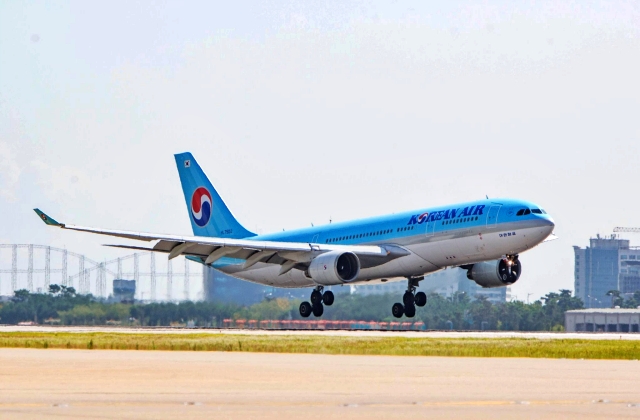
Korean Air, the biggest airline in South Korea, revealed on Monday, May 31, that it has earned another approval from two more countries over its acquisition of Asiana Airlines, a smaller local carrier. This means that it is getting closer to full take over of its former rival.
Approvals needed for the acquisition deal to go ahead
Yonhap News Agency reported that Korean Air did not only receive approval from Thailand’s watchdog but also from the Philippines. The two countries are the latest to greenlight the acquisition of Asiana Air, following Turkey that issued its approval in February.
Minus the three countries mentioned, Korean Air still needs to win the nods of regulators from the U.S., South Korea, China, Japan, Australia, the European Union and Vietnam. The carrier’s spokesperson confirmed that they are just awaiting the same positive response from the other countries and the ₩1.8 trillion or $1.6 billion acquisition deal will push through.
The South Korean airline previously said that it is aiming to merge with Asiana by 2024, after the completion of the takeover process that it is hoping to happen by next year. Once Korean Air and Asiana merged, it was predicted that it would become one of the largest airlines in the world.
Thailand completes Korean Air-Asiana merger review
Korean Air cleared another two countries for its Asiana Air acquisition and while it needs more nations to approve the deal, it is doing its best to gain their nod too. At this time, the airline is cooperating with the respective commissions and supplying them with the needed documents so it can finalize the merger and finish the acquisition process as soon as possible.
“Thailand’s Office of Trade Competition Commission recently completed its review of the business combination with Asiana, and stated that the submission of a prerequisite business combination report was not necessary,” Flight Global quoted Korean Air as saying in a statement today.
Meanwhile, Korean Air must have the approval from the regulatory board of economic competition from other countries to make sure that the merger will not affect other businesses. It is also needed to prevent monopoly in the air and travel business.







