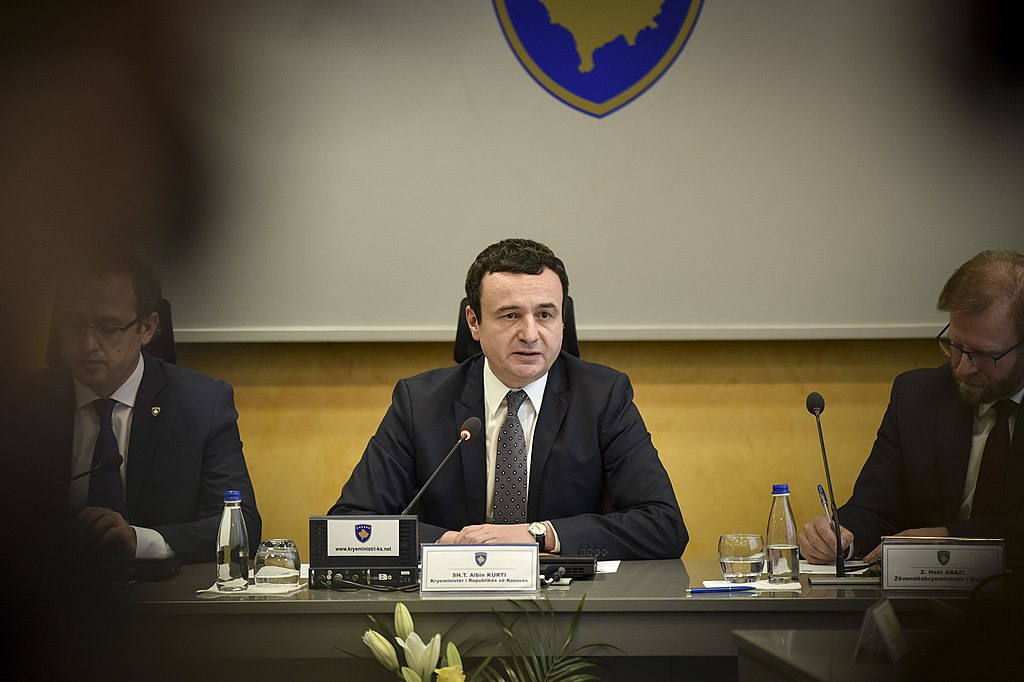
Kosovo is set to hold a crucial parliamentary election on Sunday as Prime Minister Albin Kurti and his nationalist Vetevendosje party attempt to secure a governing majority and resolve a year-long political stalemate that has paralysed parliament and delayed vital international funding. The vote comes at a critical moment for Europe’s youngest nation, where political uncertainty has raised concerns about economic stability and institutional continuity.
This will be Kosovo’s second parliamentary election this year after Kurti’s party failed to win an outright majority in the February vote. Prolonged and unsuccessful coalition negotiations led President Vjosa Osmani to dissolve parliament in November and call for early elections. Since then, Kosovo has struggled to pass key legislation and move forward with governance, deepening public frustration and political fatigue.
Failure to form a new government would further prolong the crisis at a sensitive time. Lawmakers are required to elect a new president in April and ratify approximately one billion euros in loan agreements from the European Union and the World Bank, funding that risks expiring if delays continue. These funds are seen as essential for economic development, infrastructure investment, and social programs in a country of about 1.6 million people.
Opposition parties have refused to govern with Kurti, accusing him of straining relations with Western allies and mishandling tensions in northern Kosovo, where an ethnic Serb minority resides. Kurti, in turn, has blamed opposition leaders for blocking progress and deepening the impasse.
During the campaign, Kurti has promised an extra month’s salary annually for public sector workers, increased capital investment of around one billion euros per year, and the creation of a new prosecution unit to combat organised crime. Opposition parties have also focused their messages on improving living standards and economic security.
With opinion polls not published in Kosovo, the election outcome remains uncertain. Polling stations open at 7 a.m. and close at 7 p.m., with exit polls expected shortly after voting ends. Many voters remain disillusioned, reflecting widespread concern about whether the election will bring meaningful change or simply extend the ongoing political crisis.