


 Office design isn’t keeping up with post-COVID work styles - here’s what workers really want
  Why have so few atrocities ever been recognised as genocide?
  Booked to travel through the Middle East? Here’s why you shouldn’t cancel your flight
  Google promotes ‘teacher approved’ apps for kids. Here’s what parents should know
  The American mass exodus to Canada amid Trump 2.0 has yet to materialize
  Yes, government influences wages – but not just in the way you might think
  1 in 3 uni students experience serious financial hardship. Could concession cards for all help?
  The ghost of Robodebt – Federal Court rules billions of dollars in welfare debts must be recalculated
  Why financial hardship is more likely if you’re disabled or sick
  6 simple questions to tell if a ‘finfluencer’ is more flash than cash
  Stuck in a creativity slump at work? Here are some surprising ways to get your spark back
  Disaster or digital spectacle? The dangers of using floods to create social media content
  Want to cut your energy bills? Here’s how five experts are doing it
  The pandemic is still disrupting young people’s careers


 Add as a preferred source on Google
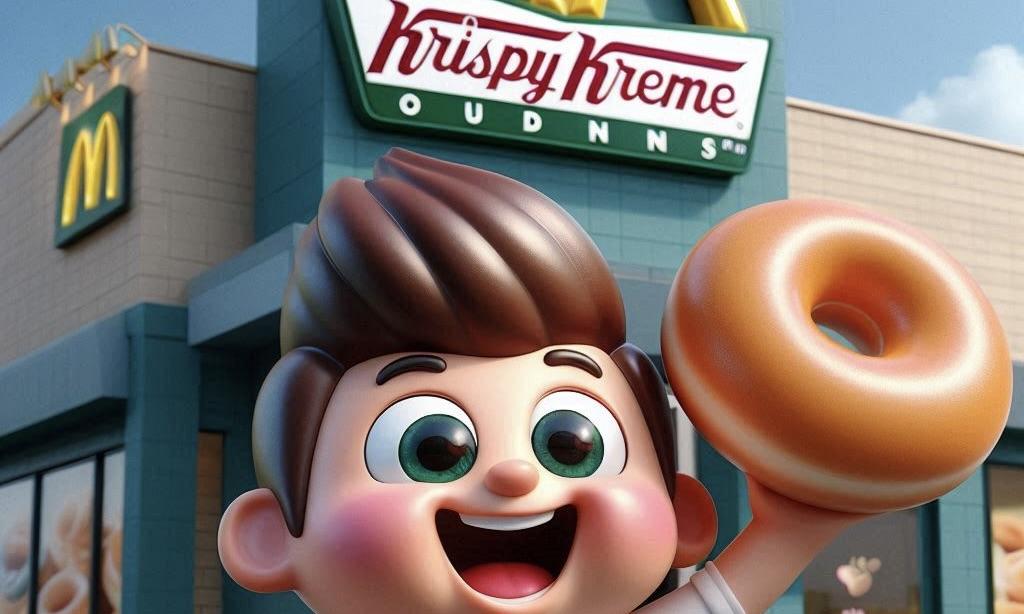
Krispy Kreme is rapidly expanding its presence in McDonald’s restaurants, reaching nearly 2,000 locations nationwide by year-end, up from an initial 1,000-store goal. CEO Josh Charlesworth announced that the rollout aims to increase brand visibility and enhance production efficiency, with further expansion planned through 2026.
Krispy Kreme Expands McDonald’s Partnership to Indiana and Ohio, Boosting Brand Visibility Nationwide
According to President and CEO Josh Charlesworth in the November 7 earnings call, Krispy Kreme doughnuts will be available in nearly 2,000 McDonald’s locations by year-end, doubling its earlier estimate of 1,000 stores just a month ago. Charlesworth confirmed the company remains on track to have doughnuts available in 12,000 McDonald’s outlets by 2026, per Restaurant Dive.
Next week, Krispy Kreme will begin delivering doughnuts to restaurants in Indiana and Ohio. Both states border Louisville, Kentucky, where the partnership was initially tested, and Chicago, where Krispy Kreme started deliveries to roughly 400 McDonald’s locations in October.
Charlesworth added that Pennsylvania and West Virginia are set to follow by late November, expanding the reach to another 1,000 restaurants.
“McDonald’s is supporting the launch with a comprehensive local marketing plan, including TV, social media, and out-of-home billboards,” Charlesworth stated. “We expect this increased visibility to benefit Krispy Kreme brand awareness as we expand to more cities across the country.”
Charlesworth noted that many of Krispy Kreme’s production facilities are operating below total capacity, with some producing only 25% of their maximum volume. The accelerated rollout at McDonald’s and other retailers “gives us the opportunity to improve the capital efficiency of the existing production hubs,” he said, adding that Krispy Kreme also plans to establish new high-capacity production facilities in underserved markets, such as Minneapolis and Massachusetts, to meet demand with faster payback.
Krispy Kreme Expands ‘Delivered-Fresh-Daily’ Network with Third-Party Logistics to Meet Growing Demand
Charlesworth assured analysts that the expansion into McDonald’s locations in the Chicago area has not caused noticeable sales cannibalization at existing Krispy Kreme shops. He mentioned that McDonald’s customers have embraced the addition, filling a gap left by removing McCafe pastries last year.
However, the rapid expansion of Krispy Kreme’s “delivered-fresh-daily” network—which supplies retailers and restaurants rather than direct-to-consumer delivery—is testing the company’s logistics capabilities.
CFO Jeremiah Ashukian stated that Krispy Kreme is exploring third-party delivery services for some of its retail and restaurant deliveries to address the strain on its distribution. This approach, Charlesworth explained, would allow Krispy Kreme to avoid scaling costs related to fuel and truck maintenance as its network grows. Following successful trials of third-party logistics, the company has issued a request for proposals to potential delivery partners.







