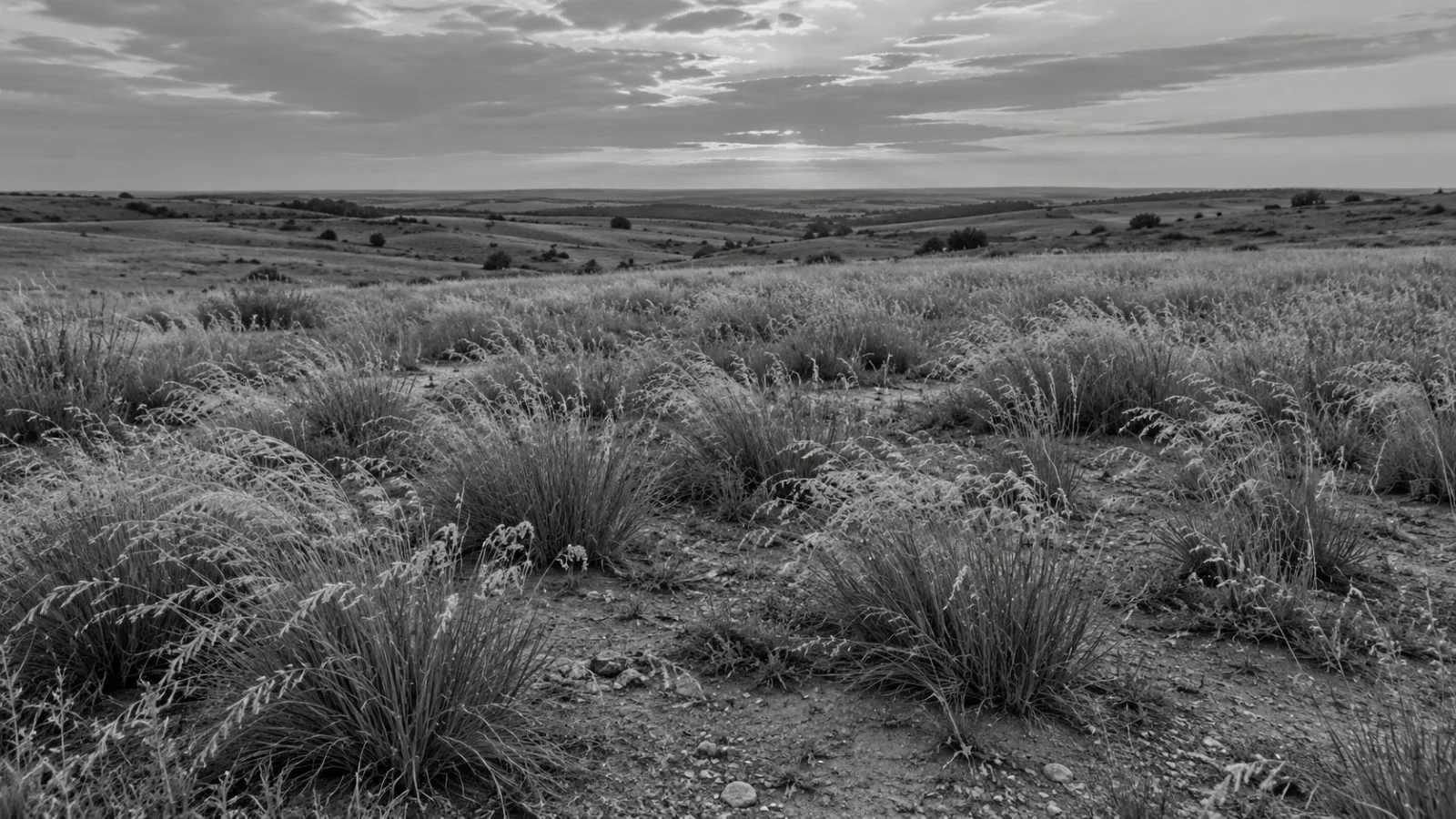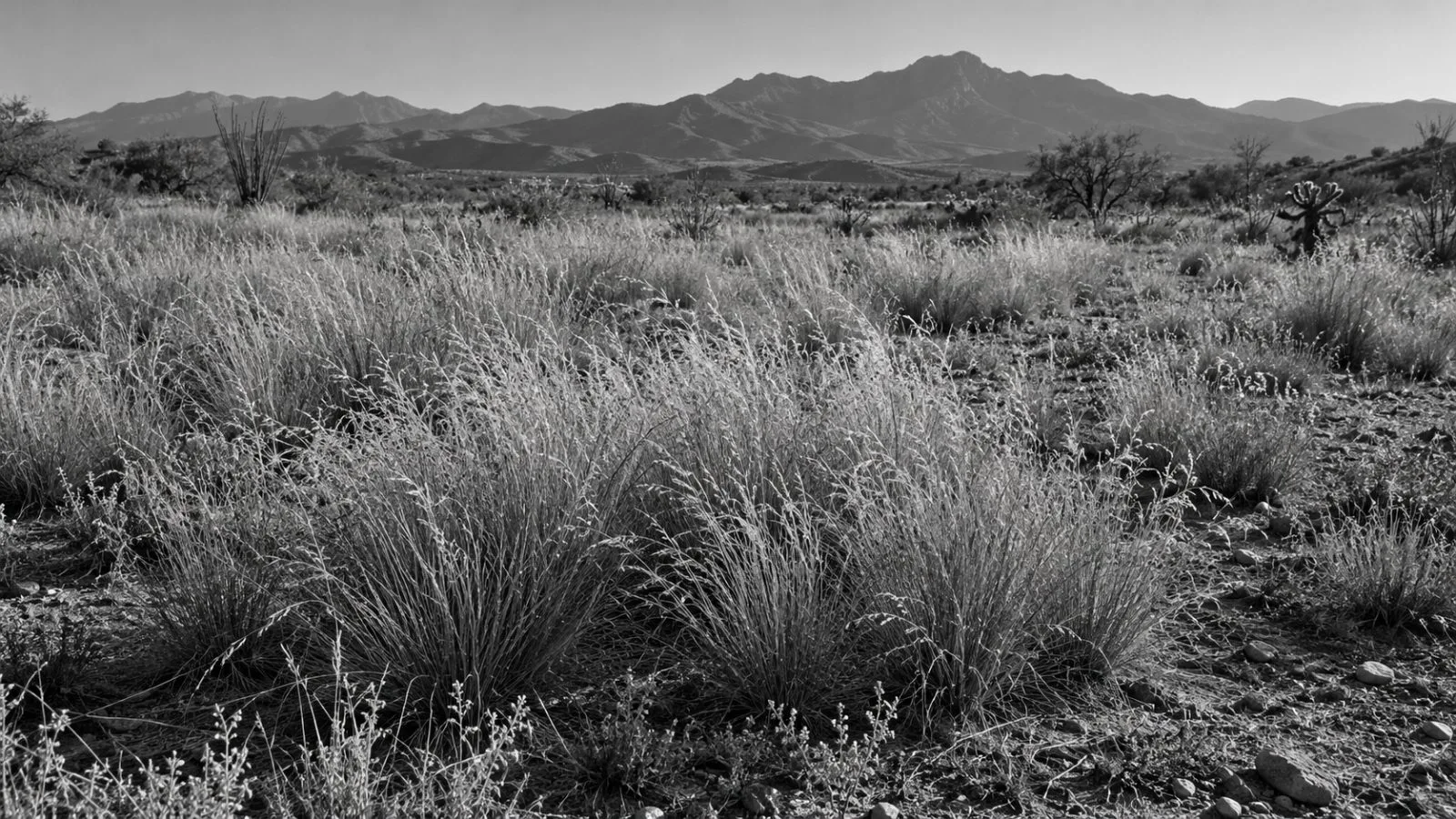
A South African grass introduced for range restoration had become a major species across about 347,000 acres in southeastern Arizona by 1988, with natural spread accounting for 182,000 acres, researchers estimated.
Seed from South Africa’s Griqualand West region reached the Boyce Thompson Southwestern Arboretum in Superior, Arizona, in 1932. F.J. Crider, the arboretum’s director, planted it there. Irrigation trials led him to select accession A-68 for its early maturity and seed yield. The U.S. Department of Agriculture’s Soil Conservation Service began a seed-production program in 1937, according to the 1988 account in Rangelands.
The account attributed nearly 155,100 seeded acres, or 94% of the total seeded area, to private landowners working with federal agencies. The Arizona Department of Transportation also seeded disturbed sites to address erosion, planting 4,100 acres from 1965 to 1985, mostly along Interstates 10 and 19.
A separate 1988 paper in the Journal of Range Management covered a wider region. It put plantings during 1940-80 above 70,000 hectares and described seed movement over a further 70,000 hectares in the U.S. Southwest and northern Mexico. The figures for that region and southeastern Arizona use different periods, geographic scopes and measures, so comparing them as a direct increase is an inference from those differences, not a like-for-like trend.
Researchers who studied the Santa Rita Experimental Range for a 1992 Biological Conservation paper assessed 75 plots that had not been seeded. Their 1989 results showed the grass in more than 85% of the plots, where it made up over 40% of the perennial grass plants counted. The authors found that the grass could spread without livestock grazing.
The U.S. Forest Service says Lehmann lovegrass displaced Arizona cottontop, threeawn and grama grasses across much of the range, while providing cattle with green forage in winter and early spring. The 1988 authors suggested seasonal grazing could give the grass a competitive edge: cattle tended to eat native grasses in summer and lovegrass more in fall, winter and spring, potentially weakening native plants. The 1992 study’s authors projected that dominance could reduce wildlife diversity and increase fire frequency; those effects were not measured by the study.