


 Apple Supplier Luxshare Faces US Patent Probe, Sees Limited Impact
  Jameson Lopp Downplays AI Threat to Bitcoin Cryptography
  TSMC Profit Set to Surge 65% as AI Chip Demand Drives Record Earnings
  US Suspends Microsoft, Adobe From Green Card Program
  Solidigm Taps Goldman, Morgan Stanley for $10 Billion US IPO
  Broadcom, Oracle and SpaceX Seek Billions in Private Debt for AI Expansion
  Anthropic Launches Claude Dashboards and Motion AI Tools
  Apple Names Steve Smith M&A Chief in Leadership Shakeup
  Elon Musk Accuses Indian Telecom Giants of Blocking Starlink Launch
  Samsung Q3 Profit Hits Record High on AI Memory Demand
  OpenAI Revenue Hits $50 Billion, Below Earlier $70 Billion Estimate
  Apple Supplier Luxshare Sees Limited Impact From US Patent Probe
  Tencent Shares Fall as $5 Billion AI Bond Sale Weighed
  Yandex Data Center Hit by Drone Strike as Russia-Ukraine Cyber Infrastructure Attacks Escalate


 Add as a preferred source on Google
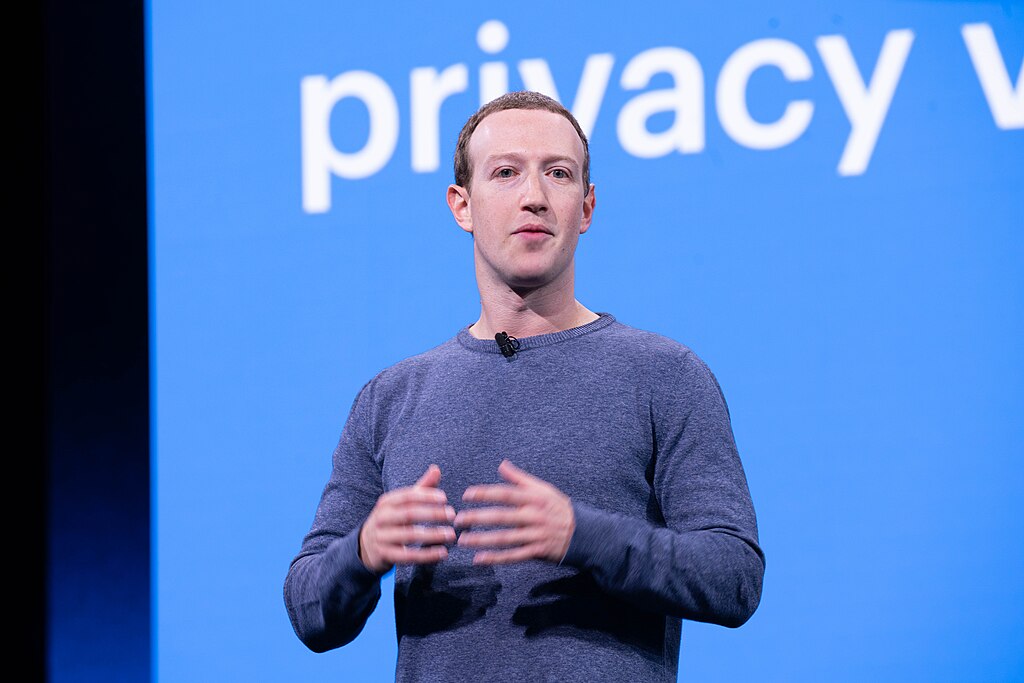
After the social media giant revealed its fourth-quarter earnings, investors in Facebook parent Meta's shares were in for a pleasant surprise: a 14% increase in shares.
Facebook CEO Mark Zuckerberg was interrogated by the Senate with "blood on his hands" from illegal content on his company's social media platform. The company announced its first dividend in history, and investors rewarded Meta with a spike in share price despite a challenging macroeconomic climate that caused worldwide advertising spending to decline.
In addition to announcing a substantial 25 percent increase in revenue, Meta's fourth-quarter results showed an equally impressive 201% increase in profits, as per Bloomberg. The company also announced a dividend without letting the public know about it before today's news release.
Mark Zuckerberg Emphasizes AI Focus Amidst New Dividend Policy and Market Response
Zuckerberg, like Alphabet CEO Sundar Pichai, focused his remarks on Meta's fourth-quarter results call on artificial intelligence. Meta is a significant player in artificial intelligence, much like Google, Microsoft, and Amazon. The company made headlines last month when Zuckerberg revealed that Meta will purchase hundreds of thousands of NVIDIA GPUs for his AI models this year.
Nevertheless, Meta had declared a 50-cent dividend for its Class A and Class B shares prior to his remarks. The company's earnings release also stated that the dividend would now be paid every three months as if that weren't shocking enough. Wall Street was forced to realign Meta's shares as a result, and in post-market trading, the company's management was rewarded with a healthy 14% increase in share price.
In comparison to several other companies, Meta's 50 basis point (0.50%) dividend yield on a 50-cent payout, based on its most recent regular hours closing price of $394.78, is quite low. The stock's annualized payout ratio is 13.4%.
Mark Zuckerberg Outlines Meta's Strategic AI Focus and Capacity Building Amidst Financial Shifts
Regarding expansion, Zuckerberg revealed that Meta's objective is to create the most sophisticated and well-liked artificial intelligence goods as well as offerings. This is being done with the intention of spreading AI to extensive use cases that give developers, entrepreneurs, and creative access to artificial intelligence models to suit their requirements. Furthermore, the Facebook CEO acknowledged that Meta's "leaner" approach helps it concentrate on staying competitive in the AI race.
In addition, Zuckerberg acknowledged that Meta had "underbuilt" its GPU clusters for Reels and that, in the process of building capacity, Meta should have built enough capacity to support both Reels and a "Reels sized A.I. service" in order to avoid having to deal with a capacity shortage sooner rather than later. According to Zuckerberg, future models will require more "compute-intensive" training and operation, though it's still unclear how big and capable they will be.
Photo: Anthony Quintano from Westminster, United States, CC BY 2.0, via Wikimedia Commons








.jpg)