


 SpaceX Delays Starship V3 Launch Ahead of Potential Record IPO
  SpaceX Prioritizes Moon Mission Before Mars as Starship Development Accelerates
  Trump Administration to Launch Autism Initiatives Targeting Acetaminophen Use and New Treatment Options
  Cogent Biosciences Soars 120% on Breakthrough Phase 3 Results for Bezuclastinib in GIST Treatment
  FDA Pilot Program Eases Rules for Nicotine Pouch Makers
  Trump and Merck KGaA Partner to Slash IVF Drug Costs and Expand Fertility Coverage
  China vs. NASA: The New Moon Race and What's at Stake by 2030
  SpaceX Pivots Toward Moon City as Musk Reframes Long-Term Space Vision
  SpaceX’s Starship Completes 11th Test Flight, Paving Way for Moon and Mars Missions
  NASA and Roscosmos Chiefs Meet in Florida to Discuss Moon and ISS Cooperation
  Blue Origin New Glenn Rocket Explodes During Launch Pad Test, Delaying Space Ambitions
  Neuralink Plans High-Volume Brain Implant Production and Fully Automated Surgery by 2026


 Add as a preferred source on Google
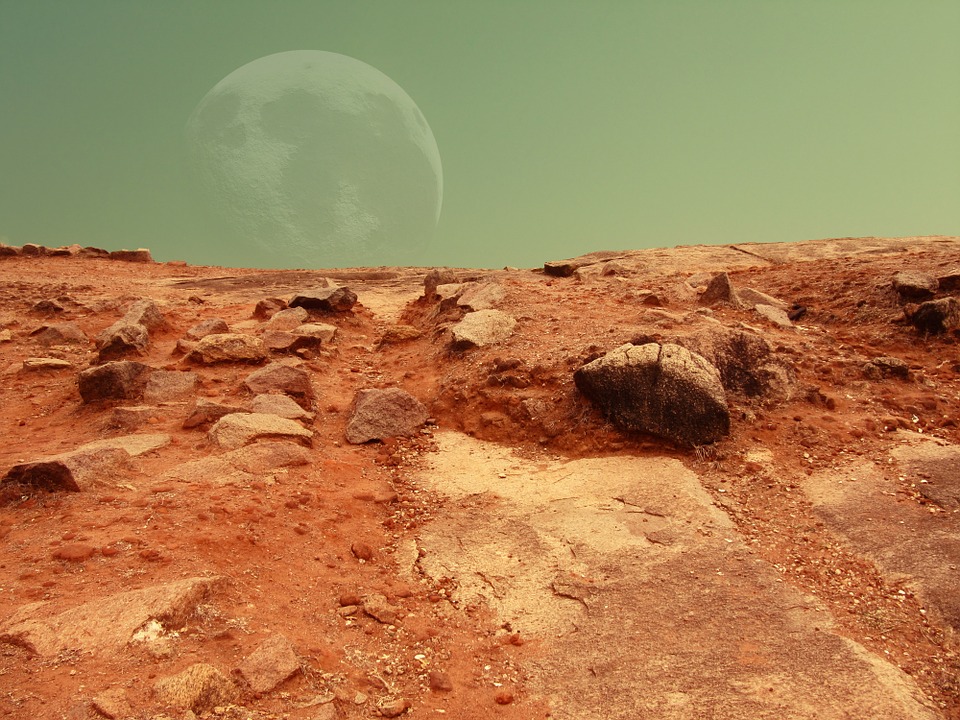
Space agencies all over the world are looking to Mars as the next destination in space exploration. With goals to colonize the Red Planet in the coming years, a report from NASA reveals that humans can make use of the planet’s lava tubes as a potential settlement.
Express reports that a study analyzing 1,500 photos taken by Mars’ Reconnaissance Orbiter, scientists believe that the lava tubes that may be present on the Red Planet’s terrain may provide shelter for astronauts that may be sent up there. These lava tubes were found in Hellas Planitia on Mars’ southern hemisphere, formed 4.1 to 3.8 billion years ago, and are known for having many volcanic formations.
The lava tubes on Mars were made from once-flowing magma and were formed when the magma flow cooled instantly. This resulted in a crust over the surface of the Red Planet. When the lava flow stops, it drains out the tube and leaves behind an empty space.
It is these formations that scientists believe could protect astronauts from solar or cosmic radiation that is present in space. Mars has a very thin atmosphere and a weak magnetic field; thus radiation is a big concern on the red planet. Scientists have estimated the exposure to radiation may decrease at around 82 percent within the lava pits. The caverns of the lava tubes may also be closed, providing a breathable environment for astronauts, who, in turn, could install heat sources inside.
According to the Center for Planetary Science director Dr. Antonio Paris, the lava tubes near the planet’s old volcanic mountain named Hadriacus Mons, could be used as a natural radiation shelter for crewed missions to Mars.
However, despite the optimism towards the possibility of being able to settle or stay on Mars for a period of time, a study conducted by the Southwest Research Institute in the United States reveals that the temperatures may be too extreme to find life outside Earth. The conditions on Mars prevent water from becoming stable, and instead, would either freeze, turn into vapor, or boil, including salt deposits or briny water.







