


 Best Gold Stocks to Buy Now: AABB, GOLD, GDX
  Gold Prices Rise as Dollar Weakens, Treasury Yields Fall
  US Dollar Hits 18-Month High as Fed Signals More Rate Hikes
  Gold Prices Fall as Fed Signals Another Rate Hike
  Oil Prices Trim Gains After Trump Rules Out Iran Strikes Before Midterms
  Asian Currencies Mixed as Yen Weakens, Dollar Holds Firm
  US Stock Futures Flat as Fed Minutes, Earnings Loom
  Oil Prices Rise as Hormuz Risks Offset IEA Stock Release
  Gold Prices Hit One-Week High as Oil Falls, Fed Rate Outlook Weighed


 Add as a preferred source on Google
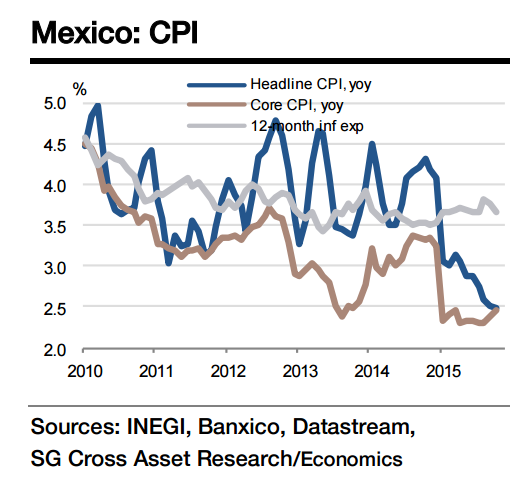
While the headline inflation rate has slipped further over the past couple of months, core inflation has moved up from 2.3% yoy in August to 2.47% yoy in October on the back of a rise in inflation in categories such as health and personal care, apparel, and furniture and domestic accessories.
Also, dwelling inflation - the key factor behind the sharp decline in inflation earlier this year - has moved up to 0.58% yoy from 0.45%. Mid-month inflation is expected to moderate to 2.47% yoy in November. In sum, core inflation has remained low, while stabilising or even rising, and the weakness in the headline inflation has been driven primarily by the food and transport segments. October and November data should hint that the deceleration (and critically, food inflation) is in last leg and that we will see it move above Banxico's target in January 2016.
Inflation should revert to its medium-term trend in 2016 when the base effect of lower telecom and energy prices ebbs. Essentially, the inflation situation remains conducive to Banxico's current accommodative stance, and growth and the Fed's stance are likely to be the key factors in monetary policy decisions over the next couple of quarters.

- News

- Economy

- Central Banks
- Investing
- Research
- Roundups
- Digital Currency
- Insights
- Technical Analysis
- Technology
- Business
- Law
- Health
- Nature
- Fintech
- Science
- Topic
- Opinions
- ©Econometrics LLC . All Rights Reserved.
Mexico inflation remains low on food and transport prices; core inflation rising
Tuesday, November 24, 2015 12:32 AM UTC
Editor's Picks



- Market Data
Most Popular




