Microchip reported a 200-krad(Si) radiation test result for its spaceflight processor, a development relevant to onboard computing that NASA’s FY26 report lists as the No. 3 of 32 civil-space technology shortfalls.
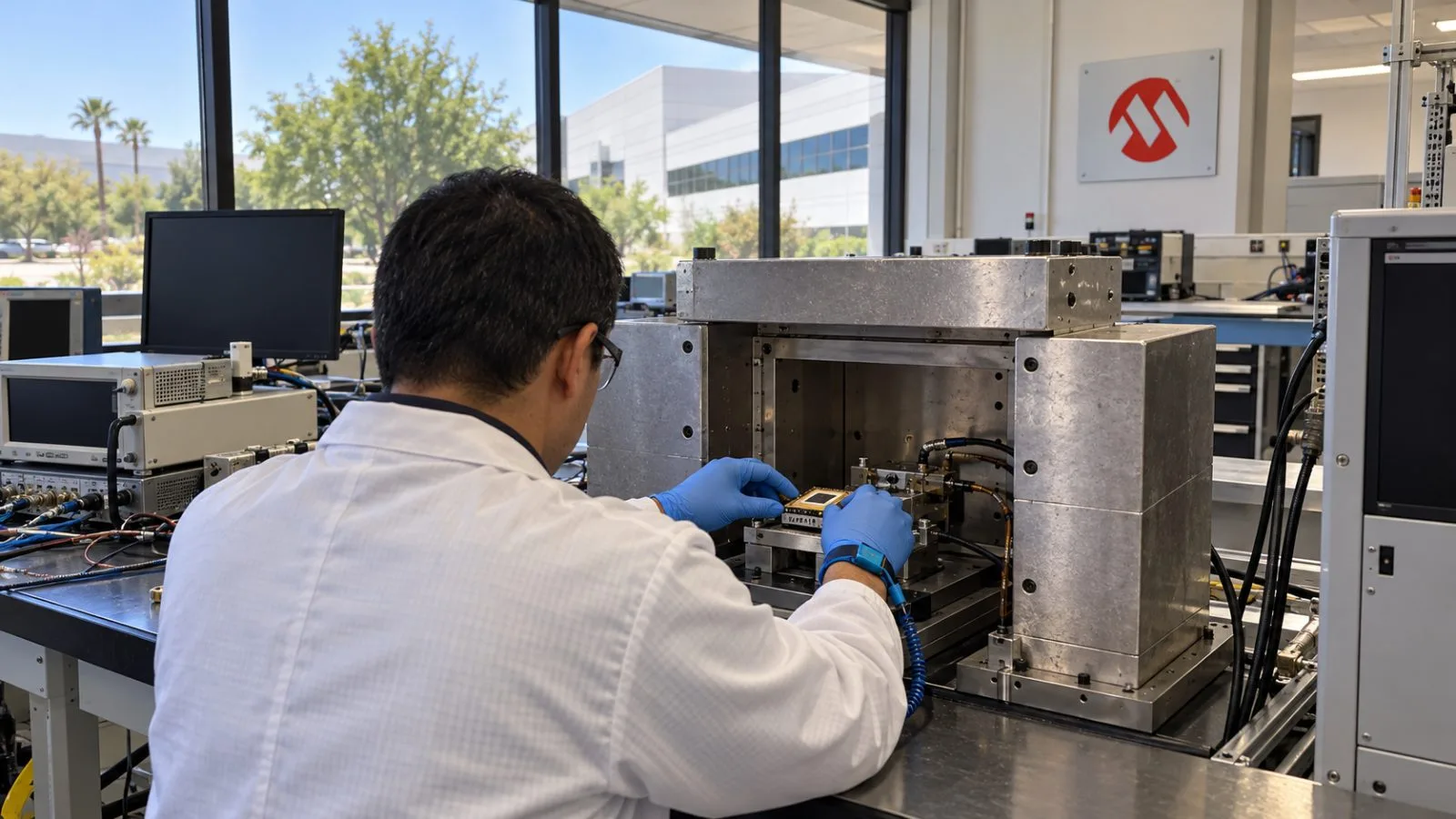
On Tuesday, Oct. 27, the company said characterization of the PIC64-HPSC1000-RH reached 200 krad(Si) for total ionizing dose (TID). It also reported a successful single-event latch-up (SEL) result at 78.2 MeV·cm²/mg under specified operating conditions. Microchip said the system controller did not leave errors uncorrected or require an external reset during single-event effects (SEE) testing completed so far.
Microchip’s product page lists a 100-krad(Si) TID rating for the PIC64-HPSC1000 and says it was tested to 200 krad. The announcement reports TID performance through 200 krad(Si), but the company did not explain the relationship between that result and its listed rating.
The company said select customers are reviewing processor silicon and development kits and have started application work. It did not identify those customers or report their evaluation results. Microchip also said board partners are developing VPX and VNX+ platforms, without naming the firms involved. Initial chip measurements were tracking program targets, the company said, but it provided no figures.
NASA’s FY26 Civil Space Shortfall Prioritization places advanced onboard computing third among 32 identified gaps, with the ordering based on quantitative feedback from stakeholders. The report includes radiation-tolerant computing for autonomy and navigation among the needs. NASA says radiation can damage spacecraft electronics and disrupt computing, while long communication lags on missions beyond Earth orbit limit real-time control from the ground.
NASA announced on Aug. 15, 2022, that its Jet Propulsion Laboratory had selected Microchip to develop the High-Performance Spaceflight Computing (HPSC) processor under a $50 million firm-fixed-price contract. NASA said Microchip would cover a significant, unspecified share of research and development costs. NASA’s project page said testing was underway as of March 2026 and says space qualification will follow testing; it gives no completion date.