


 NASA and SpaceX Target Crew-11 Undocking From ISS Amid Medical Concern
  Cogent Biosciences Soars 120% on Breakthrough Phase 3 Results for Bezuclastinib in GIST Treatment
  SpaceX Prioritizes Moon Mission Before Mars as Starship Development Accelerates
  SpaceX Delays Starship V3 Launch Ahead of Potential Record IPO
  NASA Artemis II: First Crewed Moon Mission Since Apollo Takes Four Astronauts on 10-Day Lunar Journey
  Neuralink Plans High-Volume Brain Implant Production and Fully Automated Surgery by 2026
  Trump Signs Executive Order to Boost AI Research in Childhood Cancer
  Blue Origin New Glenn Explosion Could Delay Launch Operations Until 2028
  SpaceX Pivots Toward Moon City as Musk Reframes Long-Term Space Vision
  Blue Origin’s New Glenn Achieves Breakthrough Success With First NASA Mission
  Trump and Merck KGaA Partner to Slash IVF Drug Costs and Expand Fertility Coverage
  Tabletop particle accelerator could transform medicine and materials science


 Add as a preferred source on Google
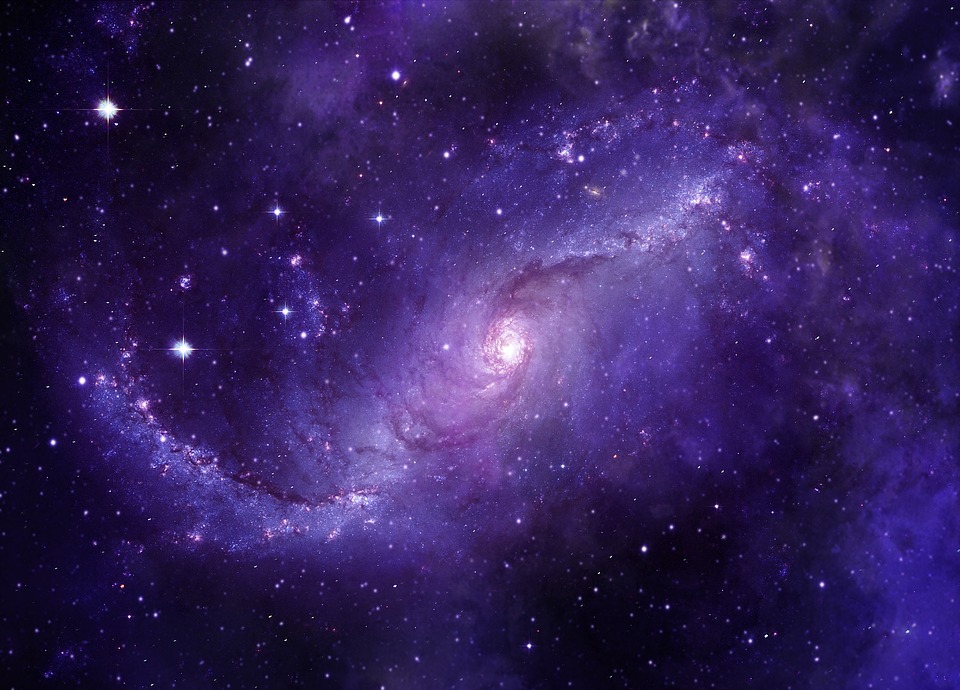
NASA and the European Space Agency’s Hubble Space Telescope is currently roaming through space, photographing the phenomena that occur. In one of its latest sightings, the US space agency released a photo taken by the Hubble of two galaxies merging.
Merging galaxies are a common occurrence in the universe, and the Hubble managed to spot the result of a galaxy collision in NGC 1614, which was first discovered back in 1885. NGC 1614 is found 200 million light-years away from Earth, and the agencies have described the shape of this galaxy as eccentric, similar in shape to that of a tadpole, with a tail made of an elongated stream of gas and stars.
“NGC 1614 was the result of an active galactic merger, which creates its peculiar appearance, including a tidal tail. The cosmic collision also drives a turbulent flow of interstellar gas from the smaller of the two galaxies involved into the nucleus of the larger one, resulting in a burst of star formation that started in the core and has slowly spread outward through the galaxy,” said the ESA.
According to astronomers, our very own Milky Way galaxy is also on its way to meet the same fate when it collides with the Andromeda galaxy. When our two galaxies collide, there is a big chance that our Sun would wind up in a new region of space. This collision is not going to happen any time soon as it will take around four billion years for the two galaxies to merge. It should also be noted that once this merge happens, life on Earth at the time will remain unaffected.
Speaking of the Milky Way, scientists at the Max Planck Institute discovered a distant galaxy with some experts claiming that it looks similar to our own home galaxy. The distant galaxy, referred to as SPT0418-47 is found 12 billion light-years away from Earth. Astronomers also found that this particular galaxy is not chaotic, which is in contrast to the theory that galaxies are usually turbulent or unstable.
While SPT0418-47 does not have the characteristic spiral arms, it does have two other parts that could also be found in our Milky Way, which is a bulge and a rotating disc.







