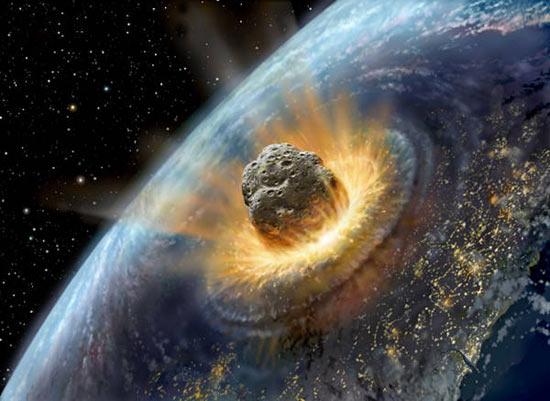
The National Aeronautics and Space Administration (NASA) recently announced the creation of a Planetary Defense Coordination Office (PDCO) to help detect and track thousands of asteroids passing near Earth each year.
The central office will manage all NASA-funded projects to detect, monitor and characterize asteroids and comets that pass near Earth's orbit. If an actual impact threat is detected, the office will also coordinate NASA's response with the Federal Emergency Management Agency (FEMA) and other US federal agencies.
"While there are no known impact threats at this time, the 2013 Chelyabinsk super-fireball and the recent 'Halloween Asteroid' close approach remind us of why we need to remain vigilant and keep our eyes to the sky," John Grunsfeld, associate administrator for NASA's Science Mission Directorate in Washington, said in a statement.
NASA says there have been more than 13,500 Near Earth Objects [NEOs] of varying sizes discovered since NASA-funded surveys began in 1998. According to current NASA data, roughly 1,500 NEOs are detected each year. The new office will focus on finding mid-sized but still potentially hazardous objects that are 450 feet (137 meters) or larger.
The organization's long-term planetary defense goals will focus on developing technologies and techniques for deflecting or redirecting objects that pose a threat of impacting Earth. Such techniques include NASA's Asteroid Redirect Mission, which plans to launch a spacecraft to an asteroid where it will capture a boulder for later analysis and redirect the asteroid to a stable orbit around the moon. The joint NASA-European Space Agency Asteroid Impact and Deflection Assessment (AIDA) mission scheduled for 2022 will test the ability to redirect an asteroid by hitting it with a spacecraft.
If the new office finds that there is no way to intervene with an asteroid impacting Earth, NASA would provide expert advice and data to FEMA and other government agencies so that they can prepare for an emergency response.