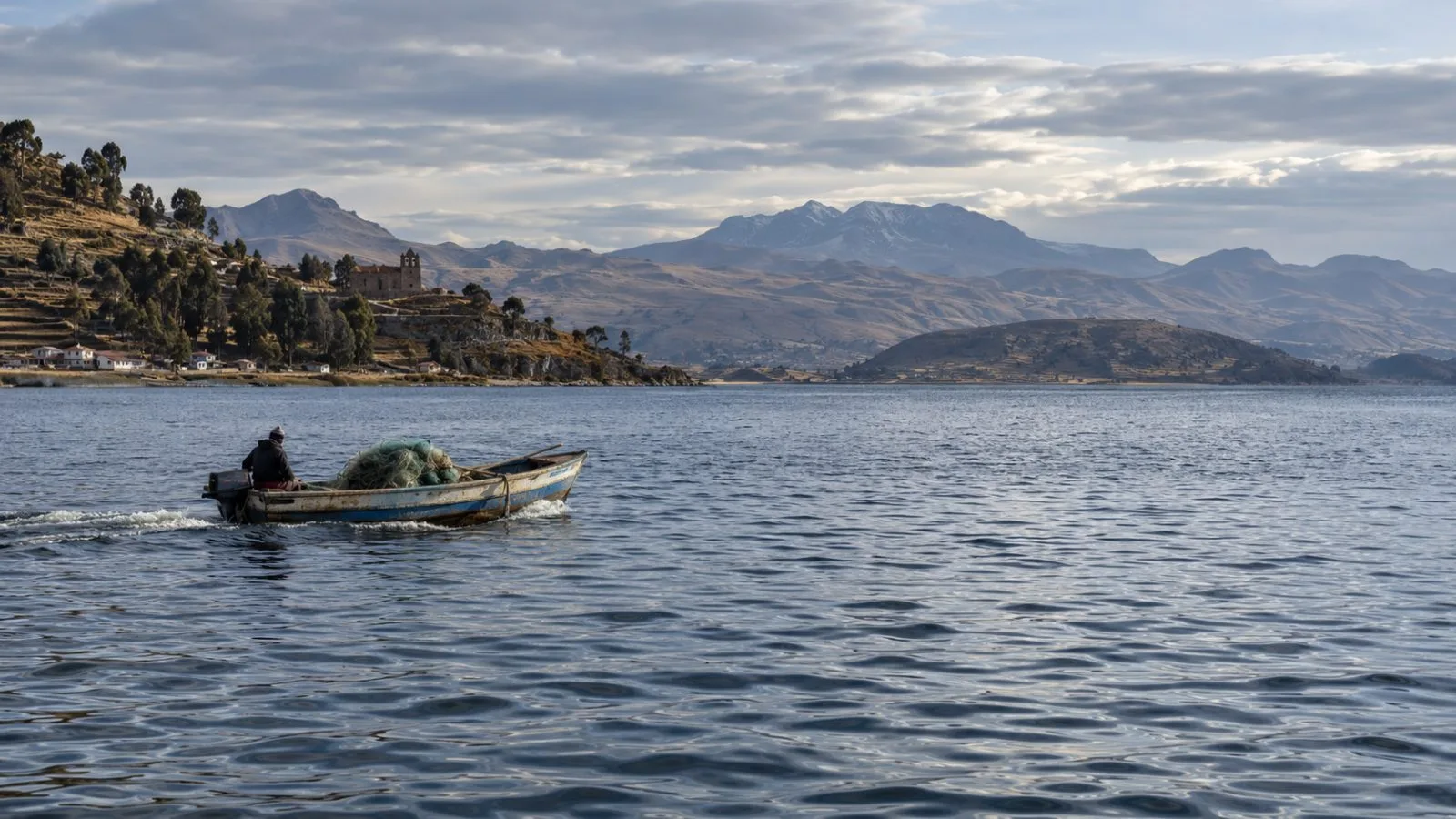
Introduced fish may have harmed Lake Titicaca’s native species mainly by competing with them, rather than by eating them, according to a study published online Oct. 16 in the Journal of Fish Biology (Villar et al.). The lake, shared by Peru and Bolivia, was the focus of a U.S.-supported stocking effort intended to expand commercial fishing (Hampton et al., Limnology and Oceanography).
The researchers compared morphological data from native and introduced fish. Endangerment or extinction risk was greater among larger native species and those with physical traits closer to introduced fish; higher-risk species also faced less fishing pressure. Villar and co-authors said this pattern “strongly suggests that competitive exclusion is the primary way that invasive species cause native fish declines in Lake Titicaca” (2026 study abstract).
U.S. government records document a series of stocking efforts rather than one simple introduction. A federal fisheries account says about 30,000 2-inch lake-trout fingerlings were planted in June and July 1940; a 2011 presentation by Peru’s Regional Directorate of Production dates the U.S. rainbow trout introduction to 1942 and lists fishing, food and aquaculture as its purposes (U.S. Bureau of Fisheries; Peru Regional Directorate of Production).
The often-cited figure of about 500,000 trout eggs comes from a Smithsonian Magazine account, which also reported that 2 million whitefish eggs were sent. The official records reviewed confirm trout stocking and periodic egg supplies, but do not verify those totals (U.S. Bureau of Fisheries, fiscal 1936 report; The Peruvian Fisheries).