


 Trump Announces Massive Oil and Mineral Exploration Plans in Greenland
  Container Ship Sinks in Strait of Hormuz as Iran Attacks Escalate
  Flavio Bolsonaro Backs Brazil’s 40-Hour Workweek Reform Ahead of Runoff
  Jordan Bardella Antisemitism Allegations Threaten Le Pen’s Campaign
  US Recalls Nicaragua Envoy After Ambassador Rejection
  FBI Denies Report of Kash Patel’s Russia Visit
  Netanyahu Rejects Preemptive Iran Strike Ahead of Israel Election
  Elon Musk Donates $366 Million to 2026 US Midterms
  US Justice Department Drops Prosecution of Ex-CIA Analyst Sue Mi Terry
  Gaza Olive Harvest Collapses as War Destroys Farmland
  Zelenskiy Says Ukraine Received No Warning Before Russian Missile Attack
  UN Urges Talks on Lebanon Peacekeeping Mission Extension
  China Resumes US Soybean Purchases After Trump-Xi Summit
  US Condemns China Sanctions on Taiwan Allies Belize and Paraguay
  SpaceX Starlink Restrictions Disrupt Ukraine Military Operations
  Zelenskiy Seeks New US Talks to Revive Ukraine-Russia Peace Negotiations


 Add as a preferred source on Google
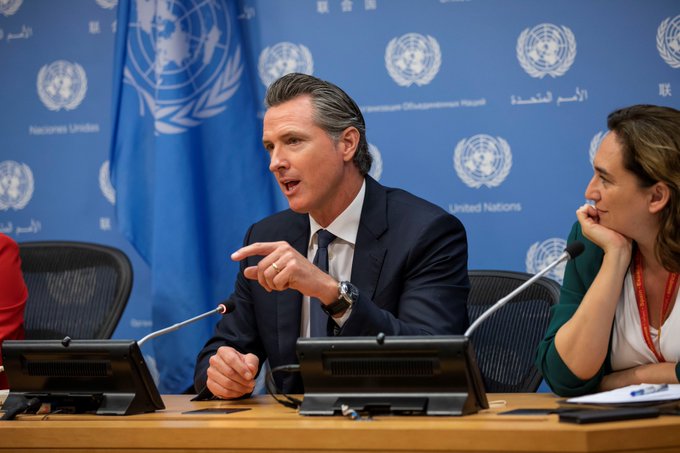
California Governor Gavin Newsom has announced a bold plan to counter potential federal policy changes under President-elect Donald Trump’s administration. On Monday, Newsom proposed reinstating a state-funded electric vehicle (EV) rebate program should Trump eliminate the federal EV tax credit, a policy that has significantly supported clean energy growth nationwide.
California’s Plan to Revive EV Rebates
Newsom’s proposal seeks to revamp California’s Clean Vehicle Rebate Program (CVRP), which ended in 2023 after helping nearly 600,000 residents purchase EVs. This initiative reportedly saved over 450 million gallons of fuel, according to Newsom’s office. The new program would be funded by California’s Greenhouse Gas Reduction Fund, a resource generated through the state’s cap-and-trade system.
While exact details about the program’s cost and rebate structure remain undisclosed, Newsom hinted that further information will be revealed during an upcoming event in Kern County. The proposed rebates aim to maintain California’s leadership in clean energy, which has already seen over 2 million zero-emission vehicles sold statewide.
The announcement comes amid Trump’s threats to repeal federal EV tax credits, valued at up to $7,500 for new EVs and $4,000 for used models. These credits, critical to EV adoption, are at risk as Trump positions himself against green energy initiatives. However, Elon Musk, Tesla’s CEO and a key supporter of the incoming administration, may influence Trump’s stance.
Trump’s Evolving Stance on EV Credits
On the campaign trail, Trump pledged to eliminate EV tax credits, framing them as unnecessary subsidies. Yet, since Musk’s growing involvement as an adviser in Trump’s administration, there have been signs of softening rhetoric. Musk’s leadership at Tesla has propelled the global EV industry, making the credits instrumental in boosting the company’s growth and, by extension, Musk’s business interests.
California’s defunct rebate program, which offered buyers up to $2,500 per vehicle, could soon see a revival. Newsom has emphasized that the updated plan would encourage innovation and competition in the EV market while combating rising gas prices.
In 2023, Californians purchased 446,961 new EVs, a 29% increase from the previous year, according to Veloz and the California Energy Commission. With the federal credits in jeopardy, state-level programs could play a crucial role in sustaining this momentum.
California vs. Trump: A Clash Over Climate Policy
Newsom’s plan represents a broader clash with Trump’s administration over environmental policies. California, with its strict emissions standards and a goal to ban gasoline-powered vehicles by 2035, has long been at odds with federal policies. Trump, however, has pledged to prevent states from enacting their own emissions regulations.
California, already facing the nation’s highest average gas prices at $4.96 per gallon, has been pushing aggressive climate policies to address global warming and reduce dependence on fossil fuels. Newsom recently signed legislation aimed at combating rising energy costs, further escalating tensions with the oil industry.
Netizens React to Newsom’s Proposal
Social media lit up following Newsom’s announcement, with users expressing both support and skepticism:
- @GreenAdvocate: “Newsom stepping up for clean energy while Trump dismantles progress? Classic California leadership!”
- @EVFanatic: “A new rebate program could save the day for EV buyers. Hope this actually happens!”
- @RightWingReality: “Newsom wasting more taxpayer dollars on green fantasies. Federal policies should trump state overreach!”
- @TeslaLover2024: “Musk backing Trump while California fights for EVs. The irony is unreal.”
- @ClimateWarrior: “California leading the fight against fossil fuels yet again. Proud to live here!”
- @PolicyWatcher: “Federal EV credit removal will hurt everyone. Newsom’s plan might be the Band-Aid we need.”







