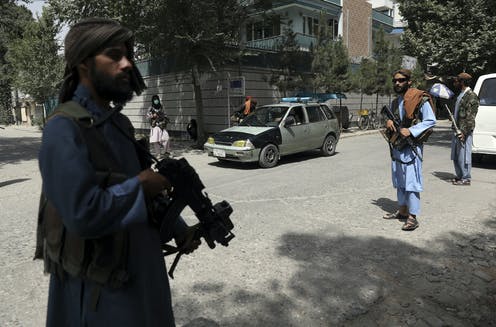
Afghanistan’s Taliban government said it is ready to negotiate with Pakistan after a sharp escalation in cross-border violence that both sides have described as an “open war.” The crisis intensified when Pakistan launched airstrikes targeting Kabul, Kandahar, and other Afghan cities, accusing the Taliban of harboring militants responsible for attacks inside Pakistan.
Taliban spokesperson Zabihullah Mujahid confirmed that Pakistani airstrikes struck parts of Kabul, Kandahar, Paktia, Paktika, Khost, and Laghman. Thick smoke and large fires were reported in the Afghan capital, with witnesses describing loud explosions and emergency sirens. A Kabul resident said an ammunition depot was hit, causing secondary blasts as stored ordnance ignited. Taliban officials reported civilian casualties but did not provide detailed figures.
Pakistan stated that its military carried out air-to-ground missile strikes on Taliban military positions in response to Afghan drone attacks along the shared border. Islamabad claimed the strikes killed 274 Taliban officials and militants, while Afghanistan said it killed 55 Pakistani soldiers. Reuters could not independently verify those numbers. Pakistan confirmed 12 of its soldiers died, and Afghanistan acknowledged the loss of 13 Taliban fighters.
The conflict stems from long-standing tensions over Pakistan’s allegation that Afghanistan shelters Tehreek-e-Taliban Pakistan (TTP) militants. Kabul denies providing safe haven, insisting that Pakistan is shifting blame for its internal security challenges. The United Nations has previously noted links between the Afghan Taliban and the TTP.
UN Secretary-General Antonio Guterres expressed deep concern and called for an immediate ceasefire and diplomatic resolution. The United States voiced support for Pakistan’s right to defend itself, while the European Union urged de-escalation and dialogue.
With Pakistan’s superior military strength and Afghanistan’s experienced guerrilla forces, fears are rising of prolonged instability along the 2,600-kilometer border. Qatar and other regional actors are reportedly working to mediate and prevent further escalation in the Afghanistan-Pakistan conflict.