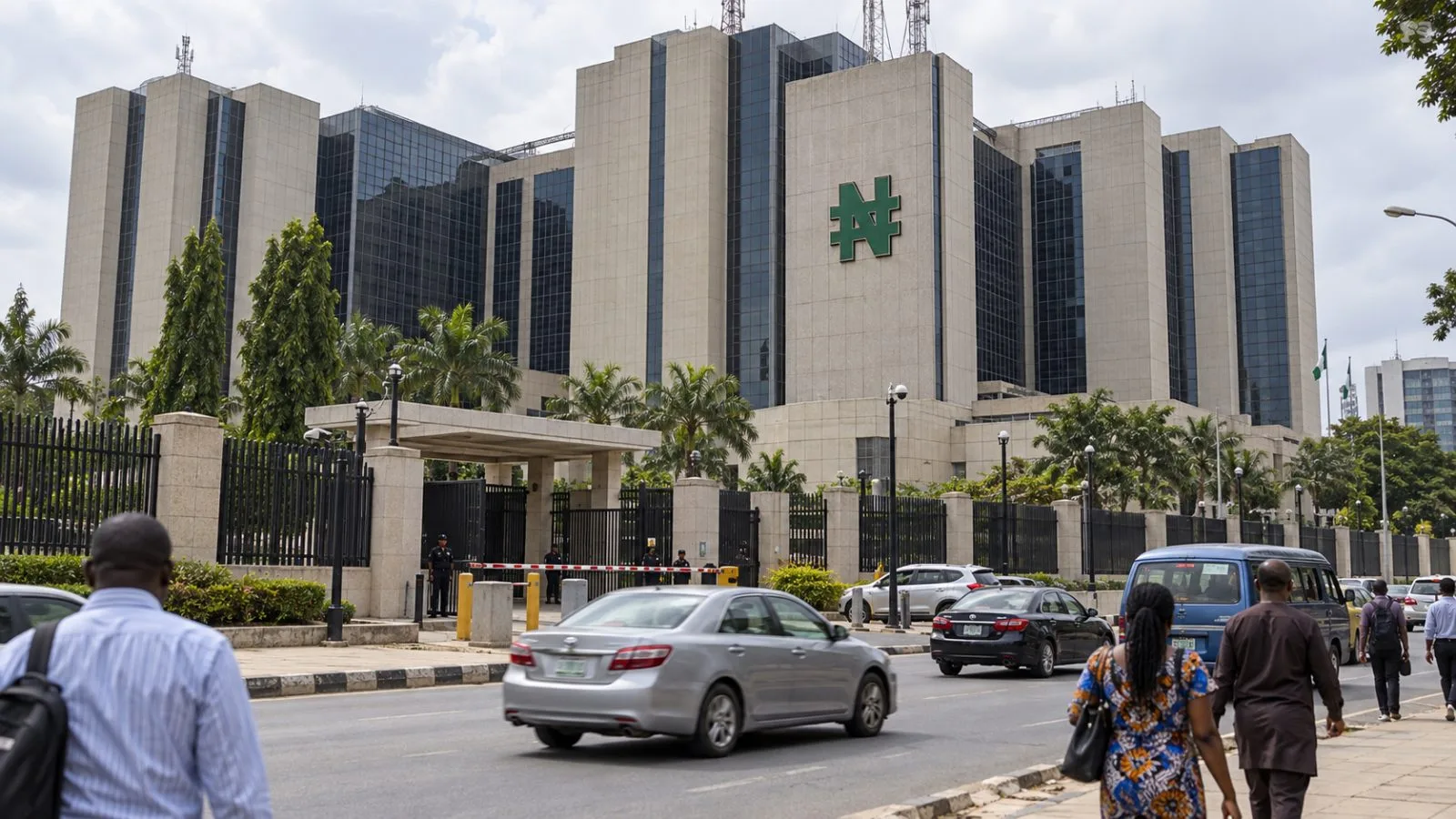
Nigeria’s private-sector activity expanded for a fifth straight month in October, while a Central Bank of Nigeria (CBN) survey showed rising price indexes and slower services growth. The composite Purchasing Managers’ Index (PMI) registered 53.2 points, up from 53.0 in September. The CBN treats readings above 50 as expansion.
The PMI is a diffusion index built from executives’ reports on whether activity indicators increased or decreased. It tracks the direction of reported change, so its reading is not a measure of the percentage growth in Nigeria’s gross domestic product (GDP). The CBN said the results represent respondents’ views and not the bank’s own view.
Price measures also moved upward. The composite input-price index rose 0.7 points to 64.0, while the output-price index gained 0.5 points to 58.9. These point readings do not quantify the amount firms paid for inputs or charged customers. The report said input-price readings rose in services and agriculture but fell in industry; it did not identify the specific costs behind the changes or measure whether higher expenses were passed along.
Agriculture’s PMI rose to 54.7 from 53.1, and industry advanced to 52.6 from 52.0. Services cooled to 52.7 from 53.2 but remained above the expansion threshold. Across 32 subsectors, 24 recorded expansion and eight contracted. Chemical & Pharmaceutical Products had the lowest PMI, at 43.4.
The composite output index stood at 54.6 and employment at 53.2, compared with 53.9 and 51.5 in September. New orders eased to 52.8 from 53.7, remaining in expansion territory but posting a lower reading than a month earlier. The survey was based on 1,851 responses from purchasing and supply executives in industry, services and agriculture.
EconoTimes has also covered cost pressures facing Nigerian businesses.