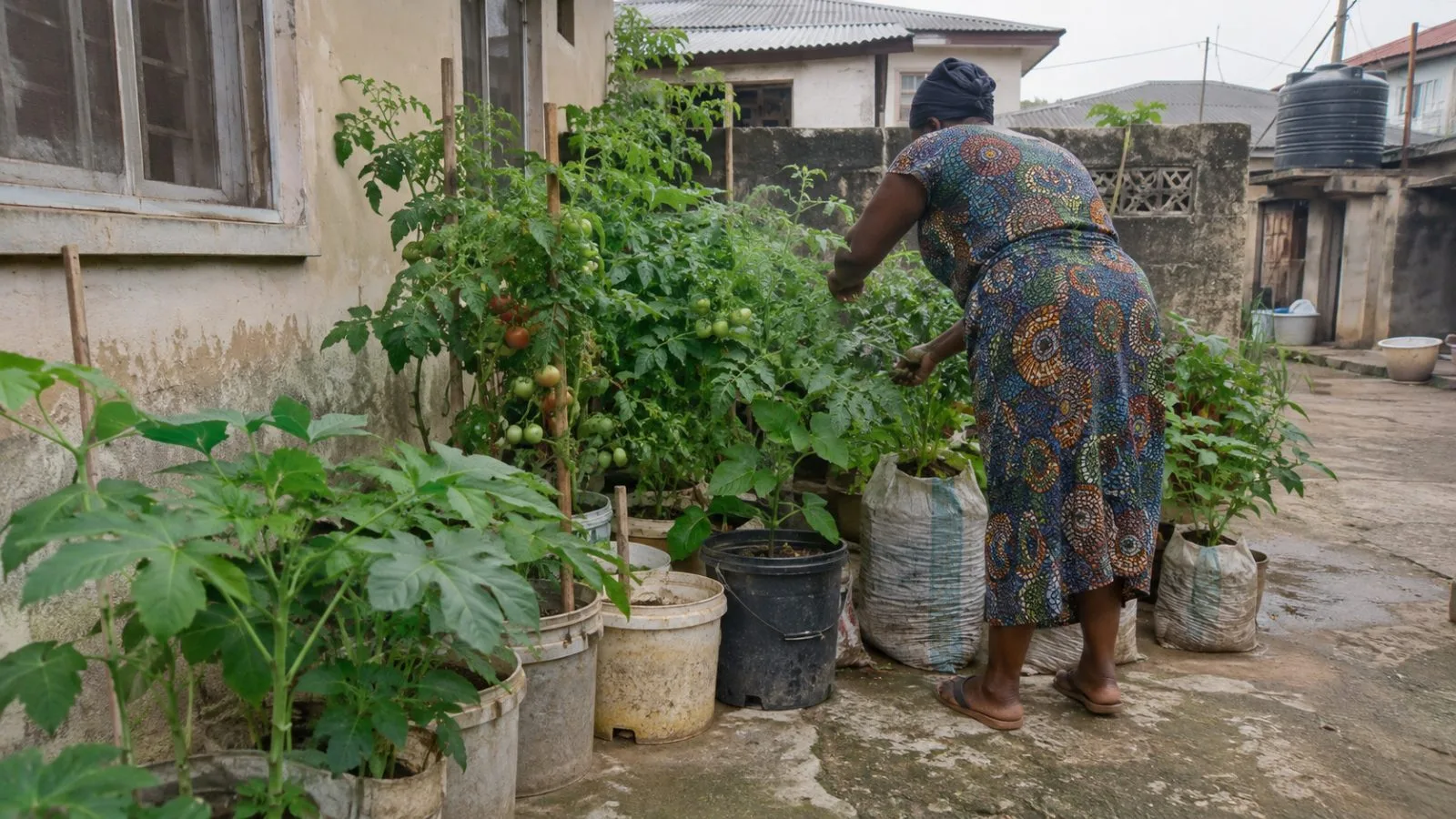
Some Nigerian households in cities are growing vegetables and staple crops in containers and small plots at home as they manage high food costs, BusinessDay reported.
Nigeria’s National Bureau of Statistics (NBS) put year-on-year food inflation at 19.59% in September 2026. BusinessDay said monthly gains had eased, although food costs remained well above their level a year earlier. Its report described households without farmland adapting sacks, buckets and window boxes to grow food.
The Consumer Advocacy and Empowerment Foundation (CADEF) said its Green Living Initiative trained 25 people in small-space cultivation. Each participant was encouraged to share the practices with at least three others; the foundation said the program reached 125 people. Training included ways to grow food with household items such as empty oil kegs and paint buckets.
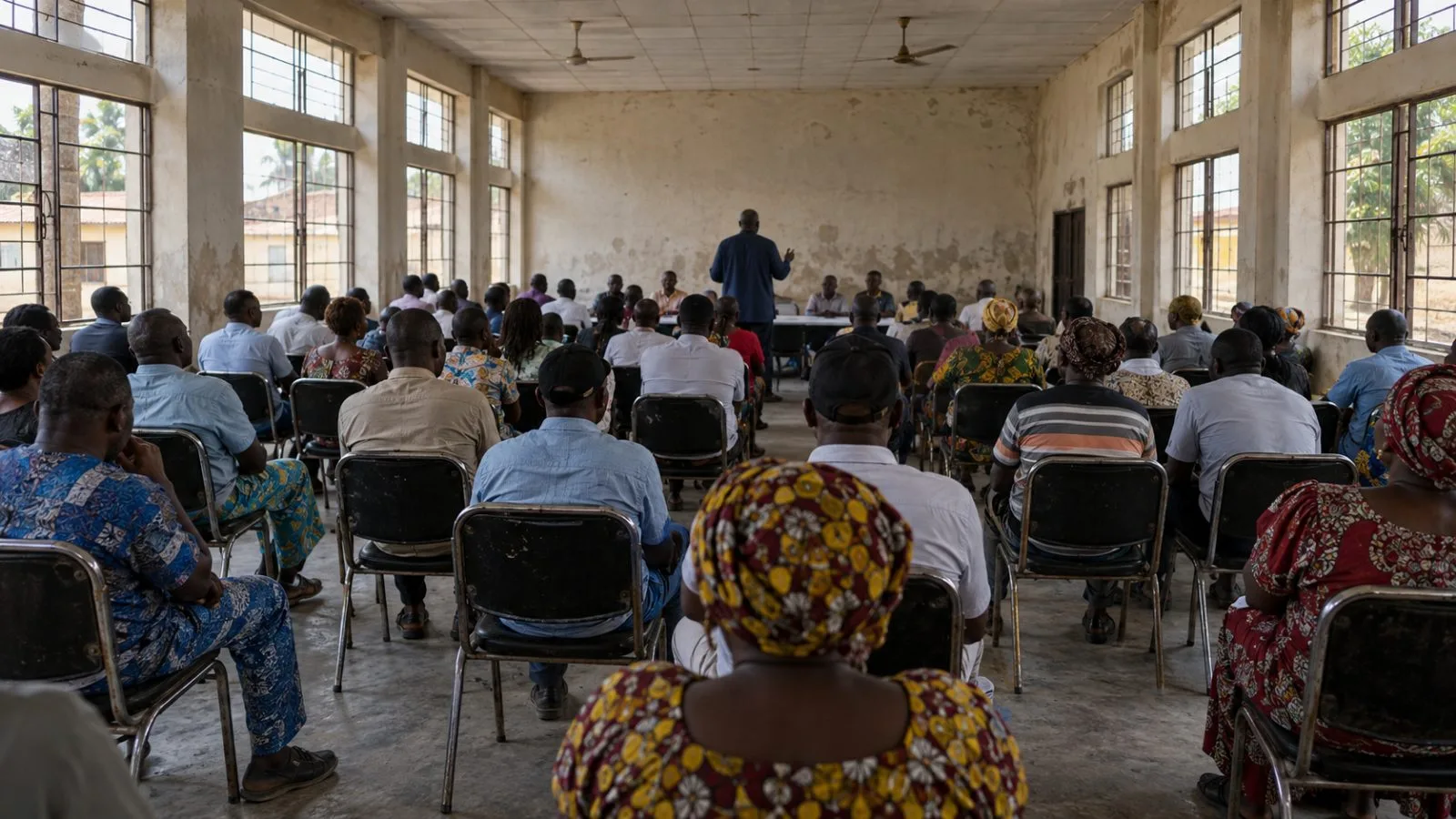
At the initiative’s closing ceremony in Lagos, participants displayed okra, cucumber, sweet potato, tomato and groundnut crops. CADEF Executive Director Chiso Ndukwe-Okafor said the project was designed to give households with limited space and resources practical food-growing options. “Small-space gardening cannot on its own solve food inflation, but it can give households another option,” she said.
Ndukwe-Okafor said the effect on household food spending depends on the size of a plot, the crops selected and available resources. She cited one participant who grows yam in about 100 sacks in his compound, feeds his family and sells some of the harvest to help pay school fees.
Beneficiary Chibueze Nwachukwu said he has grown groundnuts and plans to try other crops.
The International Monetary Fund (IMF) estimated in its June 2026 Article IV assessment that 63% of Nigerians lived below the national poverty line and 27 million faced food insecurity in fall 2025. The figures also appear in EconoTimes’ earlier coverage of the IMF’s June 2026 assessment of Nigeria.