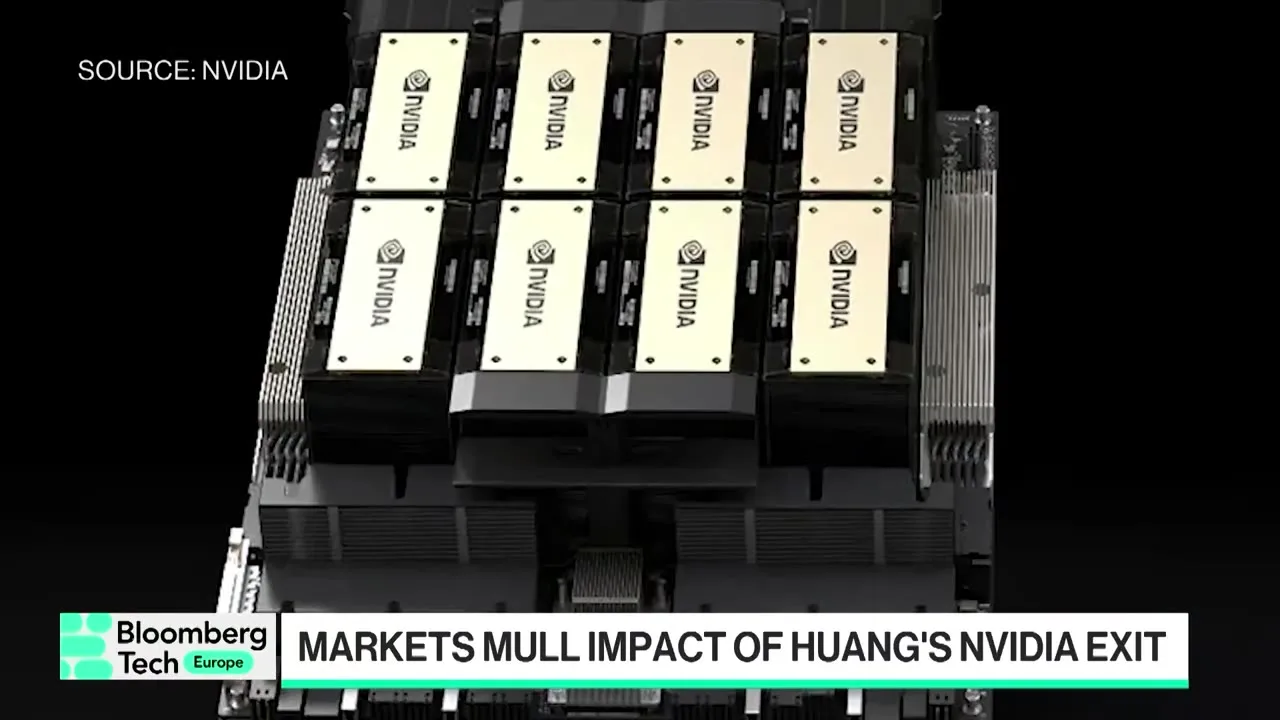
An Nvidia leadership change puts its ability to sustain rapid expansion under scrutiny, with Serenity citing chip availability and the challenge of growing beyond the company’s current designs.
Nvidia said Nov. 12 that Jensen Huang had resigned as president, CEO and a board member, effective immediately. Chief Financial Officer Colette Kress is serving as interim CEO while the board searches for a permanent successor.
Serenity distinguishes the established business from new growth projects. It said continued AI demand could support Nvidia’s current sales, product development and customer obligations. It questioned whether a successor could commit hundreds of billions of dollars and arrange supplies as effectively as Huang, particularly for projects outside Nvidia’s present chip architecture. Serenity framed the concern around Nvidia’s next moves while also seeing demand supporting its existing business.
The concern is whether a new chief could maintain roughly 70% annual growth amid supply constraints, Serenity said.
Serenity said a successor might align more closely with Washington’s limits on GPU access to China and offer less support for open-weight AI models. It said those shifts could benefit OpenAI and Anthropic.
Serenity saw optical communications and memory chip firms as possible relative winners, saying they could remain among the market’s stronger performers. By comparison, it expressed less confidence in Nvidia’s ability to compete with AMD, Broadcom and large cloud providers. It also sees a successor as potentially less willing to back projects involving newer cloud businesses and hardware partners in Taiwan, South Korea and Japan. That concern touches on how leadership choices may affect emerging cloud firms’ access to Nvidia chips.
Nvidia is scheduled to release fiscal 2027 third-quarter results Tuesday, Nov. 17, at about 4:20 p.m. ET, followed by an earnings call at 5 p.m. ET.