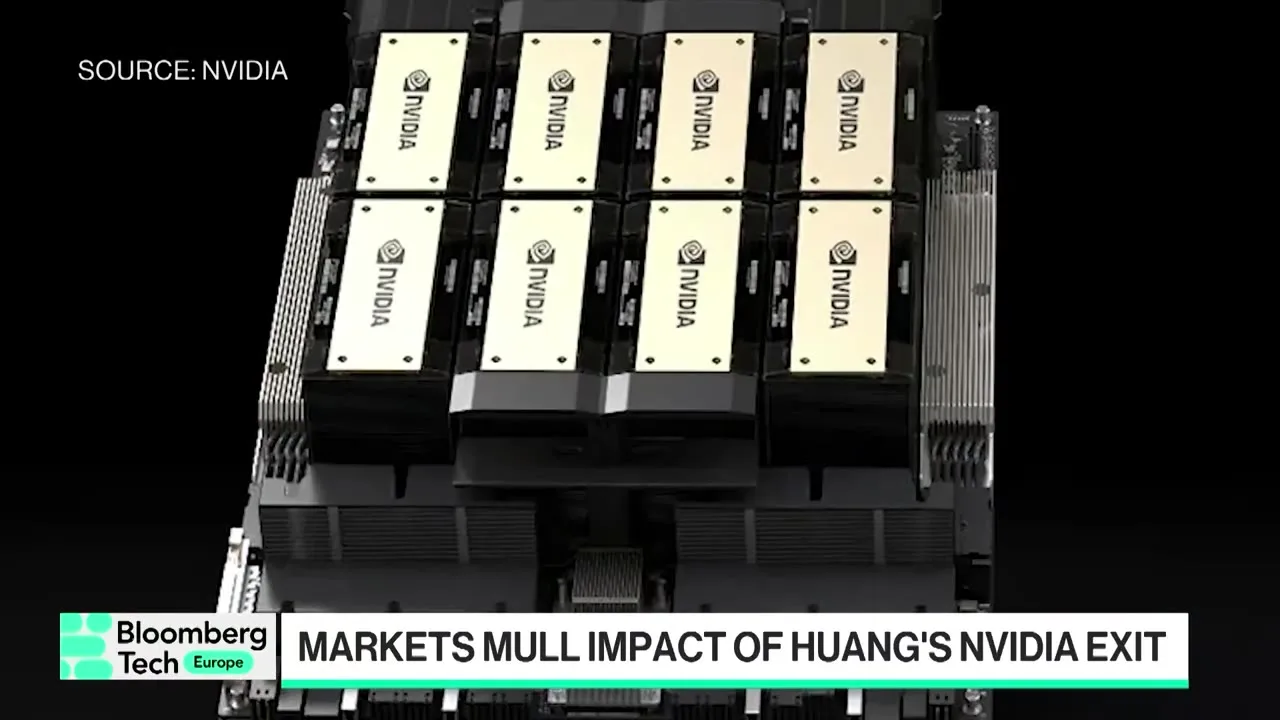
Nvidia’s share of the artificial intelligence chip market will shrink over time as competing processors gain ground in a growing market for computing power, Callosum founder Akarca said.
That would spread demand across more suppliers as businesses match different computing tasks to chips built for speed or lower energy use. Akarca gave no timetable or estimate for Nvidia’s future share.
Speaking on Bloomberg Technology, published Nov. 13, Akarca said wider use of AI had increased demand for chips while creating opportunities for processors designed for particular jobs.
Nvidia had built its position through the quality of its chips and their availability in supply chains, he said. More alternatives now offer ways to divide work among different types of processors.
“There are specialized chips that are very good for particular tasks,” Akarca said. He expects the market to become more widely shared as those products reach customers.
He said Fractile had raised $720 million in a Series C funding round, a later stage of private fundraising. He also cited London-based Olix, which he said was building chips using light and had raised hundreds of millions of dollars.
Callosum develops software that divides AI systems into separate tasks and assigns them to different chips. Akarca said that approach could make systems cheaper, improve performance and reduce energy use.
Asked about CUDA, Nvidia’s software platform that helps developers use its chips, Akarca said it had helped establish the company’s developer base by making adoption easier.
Rival chip companies can now build the software needed to support their products more quickly, he said. Callosum also works with new suppliers to help connect their chips to its systems and bring them to market.
Akarca said the competitive protection Nvidia gained from CUDA appeared to be declining, although other barriers remained. He did not identify those barriers or quantify the change.
Turning to countries’ efforts to control their own AI capabilities, Akarca said businesses and governments increasingly wanted greater control over the technologies shaping their futures.
He said the UK Sovereign AI Fund had backed Callosum, linking that support to the value countries place on using different chip technologies together. He gave no funding amount.
Asked about lessons from Jensen Huang’s leadership, Akarca praised his work building Nvidia over 30 years. He said founders should stick to their values and remain consistent.
Akarca also said Britain had talent, investment and international relationships to support alternative chip development. He did not give an investment total or announce a new commitment.