Oppo recently unveiled its upcoming flagship device, the Find X, and it was almost like a statement that non-Apple smartphone makers do not have to copy the latest iPhone design to wow the market.
Last year, Apple unveiled its first-ever iPhone with an edge-to-edge screen. To achieve that, Apple collected the front-side cameras and sensors and put them on a notch. OEMs were quick to adopt the design, understandably, to get a fraction of the hype around the newest smartphone design trend sparked by Apple.
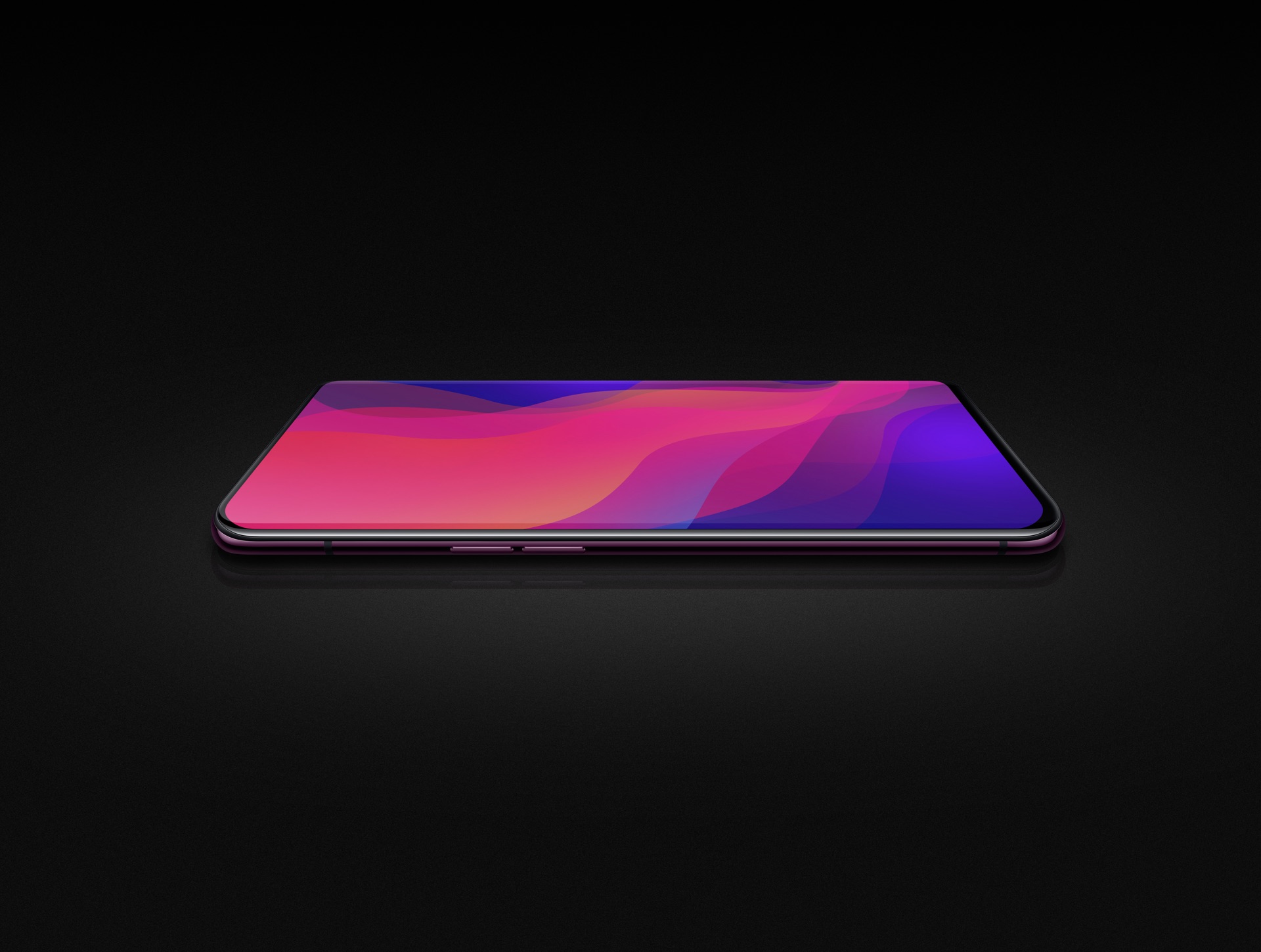
However, Oppo showcased a different approach. Earlier this week, the Oppo Find X was finally revealed to the public. And while it does have an array of premium-level specifications, the highlight of the entire announcement was Oppo Find X’s “all-screen” front without blatantly copying an iPhone design.
The Oppo Find X boasts a 93.8 percent screen-to-bezel ratio. To make this possible, the smartphone is built with a flexible OLED panel, allowing making a curved-edge screen possible. It is then paired with an edge-to-edge 6.42-inch display.
Now, one might ask where the selfie camera goes. Well, it is literally tucked inside and is attached to a motorized component that pops up when needed, and Oppo did appropriately name these parts as the “stealth 3D cameras.”
The device’s pop-up section houses the Oppo Find X’s sensors, namely the flood illuminator, an infrared camera, a ranging sensor, a front camera, and the dot projector for 3D face detection.
Oppo Find X’s top feature is definitely its pack of cameras, making it the first-ever Android smartphone to offer a face detection system based on 3D technology — a decent competitor of the iPhone X’s Face ID. Its face detection feature uses a sophisticated technology with “15,000 facial dot recognition” and promises “20 times safer” biometric authentication compared to the staple fingerprint readers.
As for its other core specs, the Oppo Find X is powered by a Snapdragon 845, a 3,730-mAh battery, 8GB of RAM, and 256GB internal memory.
The Oppo Find X is slated to be released globally but will likely debut initially in select regions in August. With an array of premium features and specs, the device is expected to cost €999 or over $1,150.