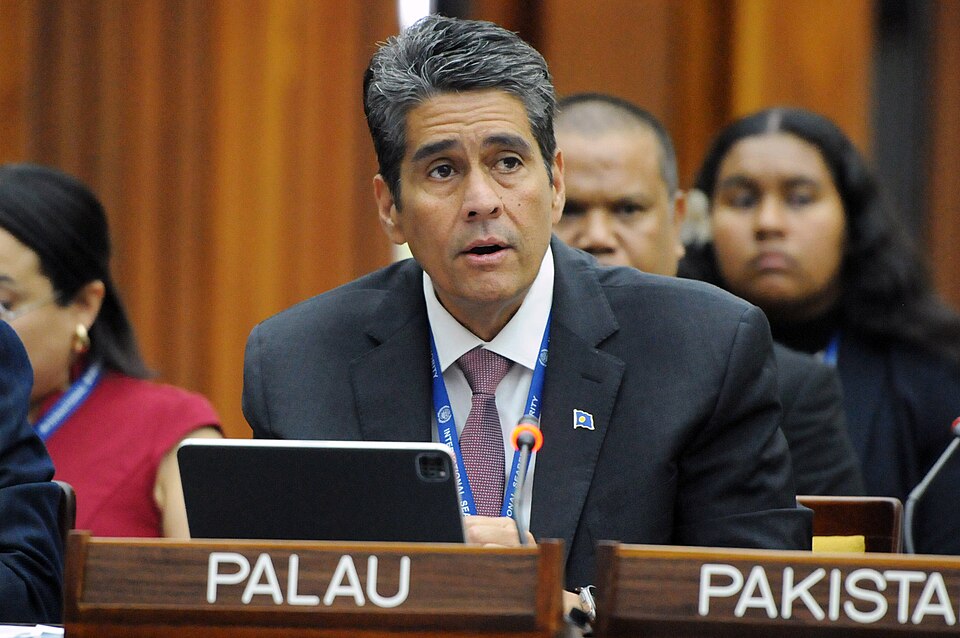
Pacific Islands Forum chair Surangel Whipps Jr. said Thursday he hopes the 18-member regional bloc can reach consensus on condemning China’s recent ballistic missile test in the Pacific, as tensions between Beijing and Taiwan dominate the final day of the summit.
Whipps, who is also Palau’s president, said leaders were expected to discuss the July missile launch before issuing their joint statement later Thursday.
“That’s definitely something that we’ll be discussing today, and a unified Pacific voice is critical in getting Beijing to respect sovereignty, to respect transparency, and to be a responsible partner,” Whipps told reporters.
“We don’t want our backyard, our homes, to be threatened and really disrespected.”
China’s July ballistic missile test was its first known launch in the Pacific since September 2024. The test occurred just hours after Fiji and Australia signed a major defence treaty, representing Fiji’s first formal alliance.
Pacific Islands foreign ministers failed last month to reach agreement on a statement condemning the Chinese missile test, despite several regional leaders publicly and privately voicing concerns about increasing militarisation. Beijing has maintained that the missile test was conducted safely.
The Pacific Islands Forum summit has also been overshadowed by a dispute over Taiwan. China objected to Taiwan’s presence at the meeting, arguing that the island was not qualified to participate.
Palau, the summit host, is one of three Pacific Island nations that maintain official diplomatic relations with Taiwan.
China considers Taiwan part of its territory and has not ruled out using force to assert control over the democratically governed island. Taiwan rejects Beijing’s sovereignty claim and says its people should determine their own future.
Several Pacific leaders skipped the summit, including the prime ministers of Fiji, Vanuatu, Samoa and the Solomon Islands and the president of Kiribati, who instead sent lower-ranking representatives.
New Zealand Foreign Minister Winston Peters said Tuesday he was “highly suspicious” that foreign interference could have contributed to some of the absences, although he did not directly blame China.
China’s foreign ministry rejected Peters’ remarks as unfounded.