The United Kingdom has updated its Arctic policy to pair a larger High North defense role with new climate research funding, signaling how London plans to manage security and environmental shifts in the region.
Published Thursday, Oct. 15, the framework replaces the 2023 Looking North policy. Its priorities include monitoring Arctic environmental change and responding to it, strengthening security and stability, supporting effective governance, advancing responsible trade and economic partnerships, and building resilience. The government cited Russia, environmental change and growing international interest in the region’s economic opportunities as reasons for the update.
The government describes its security approach as “NATO-first.” It plans to invest in technology and infrastructure as part of efforts to sustain deterrence and keep forces ready, while limiting escalation and avoiding an excessive security focus on regional affairs. At the launch, UK Minister for the Polar Regions Uma Kumaran said, “there’s no UK security or indeed global security without Arctic security.”
The policy reaffirms support for the Arctic Council and rules-based governance. The UK says economic partnerships should benefit Indigenous communities and other people who live in the Arctic. It also calls for transparent commercial practices that account for security, safety and environmental risks. The previous framework said the UK was not an Arctic state and noted its State Observer position on the Arctic Council.
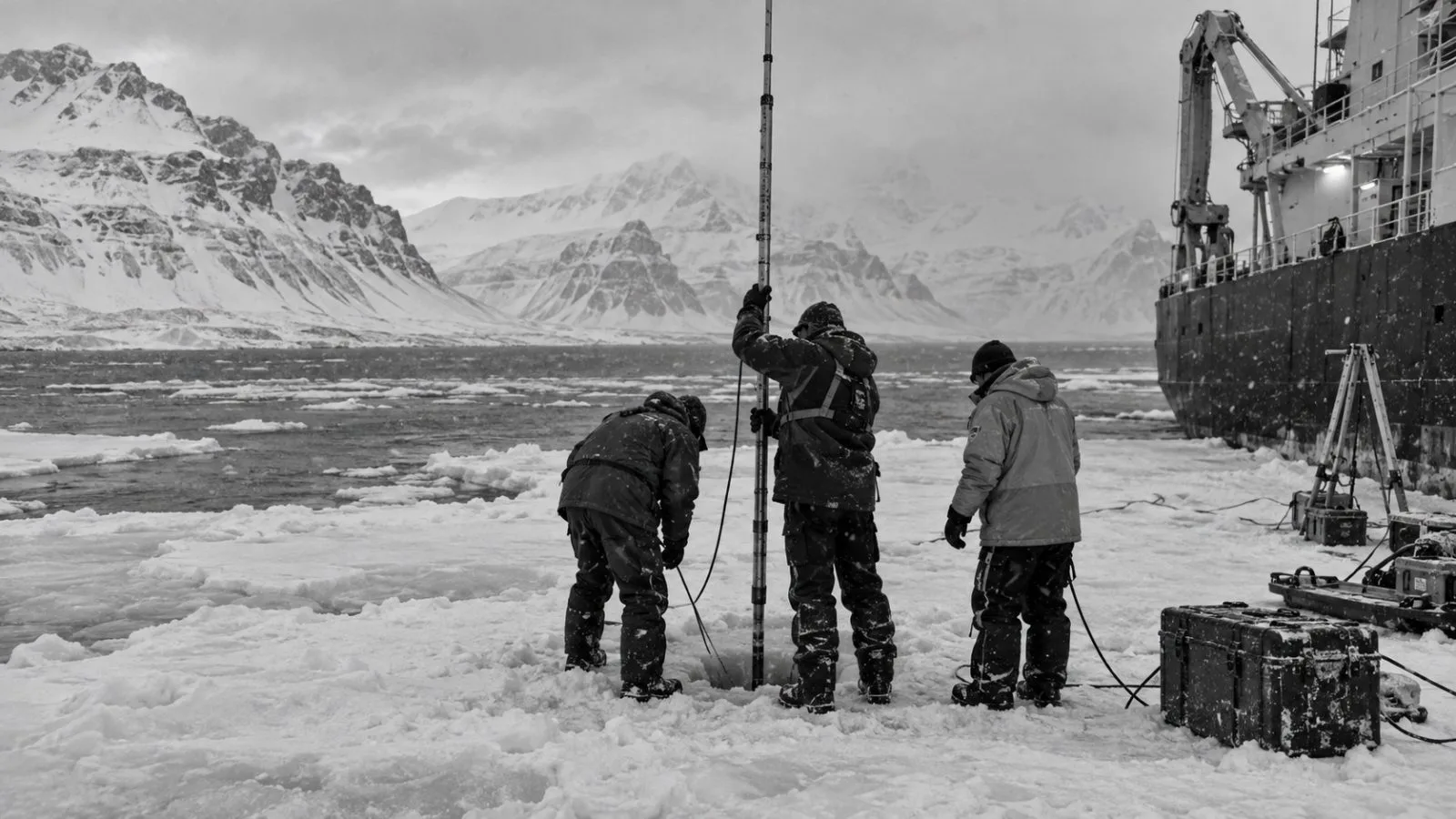
Kumaran put the Natural Environment Research Council’s (NERC) Arctic science spending at more than £145 million since 2014. She announced an initial £13 million with the Research Council of Norway for research into changes in the Arctic Ocean; separately, more than £4 million is planned for research partnerships over the following three years, including with the Arctic Council and early-career Arctic researchers.
Environmental measurements document some of the changes addressed by the policy. The Copernicus Climate Change Service reported that glaciers in Scandinavia and Svalbard had their highest rates of mass loss on record during the 2023–24 hydrological year. Average ice-thickness losses were 1.8 meters in Scandinavia and 2.7 meters in Svalbard.
NASA and the National Snow and Ice Data Center (NSIDC) reported that the 2026 Arctic winter sea-ice maximum reached 14.29 million square kilometers on March 15, statistically tying with the 2025 record low. Their report put the 2025 maximum at 14.31 million square kilometers. Kumaran pointed to the International Polar Year in 2032–33 as a longer-term horizon for Arctic research.