Indonesia’s Meteorology, Climatology and Geophysics Agency (BMKG) recorded fine particulate matter, known as PM2.5, at 1,134.5 micrograms per cubic meter in Palembang during the Oct. 15 haze, when flights were canceled and schools moved classes online, The Straits Times reported.
The peak came at 3 p.m. ET on Oct. 14 (19:00 UTC), or 2 a.m. on Oct. 15 in Palembang. The reading had fallen to 816 micrograms per cubic meter by 7 p.m. ET on Oct. 14 (23:00 UTC; 6 a.m. on Oct. 15 in Palembang), the newspaper said. Visibility in some parts of the city was about 50 meters, it reported.
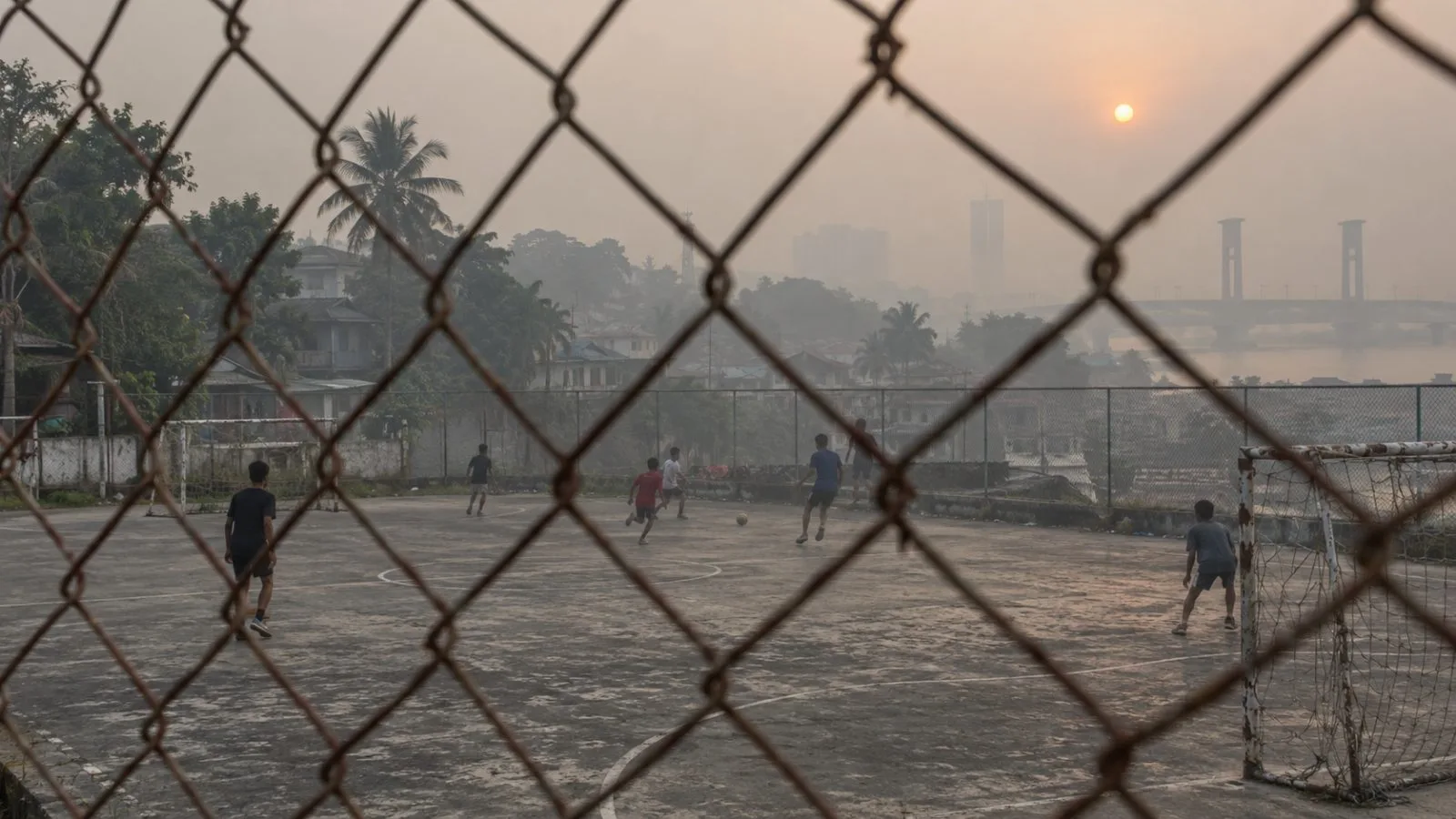
The Straits Times said flights between Singapore and Palembang were canceled, while schools closed their campuses and shifted lessons online. Its field account described residents continuing to commute, shop and spend time outdoors despite the haze. About half the people waiting at the airport wore masks, the newspaper reported. More than 10 teenagers played futsal outside without masks.
The newspaper’s reporter wrote that masks can feel hot, cost money and cause glasses to fog. The report also cited major haze episodes in Palembang in 1997, 2015 and 2019. Residents and firefighters told the outlet they could not recall a Palembang morning with heavier haze than Oct. 15 since 2015. The fire season runs from July through October, the newspaper said.
A fire engine traveled toward smoke rising from peat, according to the account. A 39-year-old firefighter in Palembang told The Straits Times that his 11-year-old son asks whether his work is dangerous. “Yes, it’s dangerous,” the firefighter said, adding that he tells his son his colleagues are trained and work to help people.
The newspaper’s account described people still eating, shopping and heading home at night, with most not wearing masks.