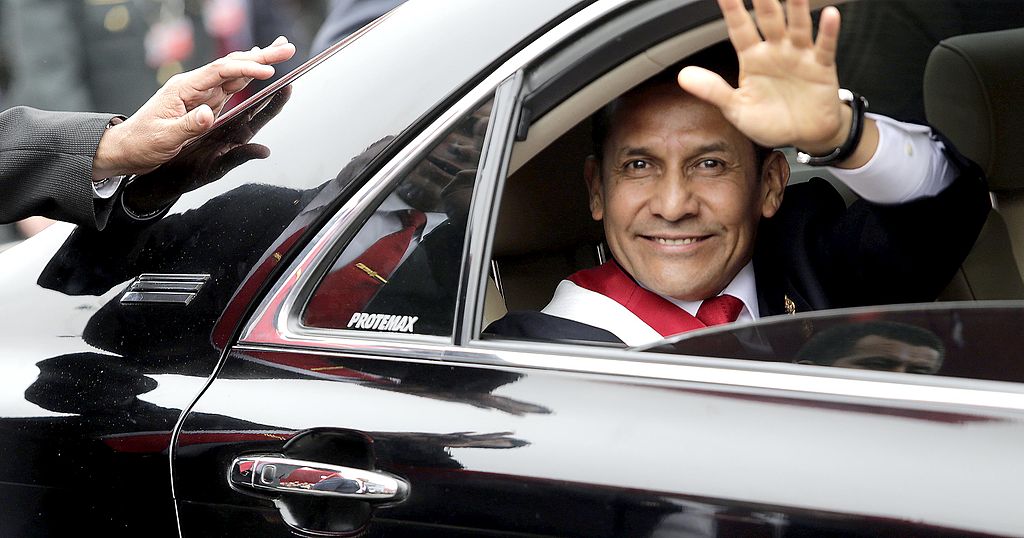
Former Peruvian President Ollanta Humala was released from prison on Friday after Peru’s Constitutional Court overturned his 15-year conviction for money laundering, marking a significant development in one of the country’s most closely watched political corruption cases.
Humala walked free from a special detention facility that houses several former Peruvian presidents who have faced criminal investigations or convictions. His release follows the Constitutional Court’s decision to reverse the sentence that had kept him behind bars after he was found guilty last year.
The former president had been convicted over allegations that his 2011 presidential campaign received illegal financial support from Brazilian construction company Odebrecht, now known as Novonor. The case was part of the broader Odebrecht corruption scandal, which has implicated political leaders and public officials across Latin America and triggered multiple investigations into campaign financing and public contracts.
Humala consistently denied wrongdoing throughout the legal proceedings. However, prosecutors argued that illicit campaign funds were funneled into his successful bid for Peru’s presidency, leading to the money laundering charges that resulted in his original conviction and 15-year prison sentence.
The Constitutional Court’s ruling effectively nullifies that conviction, allowing Humala to leave prison while adding another twist to Peru’s long-running legal and political battles involving former heads of state. The decision is expected to draw renewed attention to the country’s judicial system and the handling of high-profile corruption cases linked to the Odebrecht investigation.
The Odebrecht scandal has reshaped Latin American politics over the past decade, with numerous politicians, business executives, and government officials facing investigations or criminal charges related to alleged bribery and illegal campaign financing. Humala’s case became one of Peru’s most prominent examples of those investigations.
Humala’s release is likely to fuel further debate over judicial accountability, political corruption, and campaign finance laws in Peru. It also underscores the continuing legal and political fallout from the Odebrecht scandal, which remains one of the largest corruption investigations in the region and continues to influence Peru’s political landscape.