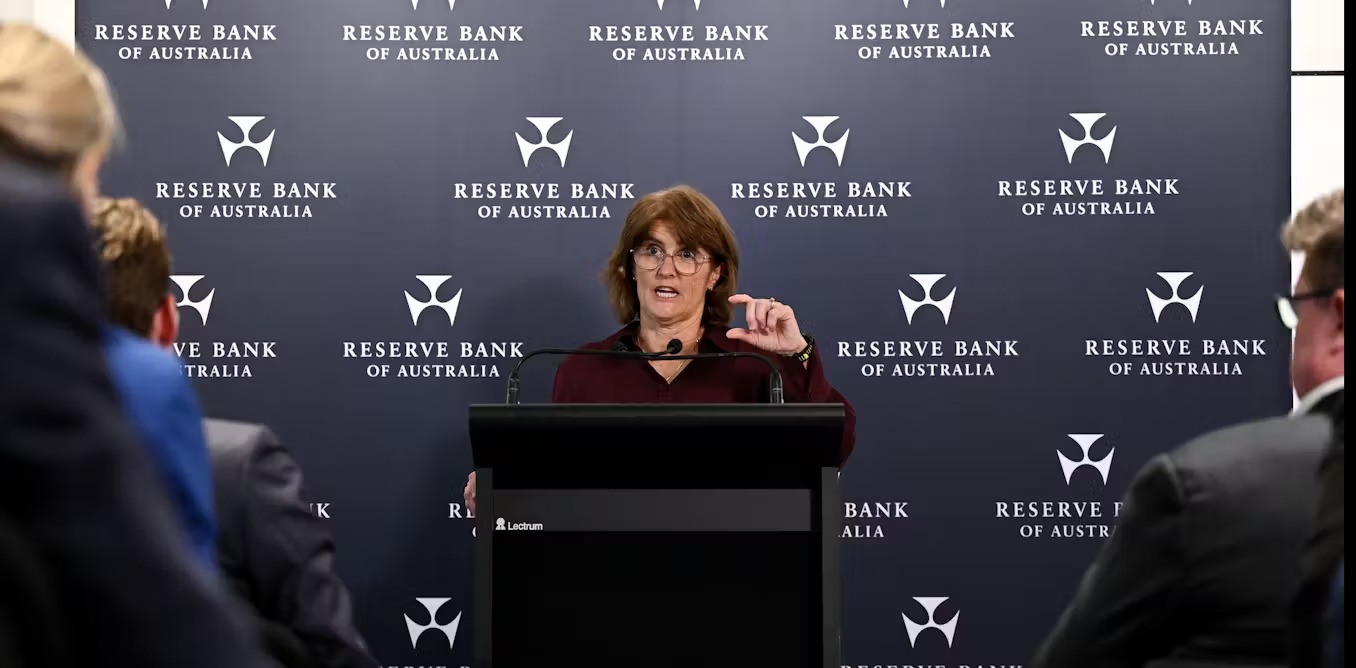
These days every word of every statement from the Reserve Bank Governor Michele Bullock is pored over in minute detail – as is every word uttered at her press conference after each Reserve Bank board meeting.
Desperate for signals about what the bank will do next, market economists examine every comma, every adjective, for a hidden meaning. It’s a bit like divination, the ancient practice of seeking meaning by examining the entrails (internal organs) of a sacrificed sheep or goat.
It’s an approach in which words are assumed to mean something different to what ordinary people think they mean. For example, one journalist at Tuesday’s post-meeting press conference asked Governor Bullock if the word “vigilant” in her statement meant a rate rise was coming.
Her reply was concise (at 21:30 on the video): “No”.
No secrets
The truth is there aren’t hidden secrets. The Governor has made what she knows and what will drive her board’s decision perfectly plain, not only at Tuesday’s press conference but also in her testimony to a Senate hearing a fortnight ago.
Australia’s consumer price index climbed 1% in the March quarter and 3.6% over the year to the March quarter.
That’s well down from the peak of 7.8% in late 2022, but it’s still well above the bank’s target of between 2% and 3%.
The bank’s written agreement with the treasurer requires it to aim for the midpoint of that target.
While there is room for debate over whether Australia could cope with a slightly higher target, there is at present no political appetite for a change.
This means the bank is obliged to keep interest rates high until it sees clear signs that inflation is headed back to within the target range.
Inflation has been driven by excess demand: too much spending relative to our ability to supply the things on which money has been being spent.
The bank is worried that if we come to expect inflation above its target band it’ll get stuck there as people adjust their spending and wage expectations to take account of it.
Continuing concern about inflation
Interest rates are slowing the economy significantly. The national accounts show economic growth has all but stalled.
While the bank acknowledged this in its statement on Tuesday, it wasn’t enough to convince it to change course.
The May budget contained new spending on energy and housing aimed at reducing the measured rate of inflation. The government clearly hoped it would encourage the bank to loosen interest rates before the next election.
There was was little sign of that in Tuesday’s statement and press conference.
Inflation isn’t the bank’s only target. It is also committed to maintaining full employment “consistent with low and stable inflation”.
Uncertainties keep rates on hold
The bank is uncertain about many things: consumption growth, wages, the overseas outlook, and how long it will take the economy to respond to previous increases to interest rates.
It’s partly those uncertainties that are driving it to keep rates on hold.
There is even a chance it will increase rates.
Its statement said it would be “some time yet before inflation is sustainably in the target range”. Recent data had “reinforced the need to remain vigilant to upside risks to inflation”.
Little signal in the noise
What we don’t know, and can’t know until new data emerges, is how the uncertainties the bank has spelled out will be resolved.
Digging for portents in official statements, futile as it is for actually predicting interest rate movements, serves other purposes. It helps financial market economists communicate with bond traders and their clients who make (or lose) money by betting on what other traders think will happen to interest rates.
And it can get their firms free mentions in the newspapers. But it doesn’t make it useful for us. The real reason we don’t yet know what the Reserve Bank will do to interest rates is because the Reserve Bank doesn’t know. It would tell us if it did.