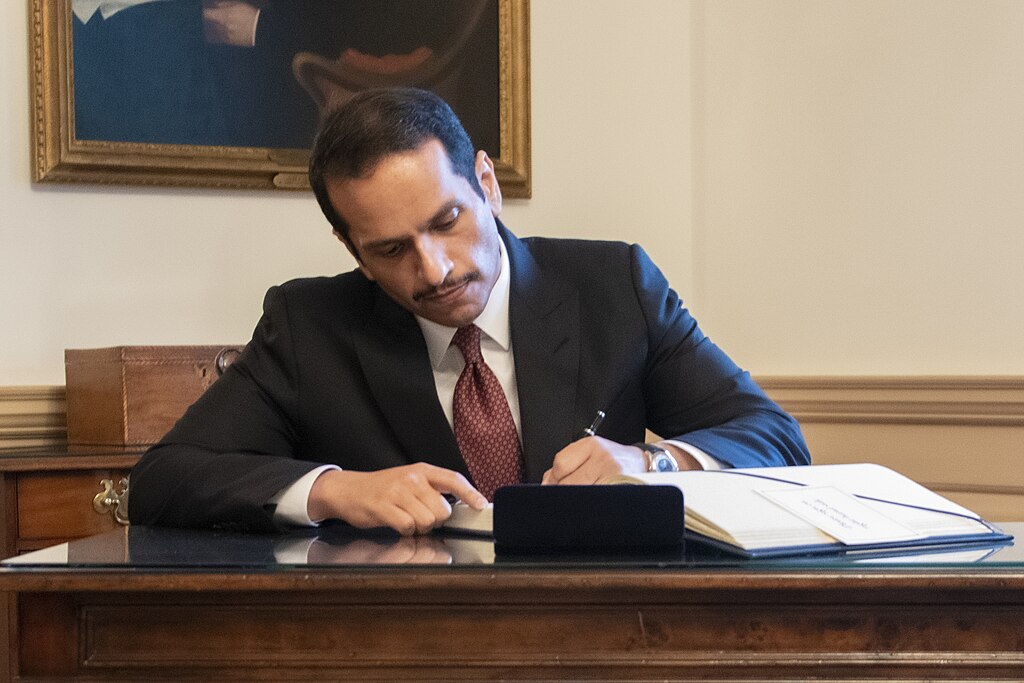
Qatar’s prime minister will visit Tehran on Thursday as Doha seeks to revive diplomatic efforts between Iran and the United States amid escalating economic pressure and continued tensions over the Strait of Hormuz.
Qatari Prime Minister Sheikh Mohammed bin Abdulrahman al-Thani is expected to discuss regional developments, de-escalation and Qatar’s mediation efforts with Iranian officials. Qatar, a U.S. ally and Gulf neighbour of Iran, previously helped broker the June ceasefire that temporarily halted fighting.
The diplomatic push comes as the conflict approaches its sixth month. Fighting has largely subsided, with U.S. Central Command reporting no attacks on Iran for nearly a month, but Washington and Tehran remain divided over control and navigation of the Strait of Hormuz.
The strategic waterway carried roughly 20 million barrels of crude oil per day before the war began on February 28. Ship-tracking data showed flows had fallen to just 5 million barrels per day on Monday, highlighting the conflict’s impact on global oil supplies.
Tensions remain elevated after an unidentified projectile struck a tanker in the strait early Thursday, causing a fire that was later extinguished. The United Kingdom Maritime Trade Operations agency said all crew members were safe.
The International Maritime Organization has recorded 70 incidents in the Strait of Hormuz since February 28, resulting in the deaths of 19 seafarers.
Iran and Oman have also been negotiating an agreement covering control of traffic and revenues from the waterway. Iran’s Revolutionary Guards said Wednesday that both countries had reached acceptable terms, but a senior Iranian source later told Reuters that negotiations were still continuing and no final agreement had been reached.
Tehran has sought to use control of Hormuz as leverage, including proposals to charge ships for passage. Washington opposes the arrangement and has increasingly shifted toward economic pressure, threatening tougher sanctions against Iran’s trading partners.
Qatar said Sheikh Mohammed’s Tehran talks would focus on restoring freedom of navigation, reducing regional tensions and creating conditions for renewed dialogue. Iran, meanwhile, continues to demand sanctions relief, compensation and an end to the U.S. blockade of Iranian ports as conditions for a broader settlement.