
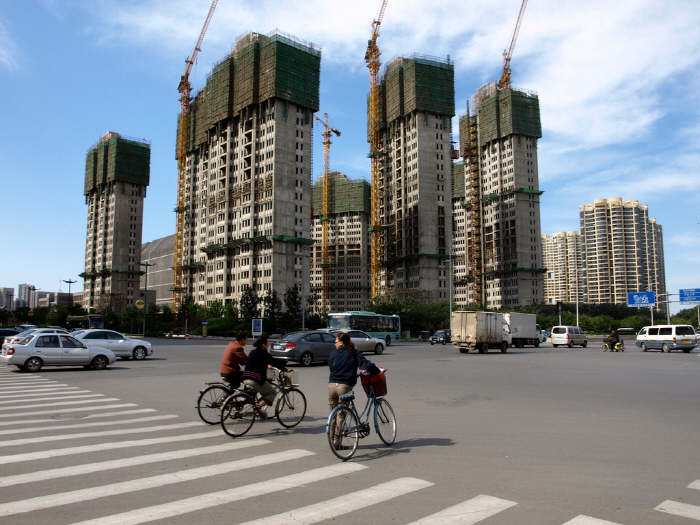
Chinese housing data for March showed a further increase in home sales. A reduction in the requirement for a down payment when buying a house is underpinning sales, which is expected to stay strong in 2016. Stronger home sales and lower inventories will continue to drive a recovery in the Chinese construction sector.
Despite a big oversupply in tier 3 and tier 4 cities, tier 1 and tier 2 cities will see a pickup in construction as supply of has come down and house prices have picked up. Uptick in the construction sector will definitely have spillover to commodity markets. Emerging market currencies will benefit from a turn in commodity prices.
In the past few days, iron ore prices have pushed higher yet again and oil prices have quickly regained pace despite the disappointment over the Doha talks. Rising appetite for emerging markets is also reflected in tighter emerging market bond spreads.
"While we could see a correction in Chinese manufacturing PMI in April following the very sharp increase in March, we expect the industrial and construction sectors to see a rising trend this year. We also expect the cyclical recovery in China, in combination with an upturn in US manufacturing and dovish central banks, to underpin risk assets in US and Europe in the medium term." notes Danske Bank in a report

