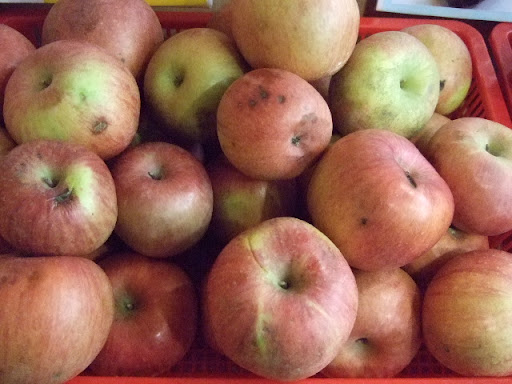
Pro-environment consumers and suppliers are patronizing ‘ugly’ agricultural products that do not fit ‘market standards’ to counter the practice of discarding them.
Unsightly produce is now attracting a growing market as more suppliers are regularly delivering ‘ugly' fruits and vegetables to households.
Choi Hyun-joo, head of Uglyus, which began offering a subscription service for ugly agricultural produce in October of last year, noted that discarding ugly-looking fruits and vegetables generates massive environmental costs.
He added that food waste accounts for 8 percent of all greenhouse gas emissions.
Uglyus packages seven or eight kinds of ‘ugly’ produce collected straight from farms for distribution every one or two weeks.
Last August, Ugly Basket followed suit and started offering an ‘ugly’ produce subscription service.
Online shopping giant 11st is also now selling ‘ugly’ products under the brands ‘Ugly Lovely’ and ‘Fresh Ugly.’
The products are cheaper than other organic ones but with the same quality.
Most of the ugly looks of the fruits and vegetables are the outcome of organic, natural farming.
An example is the yellowing of an apple’s skin due to organic farming where the apples aren’t covered with bags. While these apples may taste better, most of them would never make it to the market.