


 RBA Set for September Rate Hike as Inflation Stays High
  BOJ Raises Interest Rate to 31-Year High as Yen Weakens
  Sector Spotlight: Data Availability and Storage Lead 24-Hour Market Gains
  JPMorgan CEO Jamie Dimon Warns Mythos AI Raises Cyber Risk Tenfold
  Evernorth XRPN Nasdaq Listing Delayed to October 12
  Bitmine to Stop Ethereum Buying After Reaching 5% ETH Supply
  RBA Hikes Interest Rate to 4.60% as Inflation Risks Rise
  ECB May Stop Rate Hikes After December, Capital Economics Says
  Zcash Privacy Demand Rises as AI Exposes Bitcoin Transactions
  Zcash Mining Profits Surge as Liquidity Risks Grow
  Fed Minutes Signal Another Rate Hike by Year-End


 Add as a preferred source on Google
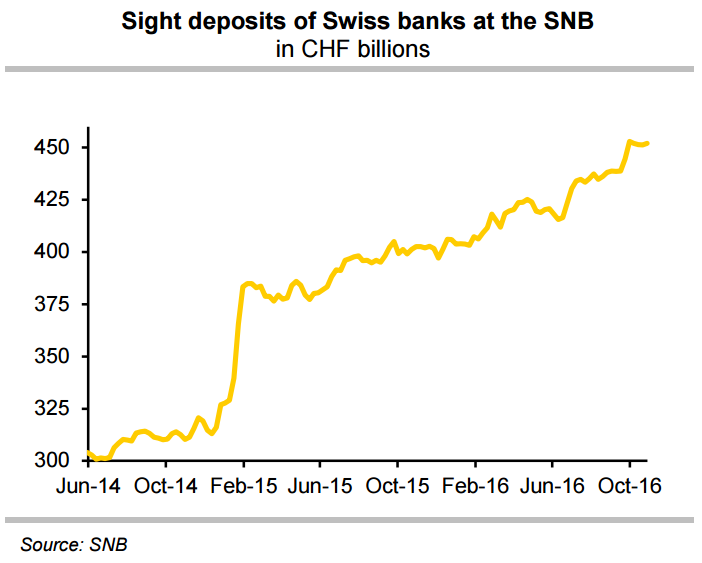
The Swiss National Bank (SNB) had previously capped the nation's currency at 1.20 per euro before abandoning the defense in January 2015. Abandoning the currency cap didn't stop the SNB which has sought to weaken the franc with FX purchases and negative rates cornerstones of that policy.
In the aftermath of Jan. 15, 2015, the SNB’s shocking decision to end its currency cap sent the franc surging more than 40 percent within minutes. The Swiss franc appreciated to around 1.08-per-euro threshold four times since mid-2016, and each time snapped back suggesting the SNB was active in the markets. The unofficial cap has helped the franc become one of the least-volatile major currencies versus the euro during the past six months.
Intervening to buy euros has helped push its foreign reserves to a record of about $630 billion, leaving the central bank vulnerable to swings in currency markets as it manages a growing pot of money. SNB posted a record profit of 28.7 billion Swiss francs (24 billion pounds) in the first nine months of 2016, driven by gains on its huge foreign currency holdings and earnings on negative interest rates.
“Domestic factors and international developments may challenge the current monetary policy of the Swiss National Bank in the coming months. SNB is likely to become “less active in the foreign exchange market in the course of 2017,” Credit Suisse economist Maxime Botteron said in a note to clients.
Despite its efforts, the SNB merely prevents the franc from appreciating but is unable to achieve a sustainable depreciation. Due to ECB’s continued ultra-expansionary monetary policy, the franc principally remains under appreciation pressure against the euro. The SNB will have to decide at some point whether it will continue to prevent the appreciation of the franc so as to maintain its inflation target or whether it considers the continuous rise of the FX reserves to be a bigger risk and therefore ends the interventions.
"We are of the view that in the end the inflation target will draw the short straw, as happened before in January 2015. Once the SNB abandons its strategy EUR-CHF will drop like a stone," said Commerzbank in a report.
EUR/CHF was 0.07 percent lower on the day, trading at around 1.0774 at around 12:00 GMT. While, USD/ CHF was 0.48 percent down at 0.9706 as markets await the crucial FOMC policy decision due later in the NY session.







