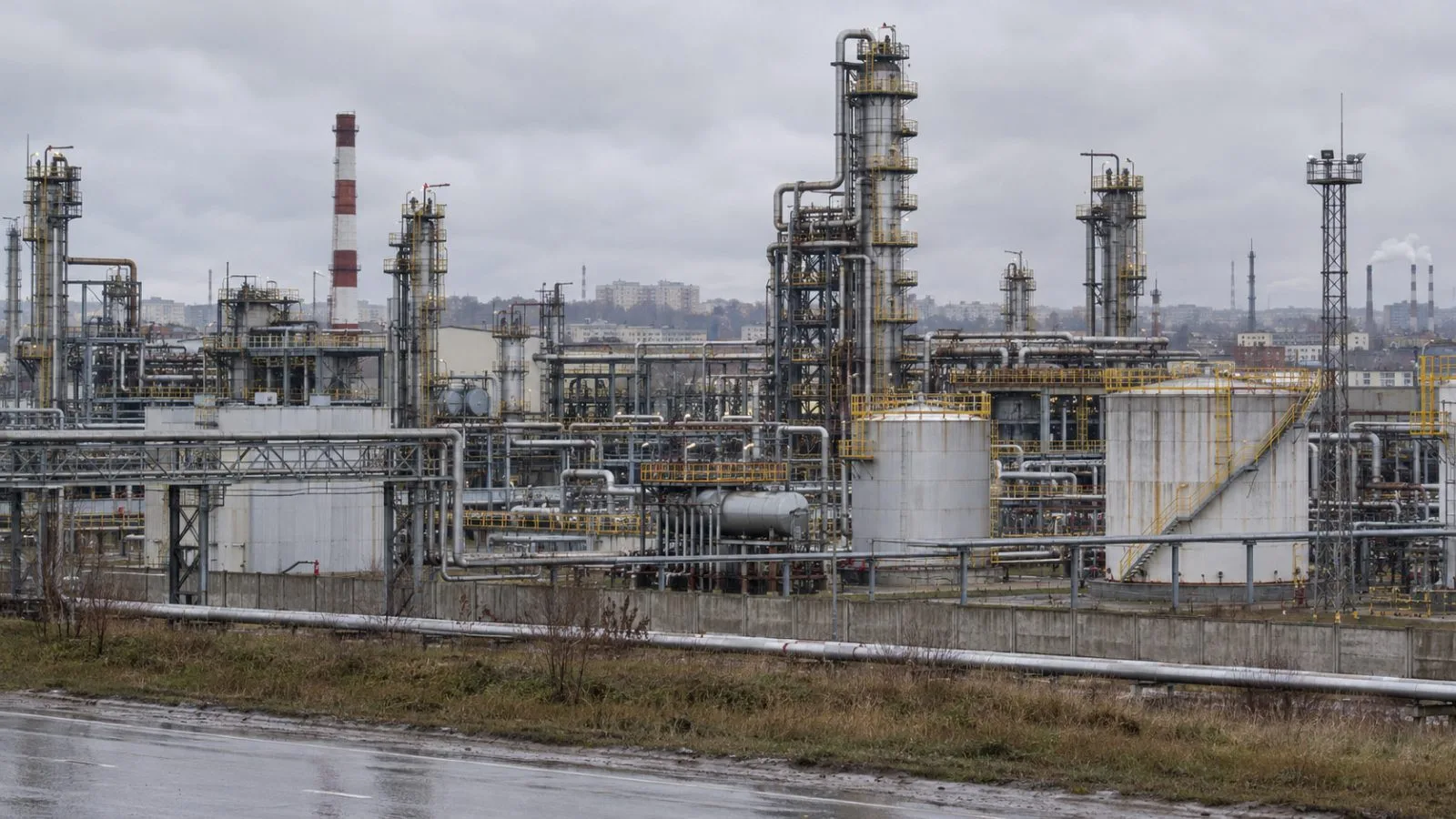
Ukrainian drone attacks have disrupted Russian refinery operations, with two industry sources telling Reuters that the latest daily crude processing estimate fell to about 400,000 metric tons, a decline that could affect fuel supply and a diesel-export deal with the United States.
The sources put the latest rate below the more than 700,000 metric tons processed daily at the end of October. They estimated that November’s daily average remained above 500,000 metric tons, about 5% to 10% below September and October levels. The latest estimate’s cutoff was not specified.
The sources said disruptions or shutdowns had affected 15 of Russia’s 35 major refineries, compared with nine around the middle of the prior week. Those facilities have nominal capacity of about 500,000 metric tons per day, or roughly 54% of Russia’s estimated primary refining capacity of 930,000 metric tons per day. Nominal capacity measures potential throughput, not production actually lost. These are industry estimates, not official Russian statistics; Russia’s Energy Ministry did not respond to Reuters’ request for comment.
Ukraine’s General Staff said Ukrainian forces struck storage tanks at the Ilsky refinery and a processing unit at the Afipsky refinery in Krasnodar region on Nov. 18. Russian officials acknowledged attacks on two industrial facilities in the region but provided no details, the Associated Press reported.
Reuters reported fuel shortages in some Russian regions and reduced export capacity following strikes on ports. The agency said lower refinery output could tighten global fuel markets and affect Russia’s ability to fulfill a diesel-export agreement with the United States.
Ukrainian President Volodymyr Zelensky said Nov. 15 that Ukraine had disabled more than 55% of Russia’s refining capacity. His statement concerns capacity, a different measure from the processing volumes estimated by Reuters’ sources. EconoTimes previously reported Ukraine’s claims about damage at Ilsky and Afipsky.