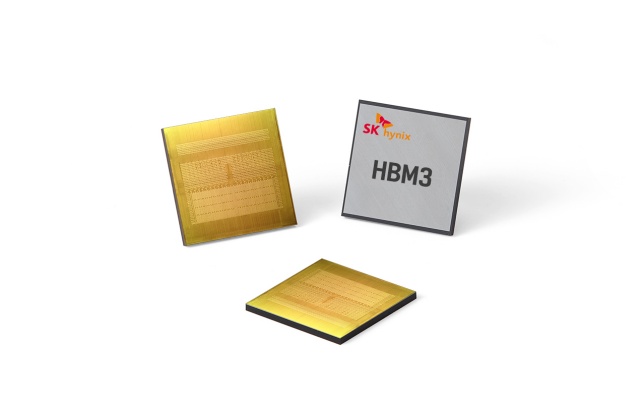
SK Hynix has signed a deal to supply the HBM3 microchip to Nvidia Corporation, which is an American tech company. The chip has been described as the world's best-performing chip and a first of its kind in the industry.
SK Hynix announced on Thursday, June 9, that it has already started the mass production of the HBM3 chip, which is a DRAM or dynamic random access memory product. The first batch of its production will be shipped to Nvidia in the United States, which is apparently, its very first client for the supply of HBM3, as per The Korea Herald.
This is the latest HBM3 DRAM semiconductor and the fourth generation of SK Hynix's HBM product line. It features high bandwidth memory that vertically interconnects multiple DRAM chips, boosting data processing speed.
SK Hynix is currently the second-largest memory chip producer in the world, and it is now the first to mass-produce the high-value, high-performance microchip that is said to be a breakthrough in the chip industry just seven months since its development.
As for Nvidia, it is the largest chipmaker in the U.S. in terms of market value. It has completed the performance tests for SK Hynix's HBM3 chip and planning to use this for its own H100 graphics processing unit. It will be a component of the company's advanced artificial intelligence technologies, such as accelerated computing.
Noh Jong Won, SK Hynix's president and chief marketing officer, said in a press release announcing its partnership with Nvidia as a supplier, "We aim to become a solution provider that deeply understands and addresses our customers' needs through continuous open collaboration."
The CMO, who is also known as Kevin Noh, further said, "In a close partnership with Nvidia, we have secured top-notch competitiveness in the premium DRAM market."
Finally, an SK Hynix official said on Thursday via Aju Business Daily that "HBM3 has opened a new market for superfast AI semiconductors." He added that depending on Nvidia's requirements. The company will be increasing the production of its HBM3, which is expected to be used in Nvidia designs graphics processing units, mobile phone processors, vehicle navigation, and systems on chip (SoCs).