


 RBA Set for September Rate Hike as Inflation Stays High
  BOJ Raises Interest Rate to 31-Year High as Yen Weakens
  Cardano Hits Record 436 TPS as Network Scaling Advances
  Bitmine to Stop Ethereum Buying After Reaching 5% ETH Supply
  Kalshi Withdraws PEPE Perpetual Futures Filing
  Jameson Lopp Downplays AI Threat to Bitcoin Cryptography
  Evernorth XRPN Nasdaq Listing Delayed to October 12
  Solana User Growth Jumps 33%, Outpacing Ethereum and Chainlink
  David Schwartz to Reveal XRP Ledger Future at Ripple Swell 2026
  Fed’s Hammack Says Bond Yield Surge Is Not Driven by Inflation Fears
  U.S. Government Moves Over $100M in Bitcoin and BNB
  Zcash Privacy Demand Rises as AI Exposes Bitcoin Transactions
  Chainlink Price Drops 3% Despite New CCIP Vault Launch
  Litecoin Marks 15 Years as Grayscale Backs LTC ETF Push


 Add as a preferred source on Google
The Fed is likely to tighten monetary policy only by as much as markets allow without major turmoil. The Fed will try to avoid any further asset price inflation and ease any bubbles that have already emerged, such as in the sovereign bond market. During the 2004-07 period, when the Fed continuously tightened monetary policy, bond yields did not react and the housing bubble continued to expand.
With the U.S. expansion in its seventh year, the lack of price pressures is starting to raise deeper questions about whether the economy will produce the kind of demand that can get inflation to Fed's 2 percent goal. Based on the difference in yields between TIPS and nominal Treasuries, the 30-year inflation outlook fell to an annual rate of 1.49 percent last month -- the lowest since early 2009.
Various FOMC members have said that the Fed needs to avoid a repetition of the 2004-07 period. The Fed is likely of the opinion that the US consumer no longer needs a positive wealth effect to sustain consumption growth, given almost full employment, the likelihood of upcoming wage growth and the relief from the lower oil price. The Fed's bond purchases have effectively transferred some of the asset price appreciation related to the economic cycle towards an earlier stage of the cycle, helping the consumer to digest the debt/housing market overhang from the financial crisis.
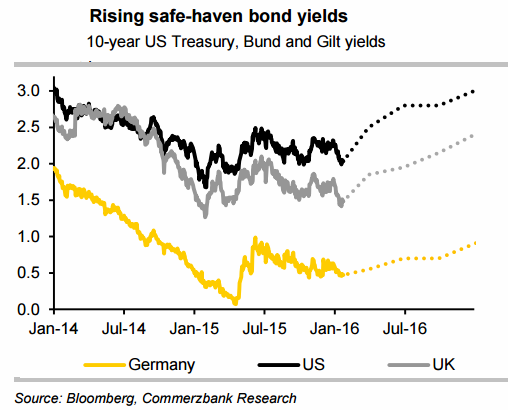
"Against this backdrop the Fed should succeed in gradually letting the air out of the bond bubble, and safe-haven bond yields are set to gradually increase. The rising relative attractiveness of sovereign bonds and the unwinding of the 'hunt-for-yield' should weigh on the returns of other asset classes resulting in years of asset price disinflation at the global level," said Commerzbank in a research note.
Besides rate hikes, the Fed has many tools to steer the process. Their bond holdings can be used to manage US Treasury yields. The policy spectrum ranges from the current reinvestment of any proceeds from their bond holdings, with the option of only partly reinvesting maturing debt or not at all, to outright bond sales. Data shows the amount of maturing US Treasury bonds in the Fed's System Open Market Account averages roughly USD22bn per month between 2016 and 2021.
U.S. Treasury yields fell to four-month lows on Friday after BoJ surprised investors by introducing negative interest rates in a further effort to stimulate the country's flagging economy. U.S. 10-Year Treasuries yield stood at 1.915 percent on the day, while 2-year yield dropped to a 3-month low of 0.766 percent on Friday before bouncing to 0.779 percent.

- News

- Economy

- Central Banks
- Investing
- Research
- Roundups
- Digital Currency
- Insights
- Technical Analysis
- Technology
- Business
- Law
- Health
- Nature
- Fintech
- Science
- Topic
- Opinions
- ©Econometrics LLC . All Rights Reserved.
Safe-haven bond yields to gradually rise as Fed aims to ease bubbles in the sovereign bond market
Monday, February 1, 2016 11:25 AM UTC
Editor's Picks



- Market Data
Most Popular




